
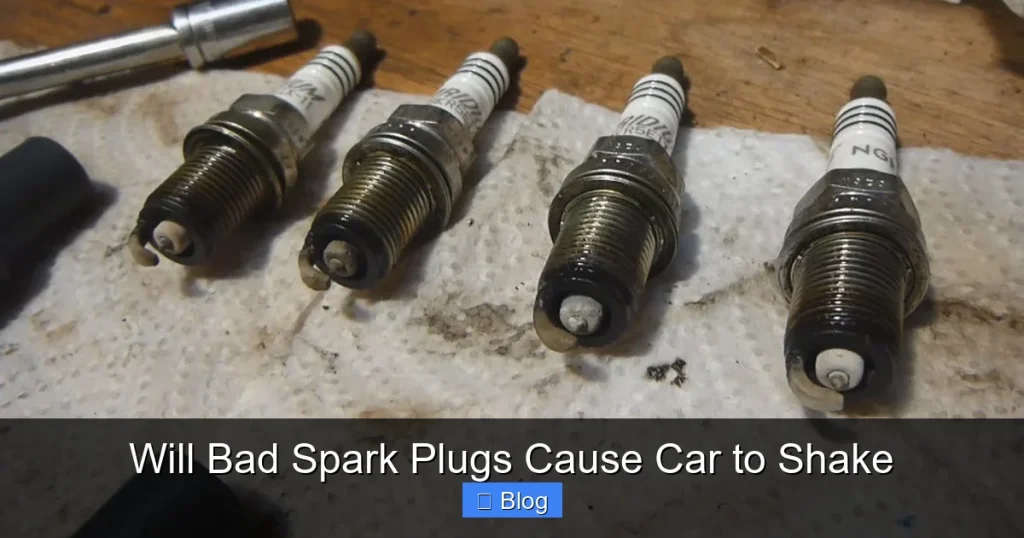
Yes, bad spark plugs can cause a car to shake. If you are wondering, will bad spark plugs cause car to shake, the answer is yes because spark plugs are responsible for igniting the air-fuel mixture inside the engine. When they become worn, dirty, or damaged, the engine may misfire, leading to vibrations, rough idling, or shaking while driving or when the car is stopped.
Another common sign of faulty spark plugs is poor engine performance. You may notice slower acceleration, difficulty starting the car, or increased fuel consumption. When the spark plugs fail to create a strong spark, the engine cannot burn fuel efficiently, which causes uneven engine operation and noticeable shaking.
Ignoring these symptoms can lead to bigger engine problems over time. Checking and replacing spark plugs regularly helps keep your engine running smoothly, improves fuel efficiency, and prevents the shaking caused by engine misfires.
Will Bad Spark Plugs Cause Car to Shake?
Imagine this: you start your car, and instead of a smooth hum, you feel a distinct shudder. Or maybe you’re cruising down the highway, and suddenly, your vehicle starts to vibrate or shake, especially when accelerating. It’s a concerning feeling, making you wonder what could be wrong under the hood. One of the most common culprits behind a car shaking, vibrating, or experiencing a rough idle is surprisingly simple: bad spark plugs.
Yes, bad spark plugs can absolutely cause your car to shake. This isn’t just a minor annoyance; it’s a clear sign that your engine isn’t running as it should. In this comprehensive guide, we’ll dive deep into why bad spark plugs lead to shaking, what other symptoms to look out for, and most importantly, how to diagnose and fix the problem. By the end, you’ll have a clear understanding of this common car issue and feel confident in addressing it, whether you do it yourself or know when to call a professional.
Key Takeaways
- Bad Spark Plugs Are a Primary Cause of Car Shaking: A vehicle that shakes, vibrates, or shudders often indicates an engine misfire, which is frequently caused by faulty or worn spark plugs.
- Misfires Lead to Incomplete Combustion: When a spark plug fails to ignite the fuel-air mixture correctly, the engine doesn’t produce consistent power, leading to noticeable shaking and reduced performance.
- Other Symptoms Accompany Shaking: Beyond shaking, bad spark plugs can also cause a rough idle, reduced fuel economy, slow acceleration, difficulty starting, and illuminate the “Check Engine” light.
- Diagnosis Often Involves Multiple Steps: Identifying bad spark plugs typically includes checking the “Check Engine” light codes (OBD-II scanner), visual inspection of the plugs and wires, and listening for engine irregularities.
- DIY Replacement Is Feasible for Many: Replacing spark plugs can be a straightforward DIY task with the right tools and precautions, saving money on labor costs.
- Proper Gapping and Torque Are Crucial: Incorrectly gapped or overtightened/undertightened spark plugs can cause new problems or damage engine components, making precision vital during installation.
- Consider Other Causes if Shaking Persists: If new spark plugs don’t resolve the shaking, the issue might stem from other components like ignition coils, fuel injectors, engine mounts, or even tire balance.
Quick Answers to Common Questions
What’s the best way to determine which spark plug is bad?
If your “Check Engine” light is on, use an OBD-II scanner. A P030X code (e.g., P0301) directly indicates a misfire in cylinder X, pointing to the likely faulty spark plug or ignition coil for that cylinder.
Can I just replace one bad spark plug?
While technically possible, it’s generally recommended to replace all spark plugs at the same time. Spark plugs wear out together, so if one is bad, the others are likely not far behind or are already affecting performance. This ensures consistent engine operation.
How often should I change my spark plugs?
Refer to your car’s owner’s manual for the specific recommendation, but typically it’s between 30,000 to 100,000 miles, depending on the type of plug (copper, platinum, iridium) and your vehicle. Older cars with copper plugs need changes more frequently.
What if my car is still shaking after I replace the spark plugs?
If the shaking continues, the issue likely lies elsewhere in the ignition system (e.g., ignition coils, spark plug wires), fuel system (e.g., fuel injectors), or engine (e.g., vacuum leak, engine mounts). Re-scan for codes and consider professional diagnosis.
Is it safe to drive with bad spark plugs causing the car to shake?
While you *can* drive with bad spark plugs, it’s not recommended for long. It can lead to reduced power, poor fuel economy, increased emissions, and potentially cause damage to other engine components, such as the catalytic converter, over time due to unburnt fuel.
Understanding the Role of Spark Plugs
Before we talk about what goes wrong, let’s quickly review what spark plugs do. In a gasoline engine, spark plugs are tiny but mighty heroes. Their job is to ignite the compressed fuel-air mixture inside each cylinder at precisely the right moment. When this ignition happens, it creates a controlled explosion that pushes the piston down, generating the power that moves your car. Each cylinder has its own spark plug, and they all need to fire consistently for the engine to run smoothly.
How Bad Spark Plugs Lead to Your Car Shaking
The shaking you feel is almost always a symptom of an engine misfire. An engine misfire occurs when one or more cylinders fail to ignite the fuel-air mixture properly. When a spark plug is bad, it can’t deliver a strong, consistent spark. This leads to:
Incomplete Combustion
If the spark is weak or mistimed, the fuel-air mixture in a cylinder won’t burn completely or at all. This means that cylinder isn’t producing its fair share of power. Instead of a smooth, synchronized dance of power strokes, you have an uneven rhythm, causing the engine to shake.

Visual guide about Will Bad Spark Plugs Cause Car to Shake
Image source: ik.imagekit.io
Uneven Power Delivery
Imagine a four-person rowing team, but one rower isn’t pulling their weight. The boat would likely veer off course and experience a jerky, uneven motion. Your engine is similar. When one or more cylinders aren’t contributing power consistently, the engine’s balance is thrown off, leading to vibrations and shaking that you feel throughout the car.
Increased Strain on Other Components
The engine’s computer tries to compensate for misfires, but this often puts extra strain on other parts. The shaking can be felt more acutely when the engine is under load, like during acceleration, or when it’s idling at low RPMs.
Common Symptoms of Bad Spark Plugs (Beyond Shaking)
While shaking is a very noticeable sign, bad spark plugs rarely act alone. You’ll often experience a combination of symptoms that point directly to an ignition issue.
- Rough Idle: Your car feels like it’s sputtering or vibrating more than usual when you’re stopped at a light.
- Reduced Fuel Economy: Incomplete combustion means your engine is burning more fuel to produce less power. You’ll notice more frequent trips to the gas station.
- Slow Acceleration or Lack of Power: If your engine isn’t firing on all cylinders, it won’t be able to generate its full power. You’ll feel a noticeable sluggishness when you press the accelerator.
- Difficulty Starting the Car: A weak spark can make it harder for your engine to “catch” and start up, especially in cold weather.
- Check Engine Light Illuminated: Your car’s onboard diagnostic (OBD-II) system is designed to detect misfires. If it senses enough of them, it will trigger the “Check Engine” light on your dashboard.
- Engine Knocking or Pinging: In some severe cases, uncontrolled combustion can lead to knocking or pinging sounds from the engine.
- Strong Fuel Smell: Unburnt fuel might make its way into your exhaust system, causing a noticeable gasoline smell.
Diagnosing Bad Spark Plugs
Feeling your car shake is the first step. The next is figuring out if bad spark plugs are truly the cause. Here’s how to investigate:
1. Check the “Check Engine” Light
If your “Check Engine” light is on, this is your best starting point. Use an OBD-II scanner (many auto parts stores offer free scans, or you can buy one cheaply) to read the diagnostic trouble codes (DTCs). Common codes related to misfires include P0300 (random/multiple cylinder misfire) or P030X (where X is the cylinder number, e.g., P0301 for cylinder 1 misfire).

Visual guide about Will Bad Spark Plugs Cause Car to Shake
Image source: ik.imagekit.io
2. Listen to Your Engine
Pay attention to the sounds your engine makes. A healthy engine has a smooth, consistent hum. An engine with bad spark plugs might sound rough, irregular, or like it’s struggling. Sometimes you can even hear a distinct “thump-thump” where a cylinder is missing.
3. Visual Inspection of Spark Plugs and Wires/Coils
This requires a bit more hands-on work, but it’s often the most conclusive diagnostic step for bad spark plugs.
Accessing Your Spark Plugs
Most modern engines have spark plugs located on top of the engine under a plastic cover, or sometimes on the side of the engine block. You’ll need to remove the engine cover and then carefully disconnect the ignition coils or spark plug wires. Labeling them as you go can save you a headache during reassembly.
Removing and Inspecting Spark Plugs
Using a spark plug socket and ratchet, carefully loosen and remove each spark plug. Once removed, examine them closely:
- Fouling: Is the tip covered in oil, fuel, or carbon?
- Erosion: Is the electrode worn down, rounded, or significantly different from a new plug?
- Cracks: Are there any cracks in the ceramic insulator?
- Gap: Is the gap between the electrodes too wide or too narrow? A spark plug gapping tool can help you measure this.
The appearance of your old spark plugs can tell you a lot about your engine’s health. For example, an oily plug might indicate a valve cover gasket leak, while a black, sooty plug points to rich fuel mixture.
Other Potential Causes of Car Shaking (to Rule Out)
While bad spark plugs are a strong candidate, it’s important to remember that a shaking car can be caused by other issues. If new spark plugs don’t fix the problem, or if your diagnosis points elsewhere, consider these common causes:
- Bad Ignition Coils: If your car uses individual ignition coils for each spark plug, a faulty coil can also cause a misfire and shaking. They are often diagnosed with the same P030X codes.
- Faulty Fuel Injectors: A clogged or malfunctioning fuel injector won’t deliver the correct amount of fuel, leading to a misfire.
- Vacuum Leaks: Unmetered air entering the engine can disrupt the fuel-air mixture, causing a rough idle and shaking.
- Engine Mounts: Worn or broken engine mounts can’t properly absorb engine vibrations, making them more pronounced throughout the vehicle.
- Tire Imbalance or Worn Suspension: If the shaking is felt more at certain speeds or through the steering wheel, it might be related to wheels, tires, or suspension components rather than the engine.
- Transmission Issues: A failing transmission can also cause jerking or shaking, especially during gear changes.
Step-by-Step Guide: Replacing Your Spark Plugs
If your diagnosis points to bad spark plugs, replacing them can be a rewarding DIY project. While the exact steps can vary slightly by vehicle, the general process is similar.
What You’ll Need:
- New spark plugs (check your owner’s manual for the correct type and number)
- Spark plug socket set (usually 5/8″, 13/16″, or 18mm)
- Ratchet and extensions
- Spark plug gapping tool (if pre-gapped plugs aren’t used)
- Torque wrench
- Anti-seize compound (recommended)
- Dielectric grease (for coil boot, recommended)
- Gloves, safety glasses
- Can of compressed air or vacuum cleaner
- Marker or tape for labeling
1. Prioritize Safety
Always work on a cool engine. Disconnect the negative terminal of your car’s battery before starting any electrical work. Wear gloves and safety glasses.
2. Access the Spark Plugs
- Locate Plugs: Spark plugs are usually found on top of the engine (under a plastic cover) or along the side.
- Remove Obstacles: You might need to remove an engine cover, air intake components, or other parts blocking access. Take photos as you go to remember how everything connects.
- Disconnect Wires/Coils: If your car has spark plug wires, carefully pull them by the boot, not the wire itself. If it has individual ignition coils, disconnect their electrical connectors and then unbolt and remove them. Label each wire or coil with its corresponding cylinder number (e.g., Cylinder 1, 2, 3, etc.) to ensure they go back in the correct place.
3. Clean Around the Plugs
Before removing the old plugs, use compressed air or a shop vacuum to clear any dirt, debris, or leaves from around the spark plug wells. This prevents contaminants from falling into the combustion chamber when the plug is removed.
4. Remove the Old Spark Plugs
Insert the spark plug socket onto the plug and attach your ratchet. Turn counter-clockwise to loosen. If a plug is stuck, apply a small amount of penetrating oil and let it sit for a few minutes before trying again. Be gentle; forcing it can damage the engine head. Remove each plug one by one.
5. Inspect the Old Plugs
As you remove each plug, compare it to the others and to images of healthy vs. unhealthy spark plugs. This inspection can offer valuable clues about your engine’s overall health and confirm your diagnosis of bad spark plugs.
6. Prepare the New Spark Plugs
- Check Gap: Even if spark plugs are advertised as “pre-gapped,” always double-check the gap with your gapping tool against your car’s specifications (found in your owner’s manual or a repair manual). Adjust if necessary by carefully bending the ground electrode.
- Apply Anti-Seize: Apply a small amount of anti-seize compound to the threads of the new spark plugs. This prevents them from seizing in the cylinder head and makes future removal easier.
- Apply Dielectric Grease: For coil boots, apply a small amount of dielectric grease inside the boot to prevent moisture and make removal easier in the future.
7. Install the New Spark Plugs
- Hand-Tighten First: Carefully thread each new spark plug into its cylinder head by hand. This helps prevent cross-threading, which can cause severe damage.
- Torque to Spec: Once hand-tight, use a torque wrench to tighten the spark plugs to your vehicle manufacturer’s specified torque setting. Over-tightening can strip threads or crack the plug insulator; under-tightening can cause misfires or allow the plug to back out.
8. Reassemble Ignition Components
Reconnect the ignition coils or spark plug wires, ensuring they are firmly seated and connected to the correct cylinders (refer to your labels). Reattach any components you removed, like engine covers or air intakes.
9. Reconnect Battery and Test
Reconnect the negative battery terminal. Start your car and listen for a smooth idle. Take it for a test drive. You should immediately notice a difference – less shaking, smoother acceleration, and improved overall performance.
Troubleshooting If Shaking Persists
If you’ve replaced your bad spark plugs and your car still shakes, don’t despair! Here are a few things to consider:
- Double-Check Connections: Ensure all spark plug wires or coil pack connectors are securely attached. A loose connection can mimic a bad plug.
- Check for New Codes: Use your OBD-II scanner again. A new code might appear, pointing to another issue like a faulty ignition coil or fuel injector.
- Inspect Wires/Coils: While you replaced the plugs, the wires (if applicable) or ignition coils themselves might be the actual problem, especially if they are old.
- Consider Other Causes: Revisit the “Other Potential Causes of Car Shaking” section above. The problem might be elsewhere entirely.
When to Call a Professional
While spark plug replacement is often a manageable DIY task, there are times when calling a professional mechanic is the best course of action:
- You’re uncomfortable working on your engine or don’t have the right tools.
- A spark plug is stuck or difficult to remove, risking damage to the cylinder head.
- After replacing the spark plugs, the shaking persists, indicating a deeper issue.
- The “Check Engine” light returns with different or more serious codes.
- Your car is a complex model that requires specialized tools or knowledge.
Conclusion
So, will bad spark plugs cause your car to shake? Absolutely, and it’s a very common indicator of an engine misfire. Recognizing the symptoms, understanding the diagnostic steps, and knowing how to address the problem can save you from further engine damage, improve your fuel economy, and restore that smooth, reliable ride you expect from your vehicle. Whether you tackle it yourself or seek professional help, addressing bad spark plugs promptly is a crucial step in maintaining your car’s health and ensuring your safety on the road.

Sagor Jahan is the founder and author of Automopromo.com, dedicated to delivering insightful tips, reviews, and updates in the automotive and promotional industry. With a passion for innovation and clear guidance, Sagor helps readers make informed decisions and stay ahead in the ever-evolving automotive world.

