
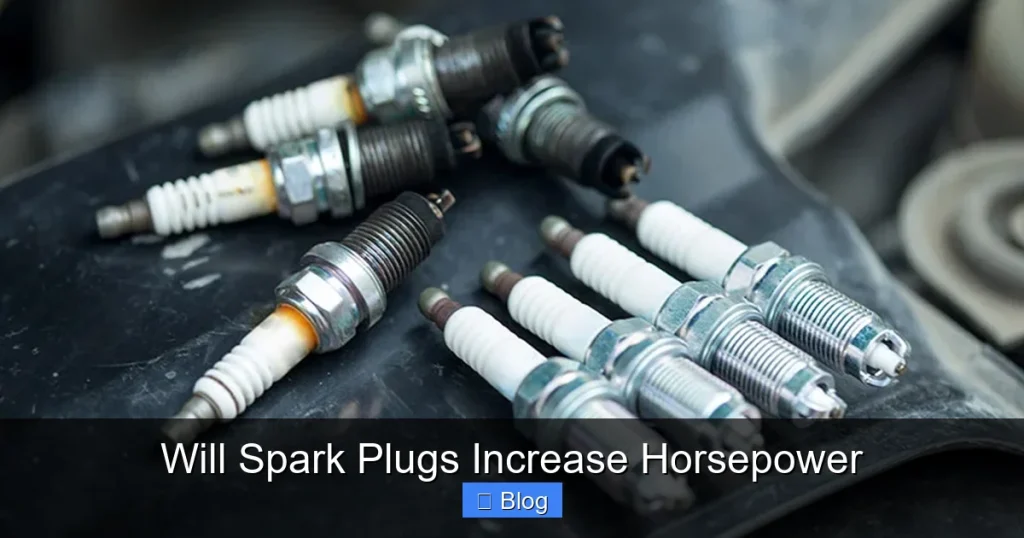
Will spark plugs increase horsepower? The short answer is: spark plugs alone usually do not increase horsepower beyond the engine’s original design. However, new or high-quality spark plugs can restore lost power if the old ones are worn, dirty, or misfiring. When spark plugs work properly, they ignite the air-fuel mixture efficiently, helping the engine run smoother and closer to its intended performance.
Over time, spark plugs wear out and may cause weak combustion. This can lead to reduced engine power, poor acceleration, rough idling, and lower fuel efficiency. Replacing old plugs with fresh ones ensures a strong spark, which improves engine efficiency and helps the vehicle perform at its best.
In some performance vehicles, upgrading to high-performance spark plugs may slightly improve engine response and combustion efficiency. While the horsepower gain is usually small, maintaining good spark plugs plays an important role in keeping your engine running smoothly and efficiently.
Key Takeaways
- No Direct Horsepower Increase: Standard or “performance” spark plugs do not directly add horsepower to a healthy engine beyond its original factory specifications.
- Crucial for Optimal Performance: Correctly chosen and properly functioning spark plugs are absolutely essential for an engine to produce its *rated* horsepower and maintain peak efficiency.
- Restore Lost Power: Worn-out, fouled, or incorrect spark plugs can significantly *reduce* an engine’s horsepower and fuel efficiency. Replacing them with the correct type restores this lost power, making it feel like an increase.
- Material Benefits are for Durability/Reliability: Advanced spark plug materials like platinum and iridium offer increased longevity and better performance in extreme conditions, not a direct horsepower boost for a typical daily driver.
- Manufacturer Specifications are Key: Always follow your vehicle manufacturer’s recommendations for spark plug type, heat range, and gap to ensure optimal performance and engine health.
- Horsepower Gains Come From Engine Modifications: Genuine horsepower increases typically result from significant engine upgrades such as ECU tuning, improved air intake/exhaust systems, or forced induction (turbo/supercharger).
- Regular Maintenance is Paramount: Consistent spark plug inspection and replacement are critical parts of engine maintenance, ensuring your car runs smoothly and efficiently, delivering all the power it was designed to.
Quick Answers to Common Questions
Always Consult Your Owner’s Manual First!
Before buying any spark plugs, check your vehicle’s owner’s manual for the specific type, heat range, and gap recommended by the manufacturer. This is the most reliable way to ensure optimal performance and engine health.
Understand the “Performance” Spark Plug Myth
Remember that fancy, expensive spark plugs (platinum, iridium) primarily offer benefits in durability and consistent spark over time, not a direct increase in horsepower for a stock engine. Don’t overspend expecting a power boost.
Regular Spark Plug Inspection is Key
During routine maintenance, have your spark plugs inspected. Signs of wear, fouling, or incorrect gapping can indicate a need for replacement and prevent future performance issues, restoring lost power.
The Correct Gap is Crucial
Even if you buy the right type of spark plug, an incorrect gap can severely impact its performance. Always verify the gap with a feeler gauge and adjust it carefully if needed, according to your car’s specifications.
Focus on Overall Engine Health
Instead of chasing minor, non-existent horsepower gains from spark plugs, prioritize overall engine health. Regular oil changes, air filter replacements, and addressing any check engine lights will have a far greater impact on your car’s sustained performance.
Will Spark Plugs Increase Horsepower? The Definitive Guide
Welcome, car enthusiasts and curious drivers! You’ve likely heard the buzz, seen the ads, and perhaps even wondered yourself: “Will spark plugs increase horsepower?” It’s a question that pops up in garages, online forums, and car meets all the time. The idea of a simple, relatively inexpensive part giving your engine a significant power boost is certainly appealing. But is it true?
In this comprehensive guide, we’re going to dive deep into the world of spark plugs. We’ll explore what they actually do, debunk common myths, and explain how they truly impact your engine’s performance. By the end, you’ll have a clear understanding of whether spark plugs can increase horsepower, what “performance” spark plugs really offer, and what methods genuinely add more ponies under the hood. Get ready to separate fact from fiction and empower yourself with accurate knowledge about your vehicle.
The Heart of Combustion: What Spark Plugs Really Do
Before we can answer the big question about whether spark plugs increase horsepower, it’s vital to understand their fundamental role. Spark plugs are small, yet incredibly crucial, components in your gasoline engine’s ignition system. Think of them as tiny lightning bolts that ignite the fuel-air mixture, making your engine run.
Understanding the Ignition Process
Every time your engine’s piston moves down, it draws in a mixture of air and fuel. When the piston moves up, it compresses this mixture into a very dense cloud. This is where the spark plug comes in. At precisely the right moment, the ignition coil sends a high-voltage electrical pulse to the spark plug. This pulse travels down the center electrode, jumps a small gap to the ground electrode, and creates a powerful spark. This spark ignites the compressed fuel-air mixture, causing a mini-explosion that pushes the piston back down, turning the crankshaft and ultimately powering your wheels. This entire process happens thousands of times a minute in a running engine! A consistent, strong spark is absolutely critical for efficient combustion. Without it, your engine simply wouldn’t run.
The Great Debate: Do Spark Plugs Actually Increase Horsepower?
Let’s get straight to the point and definitively answer the burning question: Will spark plugs increase horsepower?
The answer, for most vehicles in most situations, is a resounding **NO**.
This might come as a surprise to many, especially with the marketing hype surrounding “performance” spark plugs. While a good spark plug is absolutely essential for your engine to *produce* its designed horsepower, it doesn’t *add* horsepower beyond what the engine was originally engineered to deliver.
Think of it this way: a spark plug’s job is to start the fire. If you have a campfire, using a fancier, more efficient match won’t make the fire burn bigger or hotter than the wood itself allows. The match simply ensures the fire starts optimally. Similarly, a spark plug ensures the fuel-air mixture ignites optimally, allowing the engine to generate its maximum *intended* power. It doesn’t magically create more power than the engine’s design, fuel delivery, or air intake allows.
Why “Performance” Plugs Don’t Add Power
So, what about those expensive platinum, iridium, or multi-electrode spark plugs marketed for “performance”? Do they increase horsepower? Not directly. These advanced spark plugs primarily offer benefits in terms of:
- Durability and Longevity: Platinum and iridium are much harder and more resistant to wear than copper. This means they last significantly longer, often up to 100,000 miles or more, compared to copper plugs that might need changing every 30,000 miles.
- Consistent Spark Over Time: Because they wear less, they maintain their optimal gap for a longer period, ensuring a more consistent and reliable spark throughout their lifespan.
- Better Performance in Extreme Conditions: In highly modified engines, or engines running very high boost or aggressive tuning, these materials can withstand higher temperatures and provide a more stable spark under extreme pressure, preventing misfires that *would* lead to a loss of power. However, this is about preventing power *loss*, not *adding* power to a stock engine.
For a stock engine, using a premium iridium spark plug instead of a standard copper one won’t suddenly unlock an extra 10 horsepower. The engine is already designed to operate efficiently with the manufacturer’s recommended plug type. Any perceived “increase” is likely due to replacing old, worn plugs with new ones, which simply restores the engine to its proper operating condition.
Types of Spark Plugs: A Quick Overview
Understanding the different types of spark plugs can help clarify their specific benefits, which often revolve around durability and consistent performance, rather than outright horsepower gains.
Copper Core Spark Plugs
These are the most basic and traditional type of spark plug. They feature a copper core electrode, which is an excellent conductor of electricity. Copper plugs are effective and inexpensive but wear out relatively quickly, requiring more frequent replacement. They are often found in older vehicles or those designed for simplicity and cost-effectiveness.
Platinum Spark Plugs
Platinum plugs feature a platinum disc welded to the center electrode (single platinum) or on both the center and ground electrodes (double platinum). Platinum is harder and more durable than copper, allowing these plugs to last much longer, typically 60,000 to 100,000 miles. They provide a more consistent spark over time due to less electrode wear.
Iridium Spark Plugs
Iridium is an even harder and more durable metal than platinum, allowing for an extremely fine center electrode. This finer electrode concentrates the electrical charge, leading to a very strong and consistent spark. Iridium spark plugs are the most expensive but offer the longest lifespan (often over 100,000 miles) and excellent performance under demanding conditions. They are standard in many modern, high-tech engines.
When Spark Plugs *Impact* Performance (But Don’t Add HP)
While spark plugs don’t increase horsepower, they absolutely influence how much power your engine *delivers*. If they’re not doing their job correctly, you’ll definitely notice a drop in performance.
The Case of Worn-Out Spark Plugs
Imagine your engine is a finely tuned orchestra. A worn-out spark plug is like a musician playing off-key. Over time, the electrodes on spark plugs erode, widening the gap. This makes it harder for the spark to jump, requiring more voltage from the ignition coil. The spark might become weaker, inconsistent, or even fail entirely (a misfire).
When misfires occur, the fuel-air mixture in that cylinder doesn’t ignite properly, leading to:
- Reduced Horsepower: The engine isn’t firing on all cylinders, literally. Each misfire means a loss of power from that cylinder.
- Poor Fuel Economy: Unburnt fuel is wasted fuel.
- Rough Idling: The engine struggles to maintain a smooth rhythm.
- Increased Emissions: Unburnt fuel goes out the exhaust, harming the environment and possibly damaging catalytic converters.
In such cases, replacing worn-out spark plugs with fresh, correctly gapped ones will *restore* the engine to its original operating efficiency. This can often *feel* like an increase in horsepower because you’re getting back power you had lost. But it’s not adding new power beyond the factory design.
The Dangers of Incorrect Spark Plugs
Using the wrong spark plugs for your vehicle can be just as detrimental as using worn-out ones.
- Wrong Heat Range: Spark plugs come in “hot” and “cold” heat ranges. A hot plug retains more heat, useful for engines that run cooler. A cold plug dissipates heat more quickly, essential for high-performance or forced-induction engines to prevent pre-ignition (where the fuel ignites before the spark). Using a plug that’s too hot can lead to pre-ignition and engine damage. Using one that’s too cold can lead to fouling. Neither scenario will increase horsepower, and both can harm your engine.
- Incorrect Gap: The spark plug gap is precisely engineered for your engine. If the gap is too wide, the spark may be too weak or fail to jump. If it’s too narrow, the spark may be too small or get “quenched,” leading to poor combustion. Both result in reduced efficiency and power, not an increase.
- Physical Fit Issues: Incorrect thread size or reach can damage cylinder heads.
Always stick to the manufacturer’s recommendations to ensure your engine runs optimally and safely.
True Paths to Horsepower: What Really Works
If spark plugs won’t increase horsepower directly, what *will*? Genuine horsepower gains come from modifying components that directly influence the amount of air and fuel your engine can burn, or how efficiently it burns them.
Engine Tuning and ECU Remapping
This is one of the most effective ways to increase horsepower. Your engine’s ECU (Engine Control Unit) manages fuel delivery, ignition timing, and other critical parameters. A professional tuner can remap the ECU to optimize these settings for more power, often taking advantage of higher octane fuel or other modifications. This can yield significant horsepower gains.
Upgraded Air Intake and Exhaust Systems
Engines are essentially air pumps. Allowing more cold, dense air into the engine (cold air intake) and letting exhaust gases escape more freely (performance exhaust system, headers) can dramatically improve engine breathing. Better breathing means more air and fuel can be combusted, leading to more power.
Forced Induction: Turbochargers and Superchargers
This is where the real power boost happens. Turbochargers and superchargers force more air into the engine’s cylinders than it could naturally aspirate. More air equals more fuel, which equals a much bigger bang and substantial horsepower increases. This is a significant modification, but it directly addresses the engine’s ability to create power.
Weight Reduction and Drivetrain Efficiency
While not directly increasing engine horsepower, reducing the overall weight of your vehicle improves its power-to-weight ratio, making it *feel* faster and accelerate more quickly. Similarly, upgrading drivetrain components to be more efficient (e.g., lighter flywheels, better differentials) ensures more of the engine’s power actually makes it to the wheels.
Choosing the Right Spark Plugs for Your Vehicle
Since your goal isn’t necessarily to increase horsepower with spark plugs, but rather to ensure your engine performs optimally, choosing the *correct* spark plugs is paramount.
Consulting Your Owner’s Manual
This is your primary source of truth. Your vehicle’s manufacturer knows best. The owner’s manual will specify the exact type, material, heat range, and recommended gap for the spark plugs in your engine. Stick to these recommendations religiously. Deviating from them is rarely beneficial for a stock engine and can even cause harm.
Heat Range Matters
As discussed, spark plugs come in different heat ranges. Using a plug that’s too “hot” for your engine can lead to pre-ignition (where fuel ignites before the spark), causing engine knock and potential damage. A plug that’s too “cold” might not burn off deposits efficiently, leading to fouling. Match the heat range specified by your manufacturer.
Gapping for Perfection
The gap between the center and ground electrodes is crucial. An incorrect gap can lead to misfires, poor fuel economy, and reduced power output. While many modern spark plugs are “pre-gapped,” it’s always a good idea to double-check the gap with a proper gapping tool before installation, especially if you’re not installing OEM plugs. Adjust it carefully if necessary, following your manual’s specifications.
Troubleshooting Spark Plug Related Issues
If your engine isn’t running right, spark plugs are often among the first things to check. Understanding common symptoms can help you diagnose problems.
Common Symptoms of Bad Spark Plugs
If your spark plugs are worn, fouled, or incorrect, you might experience:
- Engine Misfires: A noticeable stumble, hesitation, or “hiccup” in engine operation, often accompanied by a check engine light.
- Reduced Fuel Economy: Your car burning more fuel than usual for the same distance.
- Rough Idling: The engine shaking or vibrating more than normal when sitting still.
- Difficulty Starting: The engine cranking longer or struggling to catch.
- Lack of Power/Sluggish Acceleration: The engine feels weak or doesn’t respond as quickly when you press the accelerator. This is often the perceived “loss of horsepower” that replacing spark plugs remedies.
- Engine Knock or Ping: A metallic rattling sound, especially under acceleration, indicating pre-ignition or detonation caused by an overly hot spark plug or incorrect ignition timing.
If you experience any of these symptoms, inspecting or replacing your spark plugs is a good starting point for diagnosis.
Conclusion
So, will spark plugs increase horsepower? The definitive answer is no, not directly. While new, properly functioning spark plugs are absolutely fundamental for your engine to produce its *intended* horsepower and run efficiently, they do not add extra power beyond the manufacturer’s design. The notion that “performance” spark plugs will provide a significant horsepower boost is largely a myth. Their benefits lie in durability, longevity, and consistent performance, especially in highly stressed or modified engines, preventing *loss* of power rather than generating *new* power.
To truly increase your vehicle’s horsepower, you need to look at more significant modifications like ECU tuning, upgraded air intake and exhaust systems, or forced induction. For day-to-day driving, your best bet for optimal performance is to simply ensure you’re using the correct spark plugs recommended by your vehicle’s manufacturer and replacing them at the prescribed intervals. This will ensure your engine is always delivering all the horsepower and efficiency it was designed to. Drive safely, and enjoy the power your car was meant to have!

Sagor Jahan is the founder and author of Automopromo.com, dedicated to delivering insightful tips, reviews, and updates in the automotive and promotional industry. With a passion for innovation and clear guidance, Sagor helps readers make informed decisions and stay ahead in the ever-evolving automotive world.

