
How many miles do motorcycle tire last? Motorcycle tires usually last 5,000 to 15,000 miles. Sport tires may last 3,000–6,000 miles, touring tires 10,000–15,000 miles, and adventure or cruiser tires fall in between. Riding style, road conditions, and maintenance greatly affect tire life.
Understanding “how many miles do motorcycle tires last” isn’t straightforward, as lifespan varies immensely. Factors like tire type, riding style, and consistent maintenance dramatically influence mileage. Expect anywhere from 2,000 to over 20,000 miles, but always prioritize regular inspection and timely replacement for optimal safety and performance.
How Many Miles Do Motorcycle Tires Last?
Riding a motorcycle offers a freedom unlike anything else, but that exhilarating experience is heavily dependent on one crucial component: your tires. They’re the only thing connecting you to the road, making their condition paramount for both performance and safety. One of the most common questions riders ask is, “How many miles do motorcycle tires last?” It’s a fantastic question, but the answer, like the open road, isn’t always a straight line.
In this comprehensive guide, we’ll dive deep into the world of motorcycle tire longevity. You’ll learn the average mileage you can expect, uncover the multitude of factors that influence tire life, and discover practical tips to extend the life of your precious rubber. We’ll also cover how to spot the signs that it’s time for a replacement, ensuring your rides remain safe and enjoyable. Let’s get rolling!
Key Takeaways
- Wide Range of Lifespan: Motorcycle tire mileage varies significantly, typically from 2,000 miles for aggressive sport riding to over 20,000 miles for touring.
- Tire Type is Crucial: Sport tires offer superior grip but wear quickly, while touring and cruiser tires are designed for durability and longer mileage.
- Riding Style Matters Immensely: Aggressive acceleration, hard braking, and spirited cornering drastically reduce tire life compared to smooth, consistent riding.
- Maintenance Extends Life: Proper tire pressure, regular inspection, balancing, and alignment are the most critical factors in maximizing your tires’ lifespan and ensuring safety.
- Rear Tires Wear Faster: The rear tire generally carries more load, transmits power, and handles most braking, causing it to wear out faster than the front.
- Beyond Mileage: Always inspect for tread depth, cracking, cupping, and age (even with good tread, replace tires after 5-7 years) – don’t rely solely on mileage.
- Road Conditions Play a Role: Abrasive road surfaces, high temperatures, and frequent commutes contribute to faster tire wear.
Quick Answers to Common Questions
How often should I check my tire pressure?
You should check your motorcycle tire pressure at least once a week, or before every major ride, when the tires are cold. This ensures accuracy and helps catch any slow leaks early.
Do front and rear motorcycle tires wear at the same rate?
No, typically the rear tire wears significantly faster than the front. This is because the rear tire handles most of the engine’s power, acceleration, and often more braking force, plus a larger share of the motorcycle’s load.
Should I “break in” new motorcycle tires?
Absolutely! New tires have a release agent on their surface from the manufacturing process, which can be slippery. Ride gently for the first 50-100 miles, avoiding hard acceleration, braking, or extreme lean angles, to scuff them in and ensure optimal grip.
What’s the maximum age for motorcycle tires, even with good tread?
Most manufacturers and safety experts recommend replacing motorcycle tires after 5-7 years from their date of manufacture, regardless of how much tread is left or how many miles they’ve covered. Rubber degrades over time due to age and environmental exposure.
Can overloading my motorcycle affect tire life?
Yes, exceeding your motorcycle’s or tires’ maximum load capacity significantly increases stress on the tires, generating excessive heat and accelerating wear. Always adhere to your bike’s weight limits to prolong tire life and ensure safety.
The Big Question: How Many Miles Can You Expect?
Let’s address the elephant in the garage: there’s no single, definitive answer to how many miles motorcycle tires last. It’s like asking how long a piece of string is – it depends! However, we can give you some general ranges.
General Averages
On average, you can expect motorcycle tires to last anywhere from 2,000 miles to over 20,000 miles. That’s a massive range, right? This wide spectrum is precisely why understanding the influencing factors is so important.
- Sportbike Tires: These are designed for maximum grip and performance, often made with softer compounds. You might see as little as 2,000-5,000 miles, especially with aggressive riding.
- Cruiser/Standard Bike Tires: Offering a good balance of grip and longevity, these often last between 6,000-12,000 miles.
- Touring Bike Tires: Built for high mileage and stability, touring tires use harder compounds and durable construction. It’s not uncommon to get 10,000-20,000+ miles from a set.
- Dual Sport/Adventure Bike Tires: Lifespan here depends heavily on the ratio of on-road to off-road use. They can vary wildly from 3,000 to 10,000 miles.
Why the Wide Range?
The vast difference in how many miles motorcycle tires last comes down to a combination of design, how you ride, and how well you care for them. Think of it like a complex recipe where every ingredient and cooking method impacts the final dish. Let’s break down these critical ingredients.
Factor 1: Tire Type and Construction
The type of tire you choose is perhaps the most significant determinant of its lifespan. Different bikes and riding styles demand different tire characteristics, which directly impact how long they last.

Visual guide about How Many Miles Do Motorcycle Tires Last?
Image source: app.cuppa.sh
Touring Tires
These tires are the marathon runners of the motorcycle world. Designed for long-distance comfort and stability, they feature harder rubber compounds and robust construction. They prioritize durability and mileage over ultimate grip at extreme lean angles. This means they’ll generally give you the most miles.
Sport/Performance Tires
At the opposite end, sport tires are sprinters. Their primary goal is maximum grip, handling, and feedback, often at the expense of longevity. They use softer rubber compounds, which heat up quickly and provide incredible traction but wear down much faster. If you ride aggressively on a sportbike, your motorcycle tires last for fewer miles.
Cruiser Tires
Cruiser tires typically offer a good compromise. They are built to handle the weight and torque of larger cruiser bikes while providing reasonable grip and a decent lifespan. They sit somewhere in the middle regarding mileage expectations.
Off-Road/Dual Sport Tires
These tires are designed with aggressive tread patterns for traction in dirt, mud, and gravel. Their lifespan depends heavily on how much time they spend on pavement versus off-road. Pavement rapidly wears down knobby tires.
Factor 2: Your Riding Style
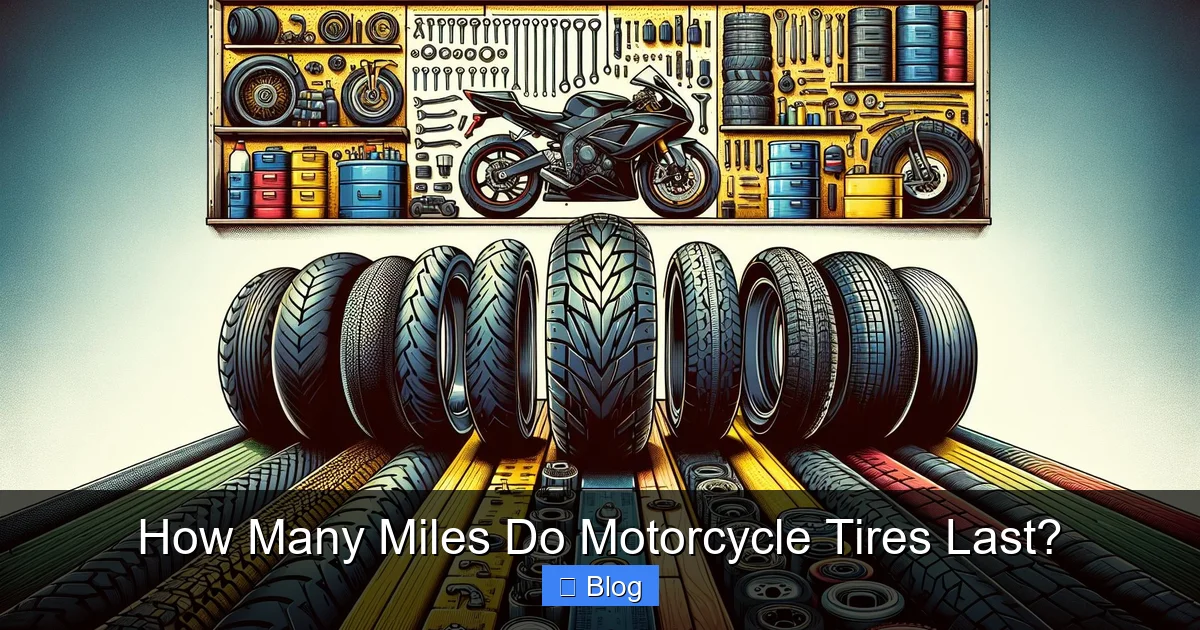
How you twist the throttle, squeeze the brakes, and lean into corners profoundly affects how many miles your motorcycle tires last. Your riding style is a huge player in tire wear.
Visual guide about How Many Miles Do Motorcycle Tires Last?
Image source: app.cuppa.sh
Aggressive Riding
- Hard Acceleration: Laying down power rapidly causes the rear tire to scrub off rubber faster.
- Hard Braking: Aggressive braking, especially with the front brake, can accelerate front tire wear and even cause flat spots.
- Spirited Cornering: Leaning deep into turns and carrying high cornering speeds puts immense stress on the tire’s shoulders, wearing them down quickly.
If you enjoy pushing your bike’s limits, expect your motorcycle tires to last on the lower end of the mileage spectrum.
Smooth, Consistent Riding
Riders who accelerate gently, brake smoothly, and maintain consistent speeds will naturally experience longer tire life. Less stress on the rubber means slower wear. If your commutes are mostly highway and you ride defensively, your motorcycle tires last significantly longer.
Carrying Heavy Loads/Pillion
Consistently riding with a passenger or heavy luggage increases the load on your tires, especially the rear. This added stress and friction can accelerate wear, reducing the overall mileage.
Factor 3: Tire Maintenance – Your Secret Weapon for Longevity
This is where you have the most control over how many miles your motorcycle tires last. Proper maintenance is not just about extending tire life; it’s absolutely critical for your safety.
Proper Tire Pressure
This is arguably the single most important maintenance item. Incorrect tire pressure leads to uneven wear, reduced grip, and increased risk of failure.
- Underinflation: Causes the tire to flex excessively, generating heat and wearing out the shoulders prematurely. It also makes the bike handle sluggishly and increases the risk of a blowout.
- Overinflation: Causes the tire to bulge in the center, leading to rapid wear down the middle of the tread. It also reduces the contact patch, making the ride harsher and potentially reducing grip.
Always check your owner’s manual for the recommended pressure and check your tires cold (before riding) at least once a week.
Tire Balancing and Alignment
Properly balanced wheels prevent vibrations and ensure the tire wears evenly. If your wheels are out of balance, you’ll experience a bumpy ride and accelerated, irregular wear. While less common than on cars, improper wheel alignment can also lead to feathering and reduced tire life.
Regular Cleaning and Inspection
Periodically clean your tires with mild soap and water to remove road grime, oil, and chemicals. Inspect them for embedded nails, glass, cracks, or bulges. Early detection of issues can prevent more serious problems.
Proper Storage
When not riding for extended periods, store your motorcycle in a cool, dry place away from direct sunlight and ozone-generating equipment (like electric motors). Elevating the bike or putting it on stands can also prevent flat spots and prolong tire life.
Factor 4: Road and Environmental Conditions
The world you ride in plays a big role in how many miles your motorcycle tires last.
Road Surface
- Abrasive Surfaces: Rough asphalt, concrete, and gravel roads can significantly accelerate tire wear compared to smooth, new pavement.
- Clean Roads vs. Debris: Riding on roads littered with sand, gravel, or debris can cause small abrasions and punctures.
Temperature
High ambient temperatures and scorching road surfaces increase the temperature of your tires, causing the rubber to break down faster. Consistent hot-weather riding will reduce tire life.
Weather
While rain itself doesn’t directly wear tires faster, UV radiation from sunlight can cause rubber to degrade and crack over time, even if the bike isn’t ridden much.
Commuting vs. Highway vs. Twisties
Frequent stop-and-go commuting can cause more wear due to repeated acceleration and braking. Long highway rides with consistent speeds are generally easier on tires. Aggressive riding on twisty roads, as mentioned, leads to faster shoulder wear.
Factor 5: Motorcycle Type and Weight
The machine itself contributes to tire wear.
Heavy Cruisers vs. Light Sportbikes
Heavier motorcycles inherently put more stress on their tires, causing them to work harder and potentially wear faster than lighter bikes, all else being equal. However, heavier bikes are often designed for touring, so their tires are built for longevity.
Engine Torque Output
Bikes with high torque, especially if ridden aggressively, will put more strain on the rear tire during acceleration, leading to quicker wear. The sheer power being put to the ground will make those motorcycle tires last less if you’re constantly revving hard.
Signs It’s Time for New Tires – Don’t Guess, Inspect!
Even if you’re meticulously tracking how many miles your motorcycle tires last, visual inspection is non-negotiable. Don’t wait for a flat or an accident to realize your tires are worn out. Safety first!
Tread Depth
This is the most critical indicator. All tires have “wear bars” (small raised sections) located in the grooves. When the tread wears down to be flush with these bars, the tire is legally considered worn out and should be replaced immediately. Reduced tread depth severely impacts wet weather grip.
Cracking and Dry Rot
Look for small cracks or crazing on the sidewalls and in the tread grooves. This is a sign of dry rot or rubber degradation, often caused by UV exposure, age, or improper storage. Even if the tread looks good, cracked tires are unsafe.
Cupping and Uneven Wear
This appears as a “scalloped” or wavy wear pattern across the tread. It can indicate suspension issues, improper tire pressure, or an imbalanced wheel. While minor cupping can be normal, severe cupping reduces grip and requires tire replacement and diagnosis of the underlying issue.
Punctures and Damage
While some punctures can be safely repaired (check manufacturer guidelines and consult a professional), many types of damage, especially to the sidewall or large punctures, necessitate immediate tire replacement.
Age of the Tire
Rubber degrades over time, even if a tire has never been ridden or still has plenty of tread. Most tire manufacturers and safety experts recommend replacing motorcycle tires after 5-7 years from the date of manufacture, regardless of mileage. The manufacturing date (DOT code) is stamped on the sidewall.
Maximizing Your Motorcycle Tire Lifespan: Practical Tips
Now that you know all the factors, here’s how to ensure your motorcycle tires last as long as safely possible.
Invest in Quality Tires
Don’t skimp on tires. Reputable brands offer better compounds, construction, and often longer life along with superior performance and safety.
Ride Smoothly
Be gentle with the throttle and brakes. Gradual acceleration and deceleration put less stress on the tire surface, extending how many miles your motorcycle tires last.
Maintain Correct Tire Pressure Religiously
This is the easiest and most impactful tip. Check your tire pressure weekly, or before every long ride, using a reliable gauge. Refer to your bike’s owner’s manual for recommended pressures (usually also on a sticker on the swingarm or frame).
Check Tread Depth Regularly
Use a depth gauge or visually check for wear bars. Get into the habit of inspecting your tires every time you clean your bike or check the chain.
Store Your Bike Properly
If you’re parking your bike for the winter, ensure it’s in a cool, dark place. Consider using stands to get the tires off the ground to prevent flat spots.
Balance and Align (When Needed)
If you feel vibrations or notice uneven wear, have your wheels balanced and checked for alignment by a professional.
Troubleshooting Common Tire Wear Issues
Sometimes, how your motorcycle tires last is signaled by specific wear patterns. Understanding these can help you diagnose problems and extend the life of your next set.
Rapid Center Wear
Symptom: The center of the tread wears down much faster than the shoulders, creating a flattened profile.
Cause: Most commonly, consistent overinflation. The tire bulges in the middle, concentrating wear there.
Fix: Adjust tire pressure to the manufacturer’s recommendations. Look for the correct pressure in your owner’s manual.
Rapid Edge Wear (Shoulders)
Symptom: The outer edges of the tread wear faster than the center, often seen on both sides.
Cause: Underinflation is a prime suspect, causing excessive tire flex and heat at the shoulders. Aggressive cornering can also contribute to this, especially on sportier bikes.
Fix: Check and correct tire pressure. Evaluate your riding style; if it’s very aggressive, this might be normal for your riding, but ensure pressure is spot-on.
Cupping or Scalloping
Symptom: An uneven, wavy, or “scalloped” wear pattern around the circumference of the tire, particularly noticeable on the front tire.
Cause: Often linked to suspension issues (worn forks, incorrect sag, damping settings), unbalanced wheels, or sometimes prolonged parking in one spot allowing flat spots to develop.
Fix: Have your suspension inspected and serviced. Check wheel balance. Ensure proper tire pressure. Sometimes, it’s just a characteristic of how certain tire compounds wear. If your motorcycle tires last this way, it might be a sign they need changing and your suspension needs a look.
Cracking (Dry Rot)
Symptom: Small, hairline cracks appearing on the sidewall or in the tread grooves.
Cause: Age, UV exposure, chemical contamination, or improper storage (e.g., near ozone-producing equipment).
Fix: This is irreversible. Replace the tire immediately. Cracking significantly compromises the tire’s structural integrity, even if tread depth is good.
Conclusion
So, how many miles do motorcycle tires last? As we’ve explored, there’s no single answer, but rather a dynamic interplay of tire type, your riding habits, maintenance diligence, and environmental factors. From a brisk 2,000 miles for a hard-ridden sport tire to a durable 20,000+ for a touring setup, the range is vast.
The most important takeaway is this: your tires are your lifeline. They are a critical safety component. Never prioritize squeezing a few extra miles out of a worn tire over your safety. Regularly inspect your tires, maintain correct pressures, and replace them when they show signs of wear, damage, or age. A well-maintained set of tires provides not just performance, but priceless peace of mind. Ride safe, and enjoy the journey!

Sagor Jahan is the founder and author of Automopromo.com, dedicated to delivering insightful tips, reviews, and updates in the automotive and promotional industry. With a passion for innovation and clear guidance, Sagor helps readers make informed decisions and stay ahead in the ever-evolving automotive world.

