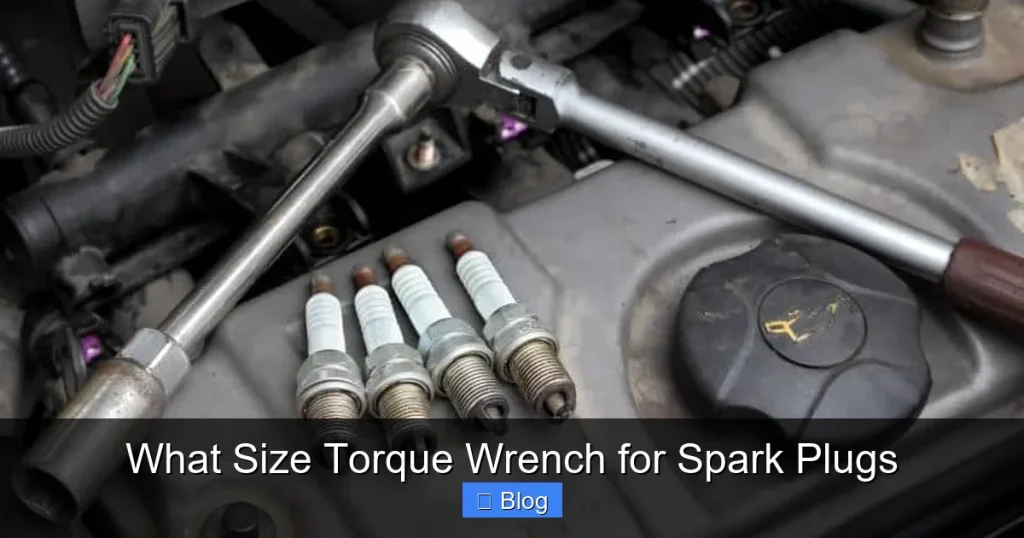
Selecting the correct torque wrench size for spark plugs is absolutely critical for engine health and longevity. Overtightening can strip threads or crack spark plugs and cylinder heads, while undertightening can lead to misfires, engine damage, and premature wear. This comprehensive guide will walk you through understanding spark plug torque specifications, choosing the appropriate type and drive size of torque wrench, and using it correctly to ensure your spark plugs are installed with precision.
What Size Torque Wrench for Spark Plugs
Spark plugs are small but mighty components vital to your engine’s performance. They ignite the air-fuel mixture, powering your vehicle. While replacing them might seem like a straightforward task, there’s a crucial detail that often gets overlooked: the exact tightness, or “torque,” with which they’re installed. Getting this wrong can lead to serious headaches, from minor misfires to extensive engine damage.
This guide is designed to empower you with the knowledge to correctly choose and use a torque wrench for your spark plugs. We’ll dive deep into why proper torque is essential, the different types of torque wrenches available, how to determine the precise specifications for your vehicle, and a step-by-step process for flawless spark plug installation. By the end, you’ll feel confident tackling this critical maintenance task, ensuring your engine runs smoothly and efficiently for miles to come.
Key Takeaways
- Consult Manufacturer Specs: Always refer to your vehicle’s service manual or the spark plug manufacturer’s guidelines for the exact torque specifications. These values are crucial and can vary widely.
- Choose the Right Torque Range: Spark plugs typically require a relatively low torque, usually between 10-30 ft-lbs (14-40 N-m). Select a torque wrench whose mid-range falls within these values for optimal accuracy.
- 3/8-inch Drive is Ideal: For most spark plug applications, a 3/8-inch drive click-type torque wrench is highly recommended. It offers a good balance of accuracy, control, and suitability for the required torque range.
- Understand Torque Wrench Types: Familiarize yourself with click-type, beam-type, and digital torque wrenches. Click-type is generally preferred for its audible/tactile feedback and accuracy.
- Hand-Tighten First: Always thread spark plugs in by hand until they seat, then use the torque wrench for the final tightening. This prevents cross-threading and ensures proper seating.
- Use Anti-Seize Sparingly (and Adjust Torque): While anti-seize can be beneficial, use it sparingly and remember it acts as a lubricant, which can reduce the required torque by 20-30%. Always follow anti-seize manufacturer guidelines or spark plug instructions.
- Calibrate and Store Properly: Ensure your torque wrench is calibrated regularly (especially click-type) and always store it at its lowest setting to maintain accuracy over time.
Quick Answers to Common Questions
Should I use anti-seize on spark plug threads?
It depends. Many modern spark plugs have special coatings and don’t require anti-seize. If you do use it, apply sparingly to the first few threads only, and reduce the specified torque by 20-30% as anti-seize acts as a lubricant, making the plug feel tighter than it actually is. Always check the spark plug manufacturer’s recommendations.
Can I use a 1/2-inch torque wrench for spark plugs?
It’s generally not recommended. 1/2-inch drive torque wrenches are designed for higher torque applications (e.g., 25-250 ft-lbs). Spark plug torque values (typically 10-30 ft-lbs) often fall near or below the minimum accurate range of a 1/2-inch wrench, leading to inaccurate results and potential damage. A 3/8-inch drive wrench is usually more appropriate.
How often should I calibrate my torque wrench?
For click-type wrenches, professional calibration is recommended annually or after approximately 2,500-5,000 cycles, especially if it’s used frequently or has been dropped. For occasional DIY use, ensuring you reset it to the lowest setting after each use helps maintain accuracy, but consider a professional check every few years.
What if my vehicle manual gives torque in N-m, but my wrench is in ft-lbs?
You’ll need to convert the value. A common conversion is 1 ft-lb ≈ 1.356 N-m, or 1 N-m ≈ 0.738 ft-lbs. Use a reliable conversion calculator or app to ensure accuracy. It’s often easier to buy a torque wrench that has both units or matches the units in your manual.
Can I just “feel” the right tightness for spark plugs?
No. While experienced mechanics might develop a “feel,” relying on it for spark plugs is risky. The difference between properly torqued, undertightened, and over-tightened spark plugs is often imperceptible by hand but can lead to significant engine problems. A torque wrench removes the guesswork and ensures precise installation.
Step-by-Step: Choosing and Using Your Torque Wrench for Spark Plugs
Once you understand the basics, the process of selecting and using your torque wrench for spark plugs becomes much clearer.
Step 1: Consult Your Vehicle Manual and Spark Plug Manufacturer
This is the absolute first step. Your vehicle’s owner’s manual or service manual will provide the specific torque specifications for spark plugs in your engine. If you’re using aftermarket spark plugs, always check the spark plug manufacturer’s instructions as well, as they might have slightly different recommendations based on material or design. Pay close attention to whether the torque is specified in foot-pounds (ft-lbs) or Newton-meters (N-m).
Step 2: Determine the Required Torque Range and Drive Size
Once you have the exact torque specification (e.g., 18 ft-lbs or 25 N-m), you can choose your wrench. As discussed, a 3/8-inch drive torque wrench with a range that comfortably encompasses your spark plug’s torque value (e.g., 10-80 ft-lbs) will be ideal for most situations. Avoid using a wrench where your target torque is at the very lowest or highest end of its scale.
Step 3: Select the Right Torque Wrench Type
For most DIY mechanics, a good quality click-type torque wrench is the perfect balance of accuracy, ease of use, and cost for spark plug installation. If you prefer ultimate precision and budget allows, a digital torque wrench is an excellent choice. A beam-type can work but requires more care in reading.
Step 4: Calibrate (If Necessary) and Set the Torque Wrench
- Click-Type: Before use (especially if it’s new or hasn’t been used in a while), turn the adjustment handle to its highest setting and then back down to the desired torque setting a few times. This helps distribute the internal lubricant. Then, set the wrench precisely to the recommended torque value. Double-check your setting.
- Digital-Type: Ensure it has fresh batteries. Most self-calibrate or have a simple calibration procedure. Set the desired torque on the digital display.
- Beam-Type: No calibration needed. Just ensure the indicator beam is at zero before applying torque.
Step 5: Prepare for Spark Plug Installation
- Engine Temperature: Always work on a cold engine. Trying to remove or install spark plugs in a hot engine can damage the cylinder head threads.
- Cleanliness: Before removing old spark plugs, clean around the spark plug wells to prevent dirt and debris from falling into the combustion chamber.
- Anti-Seize (Use with Caution): The use of anti-seize compound on spark plug threads is a hotly debated topic. Many modern spark plugs come with a special coating that makes anti-seize unnecessary, and some manufacturers *explicitly advise against it*. If you do use anti-seize (e.g., on older plugs in aluminum heads), apply a very thin coating to only the first few threads, avoiding the electrode. Critically, if you use anti-seize, you MUST reduce the specified torque value by approximately 20-30% because anti-seize acts as a lubricant, making the plug feel tighter than it actually is at the same torque setting. Consult the anti-seize product instructions or spark plug manufacturer guidelines if available.
Step 6: Hand-Tighten First, Then Torque
This is a critical step to prevent cross-threading. Install the new spark plug into the spark plug socket (often with a small piece of rubber hose inside the socket to grip the plug). Carefully thread the spark plug into the cylinder head by hand until it seats. You should be able to turn it 2-3 full rotations easily. If you feel any resistance, stop immediately, back it out, and re-start to avoid cross-threading.
Once hand-tight, attach your torque wrench to the spark plug socket. Apply smooth, steady pressure to the torque wrench handle until you hear/feel the “click” (for click-type) or see the desired reading (for digital/beam-type). Stop immediately when the torque is reached. Do NOT continue to tighten after the click or target is met.
Step 7: Re-check (Optional, but good practice)
While not always necessary, some mechanics like to re-check the torque after a short period (e.g., after the engine has run and cooled down once). This is more common for high-stress fasteners, but a quick re-check on spark plugs can provide peace of mind. Simply apply the torque wrench again and see if it clicks immediately at the set value, indicating the torque is still accurate.
Step 8: Store Your Torque Wrench Properly
For click-type torque wrenches, always reset the wrench to its lowest setting after use. This relieves tension on the internal spring, preserving its accuracy over time. Store all torque wrenches in a clean, dry place, preferably in their protective case.
Practical Tips for Spark Plug Torquing Success
- Cold Engine is Key: Seriously, wait for the engine to cool down completely. Hot aluminum cylinder heads are much softer and prone to stripped threads.
- Smooth and Steady: When applying torque, use a continuous, smooth pull on the wrench handle. Jerking or sudden movements can lead to inaccurate readings and potential over-tightening.
- Avoid Breaker Bar Use: Never use a torque wrench as a breaker bar to loosen stubborn fasteners. This can damage its internal mechanisms and throw off its calibration.
- Clean Threads: Ensure both the spark plug threads and the cylinder head threads are clean and free of debris. Use a thread chaser if necessary, not a tap, to clean cylinder head threads.
- Use the Right Socket: Always use a proper spark plug socket. These are typically deep-well sockets with a rubber insert to protect the ceramic insulator and grip the plug.
- Don’t Re-torque Old Plugs: Once a crush washer has been compressed, it generally shouldn’t be re-torqued. If you remove a spark plug, it’s best to replace its crush washer or replace the plug entirely.
Troubleshooting Common Spark Plug Torque Issues
Even with the right tools, sometimes things don’t go as planned. Here are a few common issues and how to approach them:
Wrench Doesn’t Click (Click-Type)
If your click-type torque wrench isn’t clicking, first double-check that you’ve set it correctly and that the torque value isn’t below its minimum range. Ensure you’re applying steady, increasing pressure. If it still doesn’t click, the wrench might be faulty, out of calibration, or you might be tightening too slowly. Alternatively, the spark plug might already be tighter than your set value (if you’re checking existing plugs).
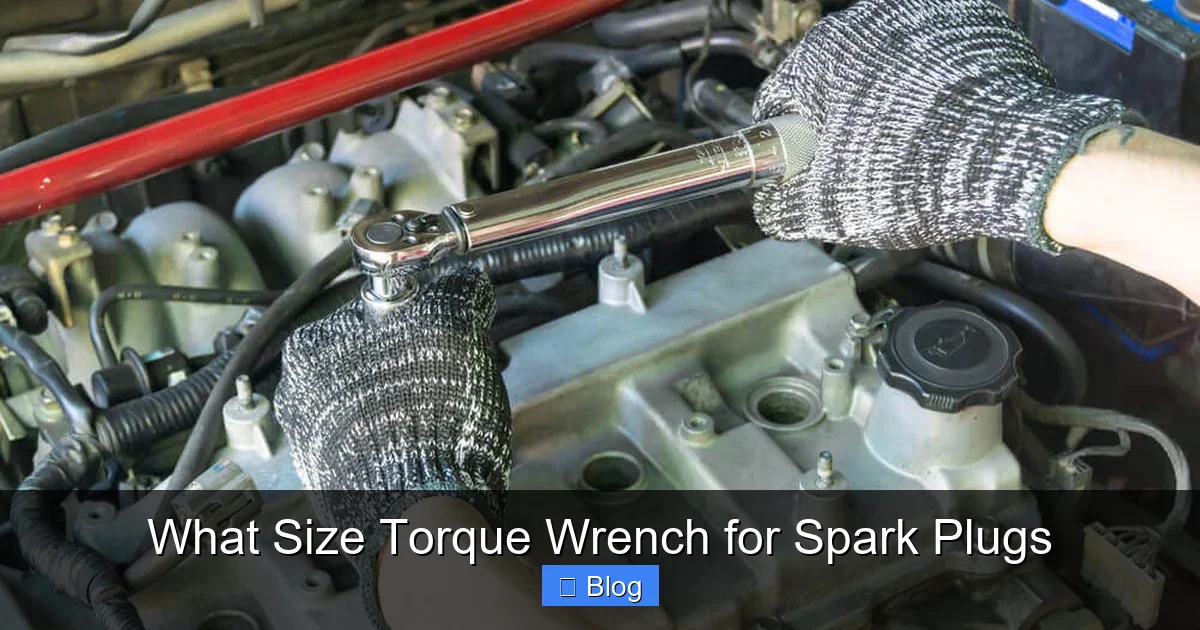
Visual guide about What Size Torque Wrench for Spark Plugs
Image source: vehiclefixing.com
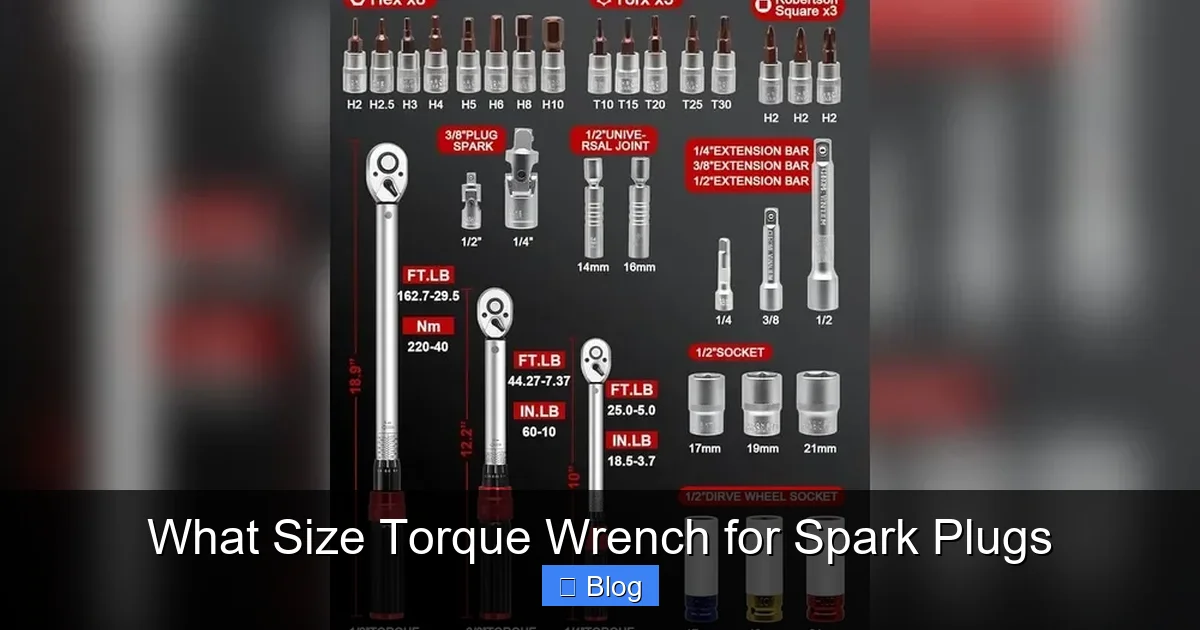
Visual guide about What Size Torque Wrench for Spark Plugs
Image source: vehicleetc.com
Understanding Spark Plug Torque: Why It Matters So Much
Imagine trying to tighten a bolt on a delicate piece of machinery without knowing how tight is too tight, or not tight enough. That’s essentially what you’re doing if you install spark plugs without a torque wrench. Spark plugs are precision instruments, and their proper seating in the cylinder head is vital for several reasons:
- Optimal Heat Transfer: Spark plugs are designed to transfer heat away from their tips into the cylinder head. If a plug is too loose, it won’t make full contact, leading to poor heat transfer, overheating, pre-ignition, and potentially melting the electrode.
- Secure Seating: A properly torqued spark plug won’t vibrate loose, preventing compression leaks, misfires, and potential damage to the plug or cylinder head.
- Preventing Damage: Overtightening is a common and costly mistake. It can strip the delicate threads in your cylinder head (an expensive repair!), crack the spark plug’s ceramic insulator, or even deform the plug itself, leading to misfires or complete failure. Undertightening, on the other hand, can cause the plug to back out, leading to compression loss and engine damage.
- Proper Gasket Compression: Many spark plugs use a crush washer or a tapered seat to seal against the cylinder head. Correct torque ensures this gasket or seat is compressed just enough to create a gas-tight seal without over-compressing and deforming it.
Ultimately, using the correct torque wrench for spark plugs and following the manufacturer’s specifications protects your engine, optimizes performance, and saves you money on potential repairs down the line.
Types of Torque Wrenches: Finding Your Match
Not all torque wrenches are created equal. Each type has its pros, cons, and ideal applications. Understanding them will help you select the best tool for your spark plug job.
Click-Type Torque Wrenches
This is arguably the most popular and recommended type for general automotive use, especially for spark plugs. When you reach the preset torque value, the wrench produces an audible “click” and a slight tactile jolt, letting you know to stop tightening. They are precise, reliable, and come in various drive sizes and torque ranges.
- Pros: Easy to use, excellent accuracy, clear feedback, durable.
- Cons: Requires calibration, must be stored at the lowest setting to maintain accuracy, generally more expensive than beam types.
- Ideal for: Spark plugs, wheel nuts, engine components – anything requiring consistent, repeatable torque.
Beam-Type Torque Wrenches
These are the simplest and often most affordable torque wrenches. They feature a long main beam with a smaller indicator beam and a scale. As you apply force, the main beam flexes, and the indicator beam moves across the scale, showing the applied torque. You read the torque visually as you tighten.
- Pros: Very durable (no internal mechanisms to break), never needs calibration (inherently accurate), affordable.
- Cons: Requires careful visual reading, can be less precise in tight spaces or awkward angles, slower to use.
- Ideal for: Occasional use, situations where visual confirmation is preferred, or for checking torque after using another type of wrench.
Digital Torque Wrenches
The most advanced and often the most expensive option, digital torque wrenches provide a precise reading on a digital display. Many offer multiple measurement units (ft-lbs, N-m, in-lbs), audible and visual alarms when nearing or reaching the target torque, and some even store torque data. Some can measure in both peak hold and track modes.
- Pros: Highest accuracy, multiple functions, very easy to read, some offer data logging.
- Cons: Expensive, requires batteries, can be sensitive to drops or impacts.
- Ideal for: Professional mechanics, high-precision applications, or anyone wanting the best technology available.
Determining the Right Torque Wrench Size for Spark Plugs
When we talk about “size” for a torque wrench, we’re primarily concerned with two things: its drive size and its torque range.
Drive Size
The drive size refers to the square lug that connects to your sockets. Common drive sizes are 1/4-inch, 3/8-inch, and 1/2-inch.
- 1/4-inch drive: Typically used for very low torque applications (e.g., small engine components, fasteners in inch-pounds). While some spark plugs have very low torque, a 1/4-inch wrench might be too small for the leverage needed and may not have the right torque range.
- 3/8-inch drive: This is generally the ideal and most versatile drive size for spark plugs. Most spark plug sockets are 3/8-inch, and the torque range of most 3/8-inch drive wrenches perfectly covers typical spark plug specifications.
- 1/2-inch drive: Best for high-torque applications like wheel lug nuts, suspension components, or larger engine bolts. A 1/2-inch drive torque wrench often has a higher minimum torque setting, making it inaccurate or unsuitable for the lower torque values required by spark plugs.
For almost all passenger car spark plug applications, a 3/8-inch drive torque wrench is your best bet.
Torque Range
This is arguably the most critical factor. Spark plugs typically require a relatively low torque value. While it varies by vehicle and spark plug material (e.g., aluminum vs. cast iron heads, tapered seat vs. gasketed plugs), common torque values for spark plugs usually fall within the range of 10 to 30 ft-lbs (14 to 40 N-m).
When selecting a torque wrench, you want one where the spark plug’s required torque falls comfortably within the wrench’s mid-range. A wrench is most accurate in the middle 70-80% of its specified range. Avoid using a wrench at its extreme minimum or maximum settings.
For example, if your spark plugs require 18 ft-lbs, a torque wrench with a range of 5-80 ft-lbs or 10-100 ft-lbs would be suitable. A wrench with a range of 20-150 ft-lbs would have 18 ft-lbs too close to its minimum, reducing accuracy.
Quick Reference: Common Torque Wrench Characteristics for Spark Plugs
Torque Wrench Selection Guide for Spark Plugs
| Feature | Recommendation for Spark Plugs | Why It Matters |
|---|---|---|
| Type | Click-Type (or Digital) | Audible/tactile feedback and high accuracy are crucial for preventing over/under-tightening. |
| Drive Size | 3/8-inch | Matches common spark plug socket sizes and provides appropriate leverage for low torque. |
| Torque Range (ft-lbs) | Typically 10-80 ft-lbs (or 5-100 ft-lbs) | Ensures the specific spark plug torque (10-30 ft-lbs) falls within the wrench’s most accurate mid-range. |
| Torque Range (N-m) | Typically 14-100 N-m (or 7-135 N-m) | Metric equivalent for spark plug torque (14-40 N-m), offering the same accuracy benefits. |
| Measurement Units | Matches vehicle manual (ft-lbs or N-m) | Prevents conversion errors and ensures exact adherence to specifications. |
Spark Plug Feels Loose After Torquing
If you’ve torqued the plug and it still feels loose, stop immediately. Do not attempt to re-torque forcefully. This could indicate stripped threads in the cylinder head. Inspect the spark plug threads for damage. If the cylinder head threads are stripped, this is a serious issue requiring professional repair, often involving a thread repair kit (like a Helicoil or Time-Sert) or cylinder head replacement.
Spark Plug Feels Too Tight/Resistant
If you’re hand-tightening and encounter resistance before the plug is fully seated, or if the torque wrench clicks at a very low setting, it could be cross-threading. Back the plug out, inspect both the plug and cylinder head threads carefully. Ensure the plug is perfectly straight when starting to thread it in. Never force a spark plug into place.
Over-tightened a Spark Plug
If you’ve accidentally over-tightened a spark plug, the damage may already be done (stripped threads, cracked ceramic, deformed plug). If it hasn’t visibly damaged anything, and you realize it immediately, you might get away with backing it out and re-torquing it correctly (though this is not ideal for the crush washer). However, if there’s any doubt about damage, it’s safer to remove the plug, inspect it thoroughly for cracks, electrode damage, or thread deformation, and replace it if necessary. If the threads in the cylinder head feel damaged, seek professional advice.
Conclusion
Choosing the correct torque wrench for spark plugs and using it properly is not just good practice; it’s a fundamental part of responsible engine maintenance. By understanding the different types of wrenches, identifying the right drive size and torque range, and diligently following the steps for installation, you can prevent costly damage and ensure your engine performs optimally. Invest in a quality 3/8-inch drive click-type torque wrench, always consult your vehicle’s specifications, and never underestimate the importance of precision. Your engine will thank you for it!

Sagor Jahan is the founder and author of Automopromo.com, dedicated to delivering insightful tips, reviews, and updates in the automotive and promotional industry. With a passion for innovation and clear guidance, Sagor helps readers make informed decisions and stay ahead in the ever-evolving automotive world.