

Why don’t diesel engines have spark plugs? Diesel engines do not use spark plugs because they ignite fuel using high compression instead of a spark. In a diesel engine, air is compressed to a very high pressure, which raises its temperature. When diesel fuel is injected into this hot compressed air, it automatically ignites, eliminating the need for spark plugs.
This process is called compression ignition, and it is the main difference between diesel and gasoline engines. Gasoline engines require spark plugs to ignite the fuel-air mixture, but diesel fuel burns when exposed to the extreme heat created during compression. This design also helps diesel engines produce strong torque and better fuel efficiency.
However, some diesel engines use glow plugs, especially in cold weather. Glow plugs help warm the air in the combustion chamber so the engine can start more easily. Once the engine is running, the high compression continues to ignite the fuel without any spark.
Key Takeaways
- Compression Ignition: Diesel engines ignite fuel by compressing air to extremely high temperatures, eliminating the need for spark plugs.
- Higher Compression Ratios: Diesel engines compress air at ratios of 14:1 to 25:1, compared to 8:1 to 12:1 in gasoline engines.
- Fuel Injection Timing: Fuel is injected directly into the combustion chamber at the precise moment when compressed air is hot enough to ignite it.
- No Spark Plugs or Ignition Coils: Diesels use glow plugs only for cold starts, not for ongoing combustion.
- Greater Fuel Efficiency: The high compression and lean-burn combustion make diesel engines more efficient than gasoline counterparts.
- Durability and Torque: Diesel engines are built stronger to handle high pressures, delivering more torque for heavy-duty applications.
- Environmental Trade-offs: While more efficient, older diesel engines produce higher NOx and particulate emissions without modern controls.
Quick Answers to Common Questions
Tip/Question?
Can you convert a gasoline engine to run like a diesel?
No, gasoline engines aren’t designed for the high compression ratios needed for diesel combustion. The engine block, pistons, and fuel system would need major modifications.
Tip/Question?
Do diesel engines ever use spark plugs?
No, not for combustion. Some experimental or hybrid designs may use spark-assisted ignition, but standard diesel engines rely solely on compression.
Tip/Question?
Why do diesels last longer?
Diesel engines are built with heavier components to handle high pressures, resulting in greater durability and longer service life.
Tip/Question?
Is diesel fuel more efficient than gasoline?
Yes, diesel fuel contains about 10-15% more energy per gallon, and diesel engines convert more of that energy into useful work.
Tip/Question?
Can glow plugs fail?
Yes, glow plugs can burn out over time, especially in cold climates. Regular inspection and replacement prevent cold-start issues.
Why Don’t Diesel Engines Have Spark Plugs? A Complete How-To Guide
If you’ve ever looked under the hood of a diesel engine, you might have noticed something missing: spark plugs. Unlike gasoline engines, which rely on spark plugs to ignite the air-fuel mixture, diesel engines operate differently. This guide will walk you through the science, mechanics, and practical reasons why diesel engines don’t need spark plugs. By the end, you’ll understand how compression ignition works, why it’s more efficient, and what components actually make a diesel engine run.
How Diesel Engines Work: The Basics
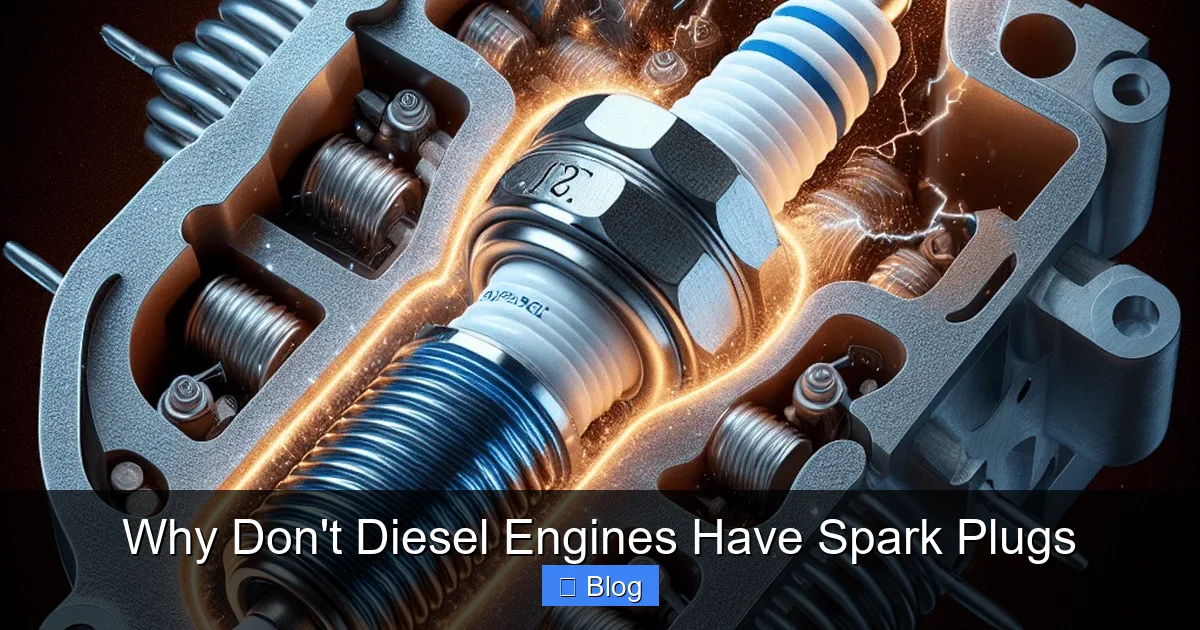
Visual guide about Why Don’t Diesel Engines Have Spark Plugs
Image source: sparkplugss.com
To understand why diesel engines don’t have spark plugs, you first need to know how they operate. Diesel engines use a process called compression ignition, which is fundamentally different from the spark ignition used in gasoline engines.
In a gasoline engine, a spark plug creates a small electric spark at the right moment to ignite a mixture of air and fuel. This spark initiates combustion, pushing the piston down and powering the engine. But in a diesel engine, there’s no spark plug. Instead, the engine compresses air so intensely that it becomes extremely hot—hot enough to ignite diesel fuel when it’s injected.
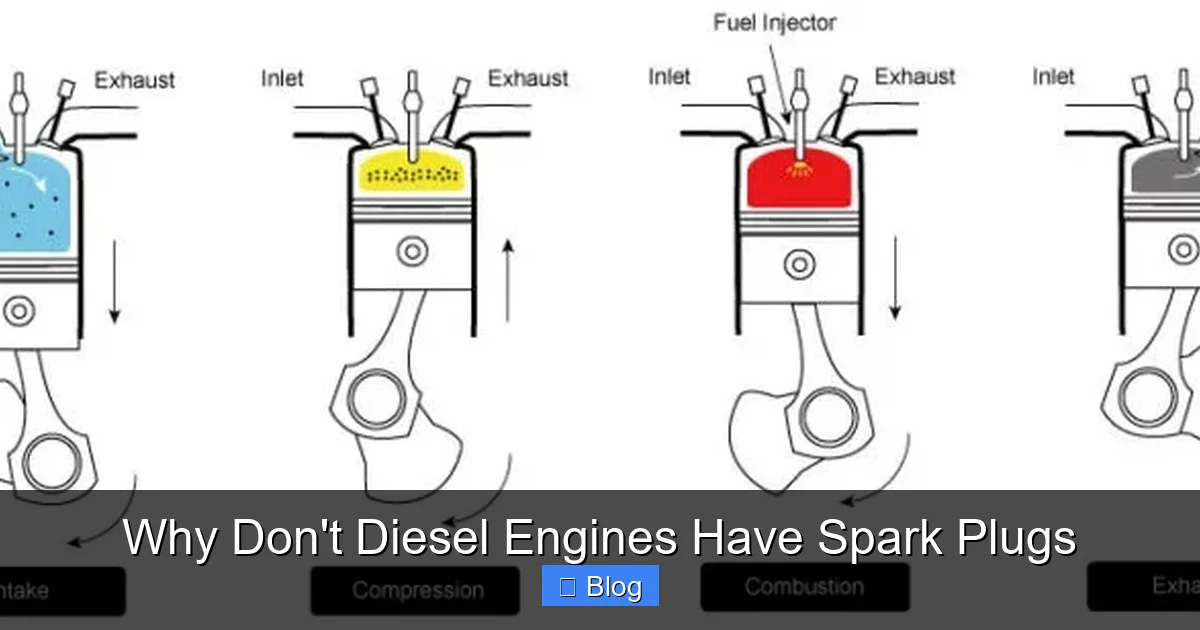
Step 1: Intake Stroke – Drawing in Air
The diesel engine cycle begins with the intake stroke. The piston moves down, and only clean air (no fuel) is drawn into the cylinder through the intake valve. This is a key difference from gasoline engines, which mix air and fuel before entering the cylinder.
Step 2: Compression Stroke – Heating the Air
Next comes the compression stroke. The piston moves back up, compressing the air in the cylinder. Diesel engines have much higher compression ratios—typically between 14:1 and 25:1—compared to gasoline engines (8:1 to 12:1). This intense compression raises the air temperature to between 700°F and 1000°F (370°C to 540°C).
Step 3: Fuel Injection – Ignition Without a Spark
At the top of the compression stroke, fuel is injected directly into the hot, compressed air. The extreme heat causes the diesel fuel to ignite instantly—no spark needed. This self-ignition is the core principle of diesel engines.
Step 4: Power Stroke – Driving the Piston
The rapid expansion of burning fuel forces the piston down, creating the power stroke. This motion turns the crankshaft and powers the vehicle or machine.
Step 5: Exhaust Stroke – Clearing the Cylinder
Finally, the exhaust valve opens, and the piston moves up again to push out the burnt gases. The cycle then repeats.
The Science Behind Compression Ignition
Visual guide about Why Don’t Diesel Engines Have Spark Plugs
Image source: askmyauto.com
The reason diesel engines don’t need spark plugs lies in the physical properties of diesel fuel and the principles of thermodynamics.
Diesel fuel has a higher energy density and a lower auto-ignition temperature than gasoline. When exposed to high heat and pressure, it naturally combusts. This property allows diesel engines to rely solely on compression to start combustion.
In contrast, gasoline is more volatile and requires a precise spark to ignite at the right time. Without a spark, gasoline won’t ignite reliably under compression alone—this is why gasoline engines must have spark plugs.
Why High Compression Works
The high compression ratio in diesel engines is essential. As air is compressed, its molecules move faster and collide more frequently, generating heat. This process follows the ideal gas law: when volume decreases, temperature increases.
For example, imagine squeezing a bicycle pump quickly—your hand feels the pump get warm. That’s compression heating the air inside. In a diesel engine, this effect is amplified to extreme levels, creating temperatures high enough to ignite fuel on contact.
What Replaces Spark Plugs in Diesel Engines?
Since diesel engines don’t use spark plugs, you might wonder what helps them start, especially in cold weather. The answer is glow plugs.
Glow Plugs: Cold Start Assist
Glow plugs are small heating elements installed in the cylinder head. They don’t ignite the fuel during normal operation—instead, they preheat the combustion chamber during cold starts.
When you turn the key in a diesel vehicle, the glow plugs heat up for a few seconds before fuel injection begins. This ensures the air in the cylinder is warm enough to ignite the fuel, even when the engine is cold.
Once the engine is running, the heat from compression takes over, and the glow plugs are no longer needed. They’re like a “jump start” for cold mornings, not a replacement for spark plugs.
Fuel Injectors: Precision Delivery
Another critical component is the fuel injector. In modern diesel engines, high-pressure injectors spray a fine mist of fuel directly into the combustion chamber at the exact moment when compressed air is hottest.
This precise timing ensures efficient combustion and minimizes emissions. Advanced systems like common rail injection allow for multiple injections per cycle, improving performance and fuel economy.
Advantages of No Spark Plugs
Eliminating spark plugs offers several benefits for diesel engines.
Greater Fuel Efficiency
Because diesel engines compress air more, they extract more energy from each drop of fuel. This results in better fuel economy—often 20% to 35% better than gasoline engines.
Higher Torque Output
The high compression and slow-burning diesel fuel produce strong, low-end torque. This makes diesel engines ideal for trucks, buses, ships, and construction equipment that need to haul heavy loads.
Longer Engine Life
Diesel engines are built with stronger components to withstand high pressures. As a result, they often last much longer than gasoline engines—many diesel vehicles exceed 300,000 miles with proper maintenance.
Fewer Ignition System Failures
Without spark plugs, ignition coils, or distributor caps, there are fewer parts to fail. This reduces maintenance costs and increases reliability, especially in harsh environments.
Common Misconceptions About Diesel Engines
Despite their advantages, diesel engines are often misunderstood.
Misconception 1: Diesel Engines Are Loud and Dirty
Older diesel engines were noisy and produced black smoke, but modern diesels are cleaner and quieter. Advanced emission controls like diesel particulate filters (DPF) and selective catalytic reduction (SCR) reduce pollutants significantly.
Misconception 2: Glow Plugs Are Like Spark Plugs
Glow plugs only assist during startup. They don’t create sparks or ignite fuel during normal operation. Confusing them with spark plugs leads to misunderstandings about how diesel combustion works.
Misconception 3: Diesel Fuel Is Just Thicker Gasoline
Diesel fuel is chemically different—it has longer hydrocarbon chains and higher energy content. It’s not interchangeable with gasoline, and using the wrong fuel can damage the engine.
Troubleshooting: What If a Diesel Engine Won’t Start?
Even without spark plugs, diesel engines can have starting issues. Here’s how to diagnose common problems.
Problem: Engine Cranks But Won’t Start
- Check glow plugs: If they’re faulty, the engine may not start in cold weather. Use a multimeter to test resistance.
- Inspect fuel injectors: Clogged or malfunctioning injectors can prevent proper fuel delivery.
- Verify fuel quality: Contaminated or old diesel fuel can cause ignition problems.
Problem: Hard Starting in Cold Weather
- Use a block heater: This warms the engine block overnight, making cold starts easier.
- Switch to winter diesel: Cold-weather diesel has additives to prevent gelling.
- Ensure battery is strong: Diesel engines require high cranking power; a weak battery can prevent starting.
Problem: Rough Idle or Misfires
- Clean or replace air filters: Restricted airflow affects combustion.
- Check for air in fuel lines: Air bubbles can disrupt fuel delivery.
- Scan for error codes: Modern diesels have onboard diagnostics that can pinpoint issues.
Conclusion: The Power of Compression
Diesel engines don’t have spark plugs because they don’t need them. Instead, they use the power of compression to heat air to temperatures high enough to ignite fuel on contact. This process, known as compression ignition, is more efficient, durable, and powerful than spark ignition.
From heavy-duty trucks to marine generators, diesel engines dominate applications where torque, longevity, and fuel economy matter. While they require different maintenance and care, their design is a testament to engineering ingenuity.
Understanding why diesel engines lack spark plugs helps you appreciate the science behind their performance. Whether you’re a mechanic, truck driver, or just curious, knowing how compression ignition works gives you a deeper insight into one of the most reliable engine technologies in the world.

Sagor Jahan is the founder and author of Automopromo.com, dedicated to delivering insightful tips, reviews, and updates in the automotive and promotional industry. With a passion for innovation and clear guidance, Sagor helps readers make informed decisions and stay ahead in the ever-evolving automotive world.

