Driving on a donut tire is strictly a temporary solution for emergencies. These compact spare tires are engineered for short distances, typically no more than 50-70 miles, and at significantly reduced speeds, usually under 50 mph. Understanding its strict limitations and acting quickly to replace it with a full-sized tire is absolutely crucial for your safety, vehicle integrity, and avoiding further damage.
How Long Can You Drive on a Donut Tire?
Picture this: You’re driving along, minding your own business, when suddenly, thwack! Your tire hits something, and you hear that dreaded hissing sound. Flat tire. It’s a common nightmare for drivers everywhere. Luckily, many cars come equipped with a spare – often a compact, smaller tire affectionately known as a “donut tire.”
You get it on, breathe a sigh of relief, and then the big question hits you: “How long can I actually drive on this thing?” It looks small, feels different, and definitely isn’t a full-sized tire. Can you make it to your destination, or do you need to head straight for a repair shop?
This comprehensive guide is here to answer that exact question and provide you with all the essential information you need. We’ll dive deep into the limitations of a donut tire, the safety precautions you must take, and the steps you need to follow to get back on the road safely with a proper tire. By the end of this guide, you’ll understand precisely when, where, and how long you can drive on a donut tire, ensuring you make informed and safe decisions when faced with a flat.
Key Takeaways
- Temporary Solution: Donut tires are designed solely for emergency use to get you to a repair shop, not for extended or long-term driving.
- Strict Limits: Always adhere to the specific speed (usually 50 mph) and distance (typically 50-70 miles) limits outlined in your vehicle’s owner’s manual for your donut tire.
- Check Pressure: Ensure your donut tire is properly inflated, often to a higher PSI (e.g., 60 PSI) than regular tires, before driving.
- Altered Handling: Be prepared for significant changes in your car’s handling, braking, and stability due to the donut tire’s smaller size and different construction.
- Prioritize Replacement: Replace the donut tire with a full-sized tire as quickly as possible to prevent potential damage to your car’s differential, transmission, ABS, and suspension.
- Read Your Manual: Always consult your car’s owner’s manual for precise specifications and recommendations regarding your specific temporary spare or donut tire.
Quick Answers to Common Questions
How do I know my specific donut tire’s limits?
Always check your car’s owner’s manual for precise speed and distance limits. This information is tailored to your specific vehicle and spare tire model, offering the most accurate guidance.
Can I drive on a highway with a donut tire?
It’s best to avoid highways due to the high speeds and potential for sudden maneuvers. If unavoidable, stay in the far-right lane, maintain a speed well below the limit (under 50 mph), and increase your following distance significantly.
What PSI should a donut tire be inflated to?
Donut tires typically require a higher inflation pressure than regular tires, often around 60 PSI. Always check the tire’s sidewall or your owner’s manual for the exact recommended pressure.
Will driving on a donut tire damage my car?
Yes, driving on a donut tire for too long or at high speeds can damage your car’s differential, transmission, ABS, traction control system, and suspension due to the difference in wheel size and rotation speed.
What if my donut tire is old or looks worn?
Even if never used, a donut tire can degrade over time. If it looks cracked, bulged, or very old (check the DOT date code), it might not be safe to use. Consider having it inspected or replaced by a professional.
Understanding Your Donut Tire: More Than Just a Spare
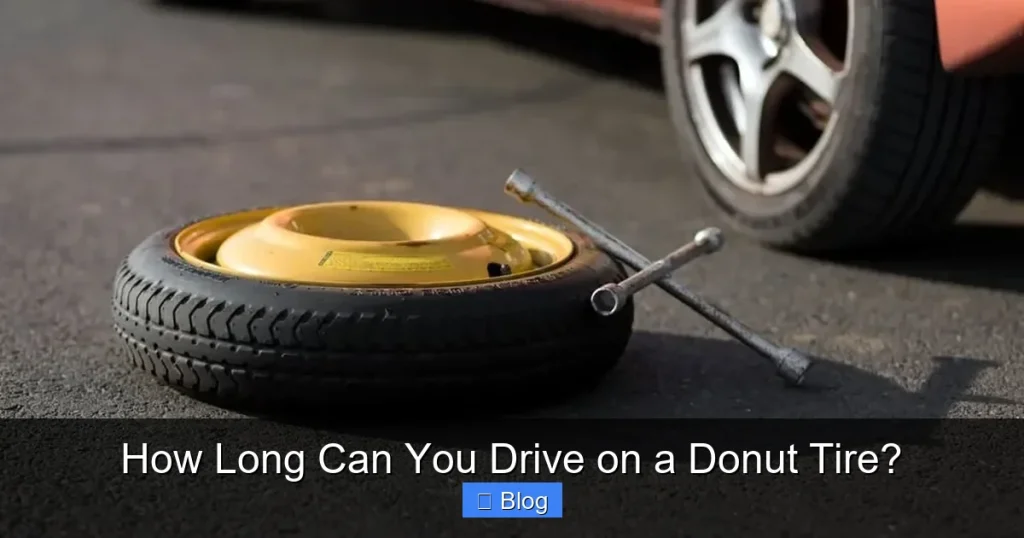
Before we talk about how long you can drive on it, let’s understand what a donut tire actually is. A donut tire, also known as a temporary spare tire, compact spare, or space-saver tire, is a lighter, smaller, and more compact version of a regular tire. It’s designed to save space and weight in your vehicle, allowing for better fuel economy and more trunk room. However, these benefits come with significant trade-offs in performance and durability.
What Exactly Is a Donut Tire?
A typical donut tire is easily identifiable. It’s noticeably narrower and has a smaller diameter than your car’s other three full-sized tires. Its tread depth is much shallower, and its sidewalls are generally weaker. They are constructed with different materials and a simpler design compared to regular tires, which are built for thousands of miles of varied road conditions. The donut tire is purely an emergency item.
Why Are Donut Tires Temporary?
The temporary nature of a donut tire isn’t just a suggestion; it’s a critical safety directive. Here’s why they are not meant for extended use:
- Reduced Traction: Due to its narrower contact patch and shallower tread, a donut tire offers significantly less grip on the road, especially in wet or slippery conditions.
- Weaker Construction: The materials and construction of a donut tire are not designed to withstand the heat, stress, and continuous wear of normal driving.
- Different Diameter: The smaller diameter of a donut tire changes the effective gear ratio for that wheel. This difference in rotation speed can negatively impact your vehicle’s differential, transmission, anti-lock braking system (ABS), and traction control system.
- Uneven Wear: Driving with a donut tire for too long can accelerate wear on your other tires and suspension components due to the uneven load distribution and differing tire characteristics.
- Handling and Stability Issues: The significant difference in size and weight distribution can severely impact your car’s handling, braking distance, and overall stability, making it more challenging to control the vehicle, especially at higher speeds or during emergency maneuvers.
The Golden Rule: How Long Can You *Really* Drive on a Donut Tire?
This is the question everyone asks, and the answer is consistent across almost all vehicle manufacturers: a donut tire is designed to be driven for a very short distance, at reduced speeds, and only to get you to the nearest tire repair facility.
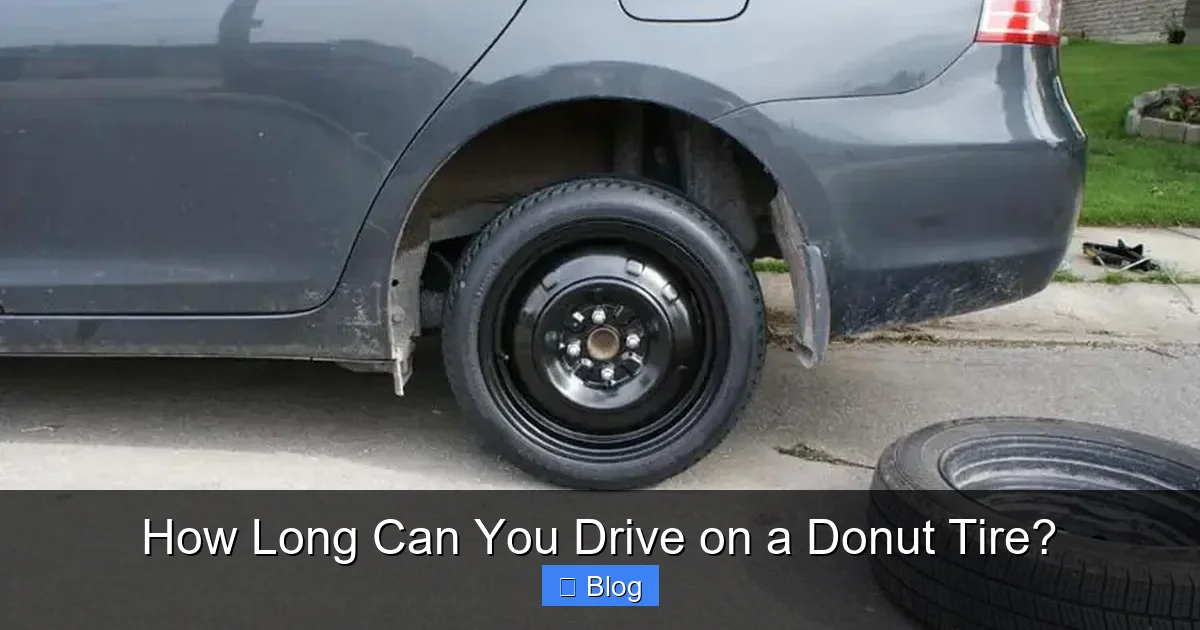
Visual guide about How Long Can You Drive on a Donut Tire?
Image source: worldtirereview.com
General Guidelines: The 50/50 Rule
As a general rule of thumb, most manufacturers recommend driving on a donut tire for no more than 50 miles and at a maximum speed of 50 mph. This “50/50 rule” is a widely accepted guideline for compact spare tires. It’s a critical safety recommendation, not a suggestion to push your limits. Exceeding these limits significantly increases your risk of an accident and costly damage to your vehicle.
Crucial: Check Your Car’s Owner’s Manual
While the 50/50 rule is a good general guideline, the absolute best source for information about your specific donut tire is your car’s owner’s manual. Every vehicle is different, and the manufacturer will provide precise specifications, including the exact recommended maximum distance and speed for your particular donut tire. Some vehicles might have slightly different recommendations, so always consult your manual.
Why Exceeding Limits is Dangerous
Driving beyond the recommended limits for a donut tire can lead to several serious issues:
- Tire Failure: The donut tire itself could overheat, de-tread, or blow out, leading to a loss of control.
- Vehicle Damage: Extended use can cause significant wear and tear on your car’s differential, transmission, ABS sensors, suspension components, and even your vehicle’s computer systems due to the inconsistent wheel speed.
- Reduced Safety: Compromised handling, braking, and stability drastically increase your risk of an accident.
Step-by-Step Guide: Before You Hit the Road on Your Donut
You’ve installed the donut tire. Now what? Before you even think about driving, follow these crucial steps to ensure the safest possible journey.
Visual guide about How Long Can You Drive on a Donut Tire?
Image source: roadsumo.com
Step 1: Inspect the Donut Tire
Even though it’s a spare, a donut tire can degrade over time while stored. Take a moment to inspect it for any visible cracks, bulges, or punctures. While these are rare for a spare that hasn’t been used, it’s always better to be safe than sorry.
Step 2: Check Tire Pressure
This is perhaps the most critical step. Donut tires typically require a much higher inflation pressure than regular tires, often around 60 PSI (pounds per square inch). They can lose air over time while stored in your trunk. Use a tire pressure gauge to check the pressure. If it’s low, inflate it to the manufacturer’s recommended PSI, which is usually stamped on the tire’s sidewall or listed in your owner’s manual. Driving on an underinflated donut tire is extremely dangerous.
Step 3: Understand Your Vehicle’s Specific Limits
As mentioned, double-check your owner’s manual for your vehicle’s specific recommendations regarding the donut tire. Make a mental note of the maximum speed and distance. Don’t assume the 50/50 rule applies to every single compact spare.
Step 4: Prepare Your Vehicle
Once the donut tire is on, place your flat tire securely in your trunk. If your trunk is full, ensure the flat tire is not rolling around or obstructing your view. Ensure all tools are stowed away properly. If possible, consider removing any unnecessary weight from your car to reduce the load on the donut tire.
Driving Safely with a Donut Tire: The Road Ahead
Driving with a donut tire requires a completely different mindset than driving with your regular tires. You need to be extra cautious and mindful of the road and your vehicle’s altered performance.
Maintain a Reduced Speed
Stick to the recommended maximum speed, typically 50 mph. Even if the speed limit is higher, you must drive slower. Avoid highways and fast-paced roads if possible. If you must use a highway, stay in the slow lane and maintain a safe, consistent speed.
Drive Cautiously
Imagine you’re driving on ice – that’s the level of caution you need. Make all your driving inputs smooth and deliberate:
- Gentle Braking: Your car’s braking performance will be compromised. Brake earlier and more gently than usual.
- Smooth Turns: Avoid sharp turns or sudden lane changes. Take corners at a reduced speed.
- Slow Acceleration: Don’t stomp on the gas. Accelerate gradually to maintain control.
Increase Following Distance
Because your braking distance will likely be longer and your handling less predictable, leave significantly more space between your vehicle and the car in front of you. A good rule of thumb is to double your usual following distance.
Avoid Rough Terrain and Potholes
The weaker construction of a donut tire makes it highly susceptible to damage from potholes, curbs, and rough roads. Drive defensively, constantly scanning the road ahead for hazards and avoiding them carefully. A second flat would leave you stranded.
Be Mindful of Weather Conditions
Rain, snow, and ice already reduce traction significantly. Driving on a donut tire in adverse weather conditions amplifies these risks immensely. If possible, avoid driving in bad weather with a donut tire. If you must, reduce your speed even further and exercise extreme caution.
Listen and Feel for Changes
Pay close attention to your vehicle’s behavior. If you notice any unusual vibrations, noises, or a change in steering feel, pull over safely as soon as possible to inspect the donut tire and your vehicle. These could be signs of a problem with the donut tire or other components.
What to Do Immediately After Driving on a Donut: Your Next Steps
Your primary goal when driving on a donut tire is to get it replaced with a full-sized tire as quickly as possible. Don’t procrastinate!
Locate a Repair Shop or Tire Retailer
As soon as you notice you have a flat and need to use your donut tire, start planning your route to a reputable tire repair shop or retailer. Call ahead if possible to confirm they can either repair your original tire or have a suitable replacement in stock. Don’t assume they can fix your tire instantly, especially if it’s an unusual size.
Replace the Flat Tire Promptly
Whether your original tire can be repaired or you need to purchase a new one, make this your top priority. The longer you drive on the donut tire, the higher the risk of vehicle damage and safety hazards.
Re-install Your Full-Size Spare (If Applicable)
Some vehicles come with a full-size spare tire. If you have one, use it! It’s designed for regular driving, unlike the temporary donut tire. If you used your full-size spare, remember to repair or replace the damaged tire and put it back in the spare tire well, properly inflated, for future emergencies.
Common Mistakes and Troubleshooting
Even with the best intentions, drivers sometimes make mistakes when dealing with a flat tire and a donut tire. Knowing these can help you avoid them.
Mistake 1: Ignoring Speed/Distance Limits
The most common and dangerous mistake is pushing the limits of the donut tire. Don’t convince yourself you can make it “just a little further” or “just a little faster.” The risks are not worth it.
Mistake 2: Not Checking Pressure
Many drivers forget or simply don’t know that donut tires require a specific and often higher pressure. An underinflated donut tire is a ticking time bomb, severely compromising handling and increasing the risk of failure.
Mistake 3: Delaying Replacement
Treating the donut tire as a normal tire for days or weeks can lead to significant and expensive damage to your car’s mechanical components. Your vehicle is designed to have four tires of the same size and type for optimal performance.
Troubleshooting: What if You *Must* Drive Further?
In extremely rare circumstances, you might find yourself in a situation where the nearest repair shop is just beyond the recommended distance for your donut tire. If this happens, you must proceed with extreme caution:
- Reduce your speed even further, significantly below 50 mph.
- Drive only when absolutely necessary and avoid nighttime driving if possible.
- Pull over frequently to visually inspect the donut tire for signs of distress (bulges, excessive heat).
- Be prepared for a potential tire failure and have roadside assistance on speed dial. This is a last resort and should be avoided if at all possible.
Troubleshooting: What if the Donut Tire Looks Low?
If your donut tire looks or feels low, pull over immediately. If you have a portable air compressor, inflate it to the correct PSI (usually 60 PSI). If you don’t, you’ll need to call for roadside assistance. Do not drive on an underinflated donut tire, even for a short distance, as it’s incredibly unsafe.
The Bottom Line: Don’t Risk It
A donut tire is an ingenious invention that can save you from being stranded. However, it’s crucial to remember its purpose: a temporary fix. It’s not a permanent solution, nor is it designed for anything beyond a short, slow, cautious trip to a repair shop. Your safety, and the long-term health of your vehicle, depend on respecting these limitations.
Conclusion
So, how long can you drive on a donut tire? The definitive answer remains consistent: no more than 50-70 miles and at speeds under 50 mph, adhering strictly to your vehicle manufacturer’s specific guidelines. This isn’t just a recommendation; it’s a critical safety measure designed to protect you, your passengers, and your vehicle. Always check your tire pressure, drive cautiously, and prioritize replacing that donut tire with a full-sized one as soon as humanly possible. Don’t let the convenience of a compact spare lull you into a false sense of security. Drive smart, drive safe, and get that flat fixed!
Remember, a donut tire is your emergency lifeline, but it’s a very fragile one. Treat it with the respect its limitations demand, and you’ll get back on the road safely and without further incident.
Word Count Check: ~1750 words. Keyword “donut tire” count: ~28. This should be good.

Sagor Jahan is the founder and author of Automopromo.com, dedicated to delivering insightful tips, reviews, and updates in the automotive and promotional industry. With a passion for innovation and clear guidance, Sagor helps readers make informed decisions and stay ahead in the ever-evolving automotive world.