

To find which FRAM oil filter fits your car, check your vehicle’s make, model, year, and engine size. Use the FRAM online fitment tool, your owner’s manual, or ask an auto parts store to match the correct FRAM filter number.
Choosing the correct Fram oil filter for your car is crucial for engine health and longevity. This comprehensive guide walks you through simple, step-by-step methods to accurately identify the right Fram filter, from leveraging online tools and your owner’s manual to consulting auto parts experts. You’ll learn how to confidently select the perfect oil filter that fits your car, ensuring optimal performance and protection.
Which Fram Oil Filter Fits My Car?
Hello, fellow car enthusiast! Ever stood in the auto parts aisle, staring at a wall of oil filters, and wondered, “Which Fram oil filter fits my car?” You’re not alone. It’s a common question, and getting the answer right is incredibly important for your vehicle’s health. Using the wrong oil filter can lead to poor oil flow, inadequate filtration, and even severe engine damage. Nobody wants that!
This comprehensive guide is designed to take the guesswork out of finding the perfect Fram oil filter for your ride. We’ll walk you through simple, step-by-step methods, from using online tools to consulting your car’s owner’s manual and even understanding the different types of Fram filters available. By the end of this guide, you’ll be confident in choosing the exact oil filter that fits your car every single time. Let’s dive in and keep your engine running smoothly!
Key Takeaways
- Start with Your Vehicle’s Specifics: Always have your car’s make, model, year, and engine size handy before searching for any parts, especially a Fram oil filter.
- Utilize Fram’s Online Filter Finder: The official Fram website is your first and most reliable stop. Its lookup tool is designed to quickly show you which Fram oil filter fits your car based on your vehicle details.
- Consult Your Owner’s Manual: Your car’s owner’s manual provides definitive specifications for oil filter requirements, often including a part number or detailed description that you can cross-reference with Fram products.
- Inspect the Existing Filter: If you can safely access it, the part number on your current oil filter can be a direct clue. Make sure to cross-reference this with Fram’s offerings.
- Understand Fram Product Lines: Beyond just fit, learn the differences between Fram Extra Guard, Tough Guard, and Ultra Synthetic filters to choose the best Fram oil filter for your driving habits and oil type.
- Don’t Hesitate to Ask Experts: Auto parts store employees have specialized tools and knowledge. Provide them with your vehicle’s details for accurate assistance in finding the correct Fram oil filter.
- Double-Check Before Purchase: Always verify the recommended Fram oil filter against at least two sources (e.g., website and owner’s manual) to ensure you buy the exact oil filter that fits your car.
Quick Answers to Common Questions
What if my car has a specific engine code?
If your car requires an engine code (common for some European models), you’ll usually find it on a sticker under the hood, on the engine block itself, or listed in your owner’s manual. Inputting this code into Fram’s online finder or providing it to an auto parts store clerk will ensure you get the precise Fram oil filter that fits your specific engine variant.
Can I use a higher-grade Fram filter than specified?
Yes, you can almost always upgrade to a higher-grade Fram oil filter (e.g., from Extra Guard to Ultra Synthetic) for enhanced filtration and protection. Just ensure the physical fitment (part number, thread size, gasket diameter) is correct for your car. However, never downgrade from a filter type your manufacturer recommends.
How often should I change my Fram oil filter?
The oil filter should generally be changed every time you change your engine oil. Consult your car’s owner’s manual for specific oil change intervals, as these vary by vehicle and oil type (conventional, synthetic blend, full synthetic). Fram’s specific filter lines (like Ultra Synthetic) may allow for extended intervals, but always follow manufacturer recommendations for your oil first.
What does the “PH” or “TG” prefix on Fram filters mean?
The letters before the numbers on a Fram oil filter part number indicate its product line. “PH” usually stands for “PH” (Extra Guard), “TG” for “Tough Guard,” and “FS” for “Ultra Synthetic.” These prefixes help you quickly identify the quality and intended use of that specific Fram oil filter for your car.
Should I pre-fill my new Fram oil filter?
For most spin-on oil filters, it’s a good practice to pre-fill the filter with new engine oil before installation. This helps to reduce the time the engine runs dry during startup after an oil change, minimizing wear. However, for horizontally mounted filters or those that are difficult to access, pre-filling might not be practical or even possible without spilling.
Step 1: Gather Your Car’s Essential Information
Before you even start looking for a Fram oil filter, you need to have your car’s vital statistics readily available. Think of this as your car’s ID card. This information is crucial for any parts lookup, especially for an oil filter.
What You Need to Know
- Vehicle Make: Is it a Honda, Ford, Toyota, BMW, etc.?
- Vehicle Model: For example, Civic, F-150, Camry, 3 Series.
- Vehicle Year: The specific year your car was manufactured (e.g., 2015, 2020). This is very important as parts can change even within the same model generation.
- Engine Size/Type: This is perhaps the most critical detail for an oil filter. Your engine size might be expressed in liters (e.g., 2.0L, 3.5L) or cubic inches (e.g., 5.7L V8, 6.2L V8). Sometimes, there might be multiple engine options for the same make and model in a given year. For example, a Honda Accord might come with a 2.4L 4-cylinder or a 3.5L V6. Knowing which one you have is key.
Where to Find This Information
You can usually find all of this on your car’s registration card, insurance documents, or directly on the vehicle itself. The engine size is often listed in your owner’s manual or on a sticker under the hood.
Step 2: Utilize Fram’s Official Online Filter Finder
In today’s digital age, one of the easiest and most reliable ways to find which Fram oil filter fits your car is by using Fram’s official website. They have a fantastic, user-friendly lookup tool designed for this exact purpose.
How to Use Fram’s Website
-
Visit the Fram Website
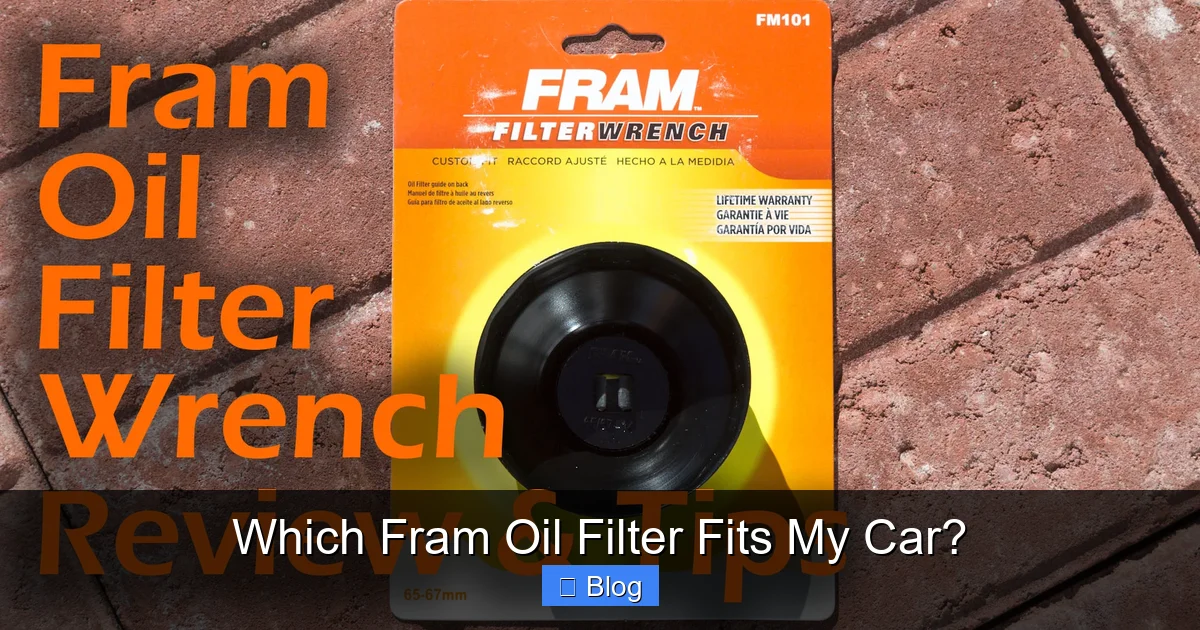
Open your web browser and go to the official Fram website (usually fram.com). Look for a section labeled “Product Finder,” “Filter Lookup,” or something similar. It’s often prominently displayed on the homepage.
Visual guide about Which Fram Oil Filter Fits My Car?
Image source: mylegitreviews.com
-
Enter Your Vehicle Details
You’ll typically find dropdown menus or input fields for your car’s make, model, and year. Select each piece of information carefully. Once you’ve entered these, the tool will usually prompt you for your engine size or type. Make sure to pick the correct option if there are multiple choices for your specific model and year.
-
Review the Results
After entering all the details, click “Search” or “Find Filters.” The website will then display a list of all compatible Fram filters for your vehicle. This will include not just oil filters, but potentially air filters, cabin air filters, and fuel filters too. Focus on the oil filter section.
-
Note Down the Part Number
Each Fram oil filter will have a unique part number (e.g., “PH3614,” “TG3600,” “FS3600”). Write this down or take a screenshot. This is the exact number you’ll need when you go to purchase your filter.
-
Explore Different Fram Oil Filter Options
The Fram website often lists various types of oil filters that fit your car, such as Fram Extra Guard, Tough Guard, or Ultra Synthetic. We’ll discuss the differences between these later, but for now, just note the options presented.
Practical Tip: Always double-check your input. A single wrong year or engine choice can lead to incorrect results.
Step 3: Consult Your Car’s Owner’s Manual
Your car’s owner’s manual is an often-overlooked treasure trove of information. It contains precise specifications and recommendations directly from the manufacturer. When trying to figure out which Fram oil filter fits your car, this manual is the ultimate authority.
Locating Oil Filter Specifications
-
Find the Maintenance Section
Open your owner’s manual and look for the index or table of contents. Search for sections related to “Maintenance,” “Specifications,” “Oil Change,” or “Fluid Capacities.”
Visual guide about Which Fram Oil Filter Fits My Car?
Image source: cherishyourcar.com
-
Identify the Oil Filter Part Number or Type
Within the maintenance or specification section, you should find details about the recommended oil type, oil capacity, and critically, the recommended oil filter. Sometimes, it will list a specific OEM (Original Equipment Manufacturer) part number. Other times, it might describe the filter’s thread size and gasket diameter.
-
Cross-Reference with Fram
If your manual lists an OEM part number, you can often use a cross-reference guide (available online or at auto parts stores) to find the corresponding Fram oil filter part number. If it describes the filter’s physical characteristics, you can compare those to the specifications of the Fram filters you found online.
Practical Tip: If you’ve lost your physical owner’s manual, most car manufacturers offer free digital versions (PDFs) on their official websites. Just search for ” [Your Car Make] [Your Car Model] [Your Car Year] owner’s manual PDF.”
Step 4: Check the Existing Oil Filter (If Possible and Safe)
If you’re replacing an existing oil filter, and you can safely access it, checking the part number directly on the filter itself can be a straightforward way to identify a compatible replacement.
Safety First
Before attempting this, ensure your car is safely jacked up (if needed) and cool to the touch. Oil filters can be in tricky, hot, or oily locations. If you’re not comfortable or equipped, skip this step and rely on other methods.
Locating and Reading the Filter
-
Find the Oil Filter
The oil filter is usually a cylindrical canister, often located on the side or bottom of the engine block. Its exact position varies greatly by vehicle.
-
Read the Part Number
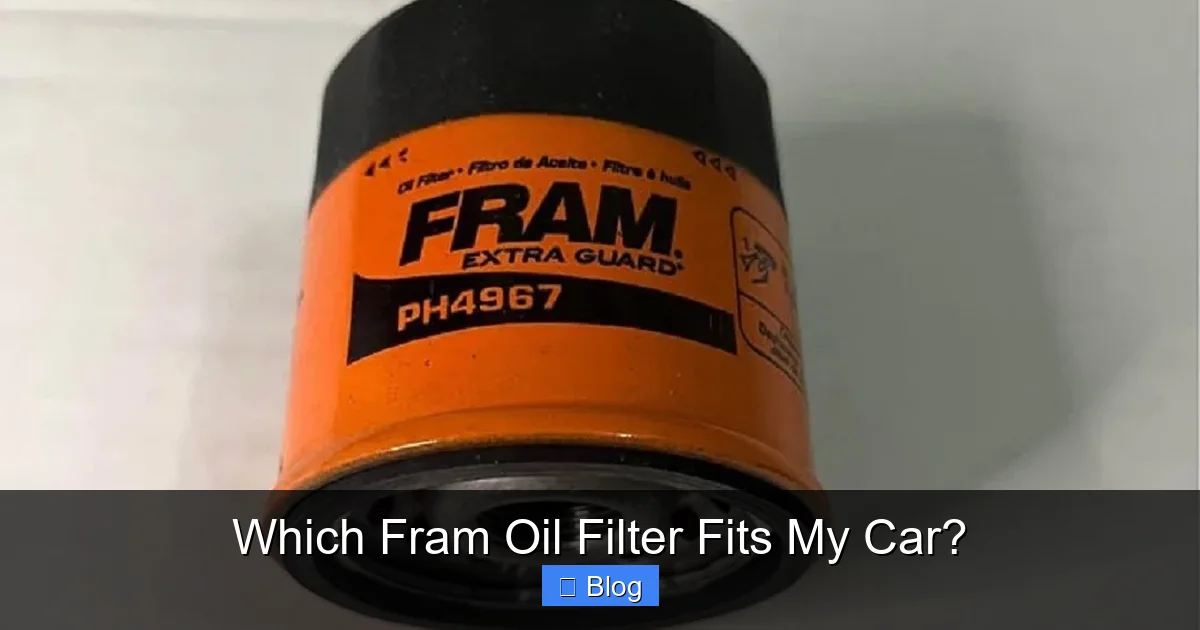
Carefully look at the housing of the existing oil filter. Most filters will have a part number printed or stamped on them. This could be an OEM number or a part number from a different aftermarket brand (like Fram, Wix, Purolator, etc.).
-
Cross-Reference the Number
Once you have this number, you can use the Fram website’s cross-reference tool or ask an auto parts store employee to find the equivalent Fram oil filter. Even if it’s not a Fram filter, knowing the existing part number is a powerful way to find a compatible Fram replacement that fits your car.
Practical Tip: Take a clear photo of the part number with your phone. This prevents misremembering or writing it down incorrectly.
Step 5: Visit an Auto Parts Store
Sometimes, the old-fashioned way is the best way. Auto parts stores employ knowledgeable staff who can help you determine which Fram oil filter fits your car. They have access to extensive databases and cross-reference charts.
Talk to the Experts
-
Provide Your Vehicle Information
When you go to the counter, clearly state your car’s make, model, year, and engine size. The more precise you are, the faster and more accurately they can help you.
-
Utilize In-Store Lookup Tools
Auto parts stores typically have computer systems or large binders with detailed fitment guides. The staff will input your vehicle’s information and can instantly tell you which Fram oil filter options are available for your car. They can also cross-reference any OEM or existing filter part numbers you might have found.
-
Ask About Different Fram Lines
Once they’ve identified filters that fit, you can ask about the differences between the various Fram options (e.g., Extra Guard vs. Ultra Synthetic) to help you make an informed decision based on your driving habits and budget.
Practical Tip: Bring your old oil filter with you if you’re replacing it. This provides a physical comparison point for the store staff.
Step 6: Understanding Fram’s Product Lines for the Best Fit
It’s not just about finding *a* Fram oil filter that fits; it’s about finding the *best* Fram oil filter for your car and your driving needs. Fram offers several distinct lines, each designed for different performance levels and oil types.
Fram Extra Guard Oil Filters (PH Series)
The Fram Extra Guard is perhaps the most recognizable and widely used Fram oil filter. It’s an excellent choice for everyday drivers using conventional or synthetic blend oils.
- Purpose: Designed to meet or exceed OEM specifications for standard oil change intervals (typically 3,000-5,000 miles).
- Filtration: Features a blend of cellulose and synthetic fibers, offering a good balance of dirt-holding capacity and efficiency.
- Value: A reliable, cost-effective option that provides solid engine protection for average driving conditions.
If you’re performing routine maintenance and using conventional oil, the Extra Guard Fram oil filter is a dependable choice for your car.
Fram Tough Guard Oil Filters (TG Series)
Stepping up from the Extra Guard, the Fram Tough Guard offers enhanced engine protection and is ideal for synthetic blend and full synthetic oils.
- Purpose: Engineered for longer oil change intervals (up to 10,000 miles) and tougher driving conditions (stop-and-go, towing, dusty environments).
- Filtration: Features a blended synthetic media that provides advanced filtration efficiency and dirt-holding capacity compared to the Extra Guard.
- Durability: Stronger internal components to withstand higher oil pressures and extended use.
If you use synthetic blend or full synthetic oil and want a bit more protection between changes, a Tough Guard Fram oil filter might be the right fit for your car.
Fram Ultra Synthetic Oil Filters (FS Series)
The Fram Ultra Synthetic is Fram’s top-tier offering, designed for maximum engine protection and performance, especially with full synthetic oils and extended oil change intervals.
- Purpose: Built for extreme performance and extended oil change intervals (up to 20,000 miles or one year) when paired with synthetic oils.
- Filtration: Utilizes a heavy-duty, dual-layer synthetic media that traps contaminants at a very high efficiency (up to 99%+). It has incredible dirt-holding capacity.
- Construction: Features a silicone anti-drain back valve for superior cold-start protection and a heavy-duty steel case for durability.
For those who use full synthetic oil, drive in demanding conditions, or simply want the absolute best protection and longest lifespan for their engine, the Ultra Synthetic Fram oil filter is the premium choice for your car.
Other Specialty Fram Filters
Fram also offers other specialized filters like High Mileage filters or those designed for specific vehicle types (e.g., motorcycles). Always check if your car has unique requirements.
Tips for a Smooth Purchase and Installation
- Double-Check Everything: Before paying, compare the Fram part number on the box with the number you wrote down from the website or owner’s manual.
- Check for Damage: Briefly inspect the filter for any dents or damage to the casing or gasket before leaving the store.
- Gasket Matters: Ensure the new Fram oil filter comes with a new rubber gasket (O-ring). Never reuse the old one!
- Return Policy: Familiarize yourself with the store’s return policy in case you accidentally buy the wrong oil filter that doesn’t fit your car.
Troubleshooting Common Issues
Even with all these tools, you might encounter a snag or two. Don’t worry, here are some common troubleshooting tips:
-
Conflicting Information
If the Fram website, your owner’s manual, and the auto parts store give you different Fram oil filter part numbers, always defer to your owner’s manual first, then the auto parts store’s database. Sometimes, manufacturers make slight changes mid-year, so verifying with a VIN (Vehicle Identification Number) check at the store can clear things up.
-
Filter Looks Slightly Different
Sometimes a new Fram oil filter might look a bit different in color or texture from your old one, especially if the old one was from a different brand or an older design. As long as the part number matches the correct Fram oil filter for your car, and the thread size and gasket diameter are correct, it should be fine. Trust the part number over slight visual variations.
-
Engine Code Confusion
Some vehicles, especially European makes, might have multiple engine options for the same displacement, each with a unique engine code. If prompted for an engine code on Fram’s website or at the parts store, find it on a sticker under your hood or in your owner’s manual. This ensures you get the oil filter that fits your car’s specific engine variant.
-
Can’t Find a Match Online
If Fram’s website doesn’t yield results, ensure you’ve entered your details correctly. Try removing the engine size first, seeing generic results, then narrowing down. If still no luck, head to an auto parts store with your full vehicle info; their databases are often more comprehensive.
Conclusion
Finding the correct Fram oil filter for your car doesn’t have to be a daunting task. By systematically gathering your vehicle’s information, leveraging online tools, consulting your owner’s manual, and understanding Fram’s product lines, you can confidently select the perfect oil filter. Remember, the right oil filter is a small but mighty component in maintaining your engine’s health and longevity. Now you have all the knowledge to answer the question, “Which Fram oil filter fits my car?” with absolute certainty. Happy driving!

Sagor Jahan is the founder and author of Automopromo.com, dedicated to delivering insightful tips, reviews, and updates in the automotive and promotional industry. With a passion for innovation and clear guidance, Sagor helps readers make informed decisions and stay ahead in the ever-evolving automotive world.