When tackling spark plug replacement, many wonder should you replace ignition coils when replacing spark plugs? This guide explains the connection between these parts, signs of wear, and when it’s smart to swap coils too. Save time and money by following our step-by-step advice for smoother engine runs.
This table helps you quickly assess your situation. Use it as a cheat sheet next time you’re under the hood.
Key Takeaways
- Coils and plugs work together: Ignition coils boost voltage for spark plugs; replacing both can prevent misfires and improve efficiency.
- Check for symptoms: Rough idling, poor acceleration, or check engine lights signal when you should replace ignition coils when replacing spark plugs.
- Not always necessary: If coils are under 100,000 miles and show no issues, you might skip replacement to cut costs.
- DIY vs. pro: Basic tools make spark plug swaps easy at home, but coil replacement needs caution to avoid electrical damage.
- Prevent future problems: Use quality parts and inspect wires during replacement for long-term reliability.
- Cost savings: Bundling replacements often reduces labor if done together, but test coils first.
Quick Answers to Common Questions
Always gap your plugs?
Yes, even pre-gapped plugs can shift in shipping. Use a feeler gauge for precision to avoid weak sparks.
Reuse old coil boots?
No, they harden over time and cause poor connections. New ones ensure reliable voltage delivery.
Which comes first—plugs or coils?
Remove coils first to access plugs easily. This prevents damage and makes reassembly straightforward.
Can I drive with a bad coil?
Short distances only; it risks catalytic converter damage from unburnt fuel. Fix soon to avoid towing.
Best time for this job?
Spring or fall, when temps are mild. Avoid extreme heat to prevent burns or cold for stiff components.
Troubleshooting Common Issues
Even with careful work, problems can pop up. If the engine won’t start post-replacement, check for loose connections or forgotten tools in the wells. Misfires? Verify plug gaps and coil seating—air gaps weaken sparks.
Oil fouling new plugs signals a gasket issue; clean wells thoroughly. For persistent lights, clear codes with a scanner and retest. If you’re unsure, a pro diagnostic run costs $50-100 but saves guesswork.
- Hard starting: Ensure battery is charged; coils draw power.
- Backfiring: Wrong plug heat range—double-check specs.
- Vibration noise: Loose coil bolts; torque again.
Tip: In humid areas, silicone boot protectors extend coil life. Always work on a cool engine to avoid burns.
Cost and Maintenance Tips
Budget-wise, spark plugs run $5-15 each, coils $20-80. DIY saves $200-400 in labor versus a shop. To maintain, change plugs per schedule, keep the engine bay clean, and use fuel additives for cleaner burns.

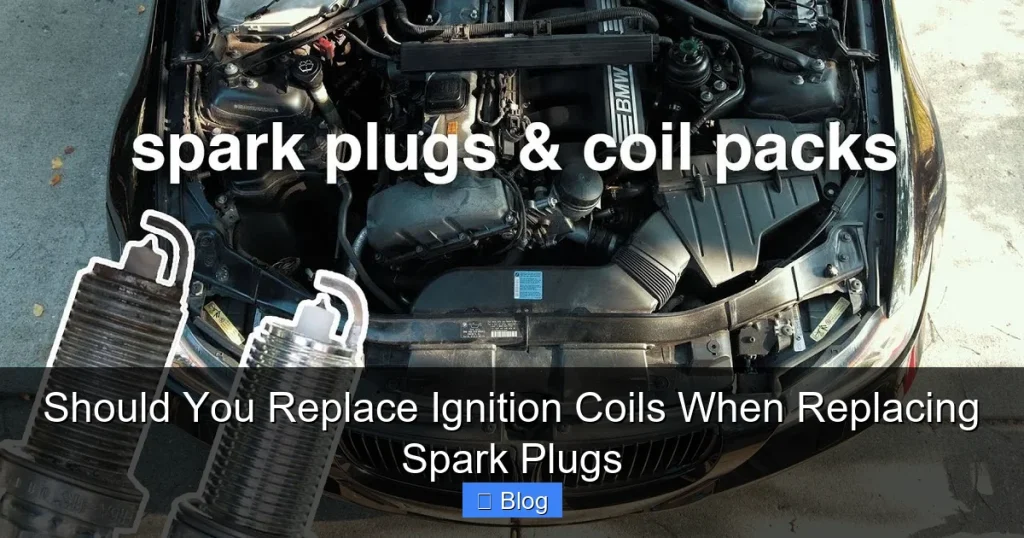
Visual guide about Should You Replace Ignition Coils When Replacing Spark Plugs
Image source: vehq.com
Introduction
Hey there, car enthusiast! If you’re diving into some DIY maintenance, you might be asking yourself, should you replace ignition coils when replacing spark plugs? It’s a common question, especially when your engine starts acting up. In this guide, you’ll learn everything you need to know about these two key components. We’ll cover how they work together, signs that coils need attention, and a step-by-step process for replacement. By the end, you’ll decide confidently whether to tackle both jobs at once, saving you trips to the mechanic and keeping your ride running smoothly. Whether you’re a weekend warrior or just starting out, this how-to will boost your confidence under the hood.

Visual guide about Should You Replace Ignition Coils When Replacing Spark Plugs
Image source: autogearlab.com
Understanding Ignition Coils and Spark Plugs
Spark plugs and ignition coils are like the dynamic duo of your engine’s ignition system. Spark plugs ignite the fuel-air mix in your cylinders, creating the explosions that power your car. Ignition coils, on the other hand, step up the battery’s low voltage to the high jolt (up to 40,000 volts) that those plugs need to fire properly.
Why does this matter when you’re swapping plugs? Worn coils can weaken the spark, leading to incomplete burns and efficiency losses. If you’re already pulling the plugs for a routine change—say, every 30,000 to 100,000 miles depending on your vehicle—it’s a prime time to inspect the coils. Many folks overlook this, but addressing both can prevent bigger headaches down the road.
For example, in modern coil-on-plug designs (common in cars from the 90s onward), each coil sits right on top of a spark plug. This setup makes it easy to check everything in one go. Older distributor systems are different, but the principle holds: healthy coils ensure your new plugs perform at their best.
How They Interact
The coil sends electricity through the plug’s electrode, creating a spark. If the coil is failing, even shiny new plugs won’t fix misfires or rough starts. That’s why mechanics often recommend checking coils during plug service. It’s not always a must, but it can extend your engine’s life.
Signs You Should Replace Ignition Coils When Replacing Spark Plugs
Not every spark plug job requires coil replacement, but ignoring symptoms can lead to repeated repairs. Let’s spot the red flags so you know when to act.
Common signs include engine misfires, where the car jerks or hesitates during acceleration. You might notice a check engine light flashing, or get codes like P0300 (random misfire) via an OBD-II scanner. Rough idling, poor fuel economy, or trouble starting in wet weather also point to coil issues—moisture can crack insulators on old coils.
Visual checks help too. During plug removal, look for corroded coil boots, oil leaks, or burnt connectors. If your plugs show uneven wear or carbon buildup, suspect the coil isn’t delivering consistent voltage.
Diagnostic Tips
- Use a multimeter to test coil resistance—primary should be 0.4-2 ohms, secondary 6,000-30,000 ohms, depending on your model.
- Listen for popping sounds from the engine bay, indicating arcing from faulty coils.
- Swap coils between cylinders to see if the misfire follows; this pinpoints the bad one.
Pro tip: If your car has over 100,000 miles, consider proactive replacement. Coils typically last 50,000-100,000 miles, but heat and vibration wear them out faster.
Tools and Materials You’ll Need
Before starting, gather your gear. This keeps the job smooth and safe. Basic tools include a ratchet set, spark plug socket (usually 5/8-inch or 13/16-inch), torque wrench, and dielectric grease. For coils, you’ll need a coil puller tool if they’re stubborn, plus anti-seize compound.
Don’t forget safety: gloves, eye protection, and a fire extinguisher nearby, since you’re dealing with fuel systems. Quality matters—opt for OEM or trusted brands like NGK for plugs and coils to match your vehicle’s specs.
Step-by-Step Guide to Replacing Spark Plugs and Ignition Coils
Now, the fun part! This guide assumes a coil-on-plug system, like in most Hondas, Toyotas, or Fords. Always consult your owner’s manual for specifics. Park on a level surface, let the engine cool, and disconnect the battery negative terminal first.
Step 1: Prepare Your Vehicle
Pop the hood and locate the ignition coils—small black modules atop each spark plug well. Remove any plastic engine covers with a screwdriver or clips. Label wires if needed, though most are plug-and-play.
Tip: Take photos before disassembly to remember connections. This step takes about 10-15 minutes.
Step 2: Remove the Ignition Coils
Disconnect the electrical connector on each coil by pressing the tab and pulling gently. Then, remove the retaining bolt (usually 10mm) with your ratchet. Wiggle the coil straight up—avoid twisting to prevent boot damage.
If stuck, use a coil puller. Inspect each coil for cracks or wear. If replacing all, set old ones aside. This reveals the spark plugs; blow out debris with compressed air to avoid contamination.
Example: On a 4-cylinder engine, you’ll handle four coils. Work from one end to the other for organization.
Step 3: Replace the Spark Plugs
Using your spark plug socket and extension, loosen each plug counterclockwise. Turn slowly to prevent cross-threading. Pull them out and compare to new ones—gapped to spec (usually 0.030-0.060 inches).
Apply a thin layer of anti-seize to threads, insert new plugs hand-tight, then torque to 10-20 ft-lbs (check manual). Over-tightening strips threads, under does nothing.
Step 4: Install New Ignition Coils (If Needed)
Should you replace ignition coils when replacing spark plugs? If diagnostics show issues or mileage warrants it, yes—it’s efficient. Lubricate new coil boots with dielectric grease for easy seating.
Push coils firmly into place, secure bolts to 8-10 ft-lbs, and reconnect wiring. Double-check for snug fits to avoid vibrations loosening them.
Practical example: If only one coil failed, replace that and its plug, but monitor others. Full sets cost $50-200, plugs $20-50 for a set.
Step 5: Reassemble and Test
Reinstall covers, reconnect the battery, and start the engine. Let it idle to check for leaks or odd noises. Drive a short test to ensure smooth operation—no misfires or lights.
If issues persist, recheck torque or scan for codes. Total time: 1-2 hours for a DIYer.
Quick Reference: When to Replace Coils vs. Just Plugs
| Scenario | Mileage/Age | Symptoms Present? | Recommendation |
|---|---|---|---|
| Routine plug change | Under 50,000 miles | No | Inspect coils; replace plugs only |
| Misfire codes | Any | Yes | Replace faulty coil(s) and plugs |
| High mileage | Over 100,000 miles | No or mild | Proactive full coil replacement |
| Oil in plug wells | Any | Yes (leaks) | Fix leak first, then replace coils/plugs |
| Recent tune-up | Under 30,000 miles | No | Skip coils; focus on plugs |
| Performance drop | 50,000-100,000 miles | Yes | Test and replace affected coils |
| Winter storage | Any | Cracks from cold | Replace all for reliability |
Examples: A Subaru owner might replace coils at 60,000 miles due to known weaknesses, while a Chevy could go longer. Track your service in a log for patterns.
Conclusion
So, should you replace ignition coils when replacing spark plugs? It depends on symptoms, mileage, and your car’s needs, but inspecting them is always wise. By following this guide, you’ve got the tools to make an informed call, potentially avoiding breakdowns and boosting performance. Tackle it yourself for that satisfying hum of a well-tuned engine. Got questions? Drop a comment below—we’re here to help. Drive safe!

Sagor Jahan is the founder and author of Automopromo.com, dedicated to delivering insightful tips, reviews, and updates in the automotive and promotional industry. With a passion for innovation and clear guidance, Sagor helps readers make informed decisions and stay ahead in the ever-evolving automotive world.