
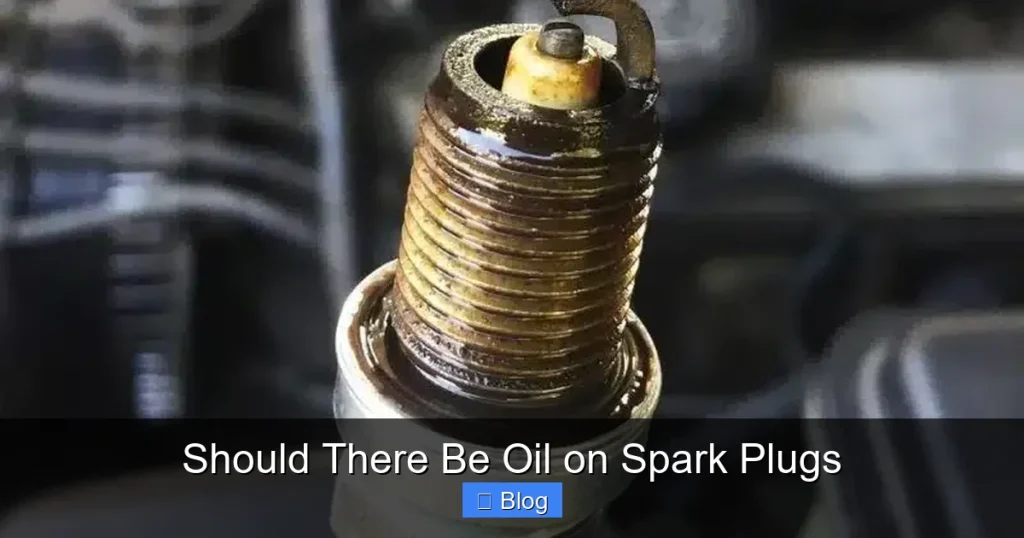
Oil on spark plugs is not normal and often signals an engine leak that needs attention. This guide explains why it happens, how to inspect your plugs safely, and steps to resolve common issues like worn seals or valve problems. By following our tips, you’ll keep your vehicle running smoothly and avoid costly repairs.
Key Takeaways
- Oil on spark plugs is a red flag: It usually means a leak from valve seals, piston rings, or gaskets, not a normal condition.
- Regular checks prevent bigger issues: Inspect plugs during routine maintenance to catch oil fouling early and save on repairs.
- Tools make the job easier: Use a spark plug socket, ratchet, and torque wrench for safe removal and reinstallation.
- Fix the root cause: Cleaning plugs won’t solve the problem; address the leak source like replacing seals or rings.
- Drive with caution: Oil-fouled plugs can cause misfires, poor fuel economy, and engine damage if ignored.
- DIY vs. pro: Simple inspections are DIY-friendly, but major fixes like ring replacement often need a mechanic.
Quick Answers to Common Questions
How often should I check for oil on spark plugs?
Inspect during every tune-up, about every 30,000 miles or if you notice rough running. Early detection prevents major engine damage.
Can I drive with oil on spark plugs?
Short distances only— it causes misfires and poor performance. Fix soon to avoid catalytic converter issues.
What’s the cost to fix oil-fouled plugs?
Plugs alone: $50-100. Full valve seal job: $500-1,000. Shop around for quotes to save money.
Does synthetic oil reduce oil on spark plugs?
It burns cleaner, but won’t fix leaks. Use it for better overall protection alongside proper maintenance.
Tip: Prevent oil fouling proactively?
Keep up with oil changes and PCV maintenance. Avoid over-revving cold engines to extend seal life.
Introduction
Hey there, fellow car enthusiast! If you’ve ever popped open your engine and spotted oil on spark plugs, you might be wondering: should there be oil on spark plugs? The short answer is no—it’s not normal and could point to a sneaky engine issue. In this how-to guide, you’ll learn everything from why oil ends up on your spark plugs to how to check for it, diagnose the cause, and fix it step by step. We’ll cover practical tips, common pitfalls, and when to call in a pro. By the end, you’ll feel confident tackling this maintenance task and keeping your ride reliable. Whether you’re a DIY newbie or a seasoned wrench-turner, we’ve got you covered with simple language and clear steps.
Understanding Oil on Spark Plugs: Is It Normal?
Let’s start with the basics. Spark plugs ignite the air-fuel mix in your engine’s cylinders. They should stay clean and dry to work right. But if you see oil coating the threads, electrode, or insulator, that’s a problem. Should there be oil on spark plugs? Absolutely not. This “oil fouling” messes with spark quality, leading to rough idling, misfires, or even stalling.

Visual guide about Should There Be Oil on Spark Plugs
Image source: mechanicsdiary.com
Oil can come from above (like bad valve seals) or below (worn piston rings). It’s more common in older engines or high-mileage cars, but neglect speeds it up. Spotting it early saves you from bigger headaches like hydrolock or total engine failure. Think of it as your car’s way of waving a warning flag—ignore it, and repairs get pricey.
Common Causes of Oil on Spark Plugs
Oil doesn’t just appear by magic. It sneaks in through leaks in your engine’s seals and components. Here are the top culprits:

Visual guide about Should There Be Oil on Spark Plugs
Image source: askcarmechanic.com
- Worn valve stem seals: These seals keep oil from dripping into the combustion chamber while the engine runs. Over time, they crack or harden, letting oil seep past.
- Damaged piston rings: Rings seal the piston to the cylinder wall. If they’re worn or broken, oil blows by into the chamber and coats the plugs.
- Blown head gasket: This gasket sits between the block and head. A failure here lets oil mix with coolant or leak into cylinders.
- PCV system issues: The positive crankcase ventilation valve regulates oil vapors. If it’s clogged, pressure builds and forces oil into the intake, fouling plugs.
- Overfilled oil: Too much oil in the pan can overwhelm seals, pushing excess into unwanted areas.
Real-world example: I once helped a friend with a 2005 Honda Accord. Oil on spark plugs turned out to be bad valve seals from 150,000 miles of driving. A $300 fix beat a full rebuild!
How to Check for Oil on Spark Plugs: Step-by-Step
Checking for oil is straightforward and doesn’t require a shop. Do this during a tune-up or if your engine runs rough. Park on a flat surface, let the engine cool, and gather your tools. Safety first—disconnect the battery to avoid shocks.
Step 1: Locate the Spark Plugs
Pop the hood and find your ignition coils or wires. In most cars, plugs sit on top of the engine block, one per cylinder. Consult your owner’s manual for exact spots—V6 engines might have them on both sides.
Step 2: Remove the Coils or Wires
Gently pull off the coil packs or spark plug wires. Label them with tape if needed to avoid mix-ups later. Twist and pull straight up; don’t yank.
Step 3: Unscrew the Spark Plugs
Use a spark plug socket (usually 5/8-inch) attached to a ratchet. Turn counterclockwise slowly. If it’s tight, apply penetrating oil and wait 10 minutes. Pull out the plug and inspect it under good light.
Look for shiny, wet oil on the threads or tip. Black, oily residue means fouling. Compare to a clean plug—it should be dry with light tan deposits at most.
Step 4: Reinstall or Replace
If clean, gap the plug (use a feeler gauge) and torque it to spec (around 15-20 ft-lbs for most cars). Reattach coils. If oily, clean with brake cleaner or replace the set—don’t reuse fouled ones.
Tip: Work one cylinder at a time to keep things organized. This check takes 30-60 minutes for a four-cylinder engine.
Tools and Materials for Inspecting and Fixing Oil on Spark Plugs
Having the right gear makes the job smooth and safe. Before diving in, stock up on basics to avoid mid-task trips to the store. This setup works for most vehicles, from sedans to trucks.
| Tool/Material | Purpose | Tips for Use |
|---|---|---|
| Spark plug socket (e.g., 5/8-inch) | Fits over plugs for easy removal without damage | Choose one with a rubber insert to grip the plug |
| Ratchet and extensions | Provides leverage to unscrew tight plugs | Get a 3/8-inch drive set; extensions reach deep wells |
| Torque wrench | Ensures plugs are tightened to manufacturer specs | Set to 15-25 ft-lbs to avoid stripping threads |
| Feeler gauge set | Checks electrode gap for proper spark | Aim for 0.030-0.060 inches, per your manual |
| Brake cleaner or rag | Cleans oil residue from plugs and wells | Spray lightly; wear gloves to protect skin |
| Anti-seize compound | Prevents future corrosion on plug threads | Apply sparingly to avoid over-lubrication |
| Dielectric grease | Protects coil connections from moisture | Dab on boots for better conductivity |
With these, you’re set for success. Budget $50-100 for a basic kit if you don’t have one.
Diagnosing the Root Cause: Beyond the Plugs
Finding oil on spark plugs is just the start. Now, pinpoint why it’s happening. Start a compression test—low readings in oily cylinders suggest ring issues. A leak-down test confirms if it’s valves or rings.
Step 1: Visual Engine Inspection
Check for oil leaks around the valve cover or head. Wipe areas clean and run the engine; fresh oil means gasket trouble.
Step 2: PCV Valve Check
Locate the PCV valve (often on the valve cover). Shake it—it should rattle. If not, replace it for $10-20.
Step 3: Oil Consumption Test
Track oil levels over 1,000 miles. Burning a quart or more? Rings or seals are likely culprits.
Example: In a Ford F-150, oil on plugs often ties to PCV clogs from dirty air filters. Cleaning fixed it without major work.
If DIY tests overwhelm you, a mechanic’s scope can view inside cylinders for $100-200.
Step-by-Step Guide to Fixing Oil on Spark Plugs
Fixing depends on the cause, but here’s a general roadmap. For simple stuff like PCV, you’re good solo. Bigger jobs? Get help.
Step 1: Clean or Replace Spark Plugs
Remove all plugs. Spray oily ones with cleaner, scrub with a wire brush, and dry. Install new plugs gapped correctly—NGK or Bosch are reliable brands.
Step 2: Address Minor Leaks
For valve cover gaskets, remove the cover (six bolts usually), clean surfaces, and apply new gasket with sealant. Torque evenly.
Step 3: Tackle Valve Seals
This needs the head off—pro territory unless you’re advanced. Seals cost $50-100; labor adds $500+.
Step 4: Piston Ring Replacement
Engine out, hone cylinders, fit new rings. Budget $1,000-3,000 total. It’s labor-intensive, so consider engine swap for old cars.
Step 5: Test Drive and Monitor
Run the engine, check for smoke or misfires. Recheck plugs after 500 miles.
Pro tip: Always change oil and filter post-repair to flush debris. Use the right viscosity—5W-30 for most modern engines.
Troubleshooting Common Problems
Things don’t always go perfectly. Here’s how to handle hiccups:
- Plugs won’t budge: Soak with WD-40, use a breaker bar for torque. If stripped, a thread chaser tool saves the day.
- Misfires after reinstall: Double-check gaps and coil connections. Faulty wires? Swap one at a time to test.
- Oily plugs return quickly: Root cause isn’t fixed—do that compression test ASAP.
- Engine smokes after fix: Overfilled oil or poor reassembly. Drain excess and retighten.
- Unsure of cause? OBD-II scanner reads codes like P0300 for misfires, pointing to oily plugs.
Remember, if your car has over 100,000 miles, budget for wear items. Prevention beats cure—change oil every 5,000 miles and inspect plugs yearly.
Conclusion
So, to circle back: should there be oil on spark plugs? No way—it’s a sign to act fast. You’ve now got the know-how to inspect, diagnose, and fix this issue, from quick checks to full repairs. Regular maintenance like this keeps your engine purring and your wallet happy. If oil fouling persists or seems complex, swing by a trusted mechanic. Drive safe, and enjoy the smooth ride!

Sagor Jahan is the founder and author of Automopromo.com, dedicated to delivering insightful tips, reviews, and updates in the automotive and promotional industry. With a passion for innovation and clear guidance, Sagor helps readers make informed decisions and stay ahead in the ever-evolving automotive world.

