
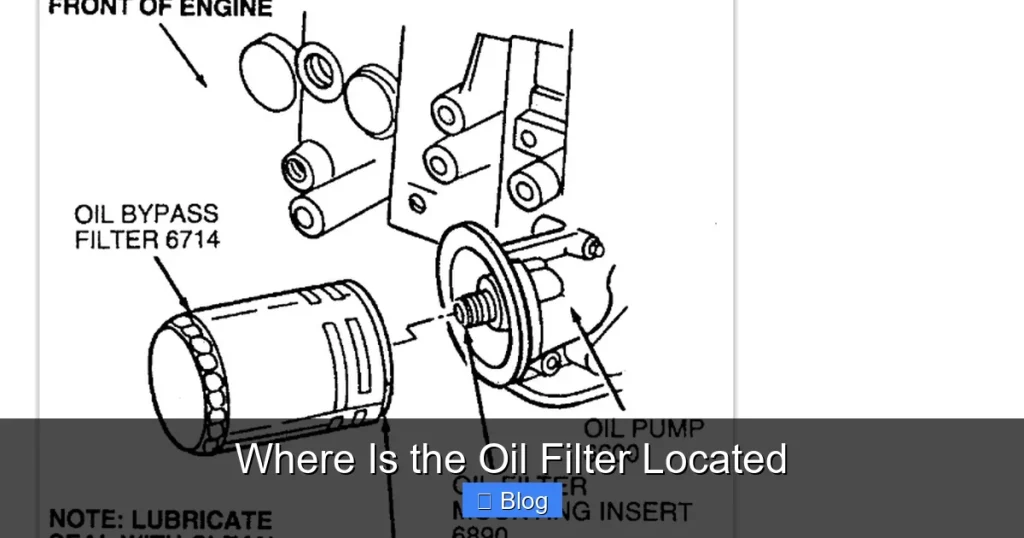
Knowing where the oil filter is located is essential for routine maintenance and DIY oil changes. This guide walks you through identifying, accessing, and replacing your vehicle’s oil filter—no mechanic required.
Where is the oil filter located? The oil filter is usually located on the engine block, either on the side or underneath the engine. In most cars, it sits near the oil pan and is accessible from under the vehicle. Some vehicles place the oil filter on top of the engine inside a housing. The exact location depends on the make and model of the car.
Key Takeaways
- Oil filter location varies by vehicle: It can be on the engine block, near the oil pan, or mounted remotely—check your owner’s manual for specifics.
- Common access points include underneath the car or through the engine bay: Front-wheel-drive cars often place it under the vehicle for easier service.
- Use proper tools like an oil filter wrench: This prevents slipping and damage when removing a tight or stuck filter.
- Always replace the oil filter during an oil change: Old filters trap contaminants and reduce engine efficiency over time.
- Check for leaks after installation: A loose or improperly seated filter can cause oil leaks and engine damage.
- Safety first—use jack stands and gloves: Never rely solely on a jack when working under your vehicle.
- Dispose of used oil and filters responsibly: Most auto parts stores accept them for recycling.
Quick Answers to Common Questions
Tip/Question?
Can I change the oil without replacing the filter?
No—always replace the oil filter during an oil change. Reusing an old filter reduces efficiency and can lead to contamination.
Tip/Question?
How tight should I install the new oil filter?
Hand-tighten until snug, then give it an additional ¾ to 1 full turn. Over-tightening can damage the seal.
Tip/Question?
What if my filter is leaking after installation?
Check if the old gasket is still stuck to the engine. Remove it, clean the surface, and reinstall the new filter properly.
Tip/Question?
Do all cars have the oil filter in the same place?
No—locations vary by make, model, and engine design. Always consult your owner’s manual for accuracy.
Tip/Question?
Can I use any oil filter brand?
Stick to reputable brands that meet OEM specifications. Check your manual or filter packaging for compatibility.
Where Is the Oil Filter Located? A Complete How-To Guide
If you’re planning to change your car’s oil yourself, one of the first things you’ll need to know is: where is the oil filter located? Whether you’re a first-time DIYer or just switching to a new vehicle, understanding the oil filter’s position can save you time, frustration, and even prevent costly mistakes.
The oil filter plays a critical role in your engine’s health. It traps dirt, metal particles, and sludge, ensuring clean oil circulates through your engine. Over time, it gets clogged and must be replaced—typically every time you change your oil. But before you can replace it, you need to find it.
In this guide, we’ll walk you through how to locate your oil filter, what tools you’ll need, step-by-step removal and installation, and tips to avoid common pitfalls. By the end, you’ll feel confident tackling this essential maintenance task on your own.
Why the Oil Filter Location Matters

Visual guide about Where Is the Oil Filter Located
Image source: mechlesson.com
Knowing where your oil filter is located isn’t just about convenience—it affects how easy (or difficult) your oil change will be. Some filters are tucked away in tight spaces, while others are right out in the open. The location can also influence how messy the job gets. For example, a filter mounted upside down under the engine may drip oil when removed, so you’ll need to be prepared.
Additionally, different vehicle types—sedans, SUVs, trucks, and hybrids—have different designs. Front-wheel-drive cars often place the filter near the front of the engine or under the oil pan. Rear-wheel-drive vehicles might have it on the side of the engine block. Some modern cars even use remote-mounted filters connected by hoses.
That’s why consulting your owner’s manual is the best first step. It will tell you exactly where to look and may even include a diagram.
Step-by-Step: How to Find Your Oil Filter

Visual guide about Where Is the Oil Filter Located
Image source: motorandwheels.com
1. Consult Your Owner’s Manual
Your vehicle’s owner’s manual is the most reliable source for locating the oil filter. Look for the “Engine Oil” or “Maintenance” section. Many manuals include a labeled engine diagram showing the filter’s position.
If you don’t have the physical manual, search online using your car’s make, model, and year. Most manufacturers offer free PDF versions.
2. Check Under the Hood
Pop the hood and look around the engine. The oil filter is usually a cylindrical or canister-shaped component, often black or silver, with a hex nut or ridged surface for gripping.
Common under-hood locations include:
- On the side of the engine block, near the cylinder head
- Near the oil pan, often slightly forward or to one side
- Mounted vertically or horizontally on a bracket
Some filters are easy to spot—others are hidden behind air intake ducts, battery trays, or engine covers. You may need to remove a plastic cover or disconnect a hose to access it.
3. Look Underneath the Vehicle
If you can’t find the filter under the hood, it’s likely underneath the car. This is especially common in front-wheel-drive vehicles.
To check:
- Safely lift the front of the car using a jack and secure it with jack stands
- Put on gloves and safety glasses
- Crawl under and look near the oil pan—the filter is often attached to the engine block just above or beside it
Be cautious: hot engines and sharp edges can be dangerous. Never work under a car supported only by a jack.
4. Identify the Filter Type
Once you locate the filter, note its orientation:
- Can-style filter: Most common—looks like a metal can with a threaded base
- Cartridge filter: Uses a replaceable element inside a housing—requires a special tool to open
- Remote-mounted filter: Connected via hoses, often found in tight engine bays or luxury vehicles
Knowing the type helps you choose the right replacement and tools.
Tools You’ll Need to Access the Oil Filter
Before you start, gather these essentials:
- Oil filter wrench (strap, claw, or socket type)
- Drain pan (to catch dripping oil)
- Funnel
- New oil filter (check your manual for the correct part number)
- New engine oil (check capacity and type in the manual)
- Gloves and safety glasses
- Jack and jack stands (if accessing from underneath)
- Rags or paper towels
An oil filter wrench is especially important. Filters can be tight, especially if they’ve been on for a while. A good wrench gives you the grip and leverage needed without damaging the filter.
How to Remove and Replace the Oil Filter
Step 1: Drain the Old Oil First
Always drain the oil before removing the filter. This reduces spillage and makes the job cleaner. Place your drain pan under the oil pan, remove the drain plug, and let the oil flow out completely.
Step 2: Loosen the Oil Filter
Once the oil is drained, locate the filter. Position your oil filter wrench and turn it counterclockwise. If it’s stuck:
- Tap the wrench gently with a hammer to break the seal
- Use a filter with a built-in hex nut for easier wrench attachment
- As a last resort, carefully puncture the filter with a screwdriver and use it as a lever (messy but effective)
Step 3: Remove and Inspect
Once loose, unscrew the filter by hand. Be ready—some oil may still drip out. Check the old filter for metal shavings or sludge, which could indicate engine wear.
Step 4: Prepare the New Filter
Before installing:
- Lightly coat the rubber gasket on the new filter with fresh oil—this ensures a proper seal and prevents tearing
- Double-check that the old gasket didn’t stick to the engine—if it did, remove it to avoid a double seal
Step 5: Install the New Filter
Screw the new filter on by hand until it seats. Then, tighten it an additional ¾ to 1 full turn. Do not over-tighten—this can damage the gasket or make future removal difficult.
Step 6: Refill with Oil and Check for Leaks
Add the recommended amount and type of oil using a funnel. Start the engine and let it run for 10–15 seconds, then turn it off. Check under the car for leaks around the filter and drain plug. Top off oil if needed.
Troubleshooting Common Oil Filter Issues
Problem: Can’t Find the Oil Filter
Double-check your owner’s manual or search online forums for your specific vehicle. Some filters are hidden behind components like the alternator or air filter housing.
Problem: Filter Won’t Budge
Use a filter wrench with better grip or try the “screwdriver method” as a last resort. Avoid excessive force—you don’t want to damage the engine block.
Problem: Oil Leak After Installation
This is usually due to an over-tightened filter, a damaged gasket, or the old gasket still in place. Drain the oil, remove the filter, clean the mounting surface, and reinstall properly.
Problem: Wrong Filter Installed
Using the wrong filter can cause leaks or poor filtration. Always match the part number from your old filter or consult your manual.
Safety Tips and Best Practices
- Always let the engine cool before starting—hot oil can cause burns
- Use jack stands, not just a jack, when working under the car
- Dispose of used oil and filters at a recycling center or auto parts store
- Keep a fire extinguisher nearby when working with flammable fluids
- Wear gloves to protect your hands from oil and sharp edges
Conclusion
Finding the oil filter doesn’t have to be a guessing game. With the right approach—starting with your owner’s manual and using the proper tools—you can locate, remove, and replace your oil filter with confidence. Whether it’s under the hood or beneath the car, knowing where the oil filter is located empowers you to maintain your vehicle safely and effectively.
Regular oil and filter changes are one of the simplest ways to extend your engine’s life. By mastering this skill, you’ll save money, reduce trips to the mechanic, and gain peace of mind knowing your car is running on clean oil.
So next time you’re under the hood—or under the car—you’ll know exactly where to look.

Sagor Jahan is the founder and author of Automopromo.com, dedicated to delivering insightful tips, reviews, and updates in the automotive and promotional industry. With a passion for innovation and clear guidance, Sagor helps readers make informed decisions and stay ahead in the ever-evolving automotive world.

