
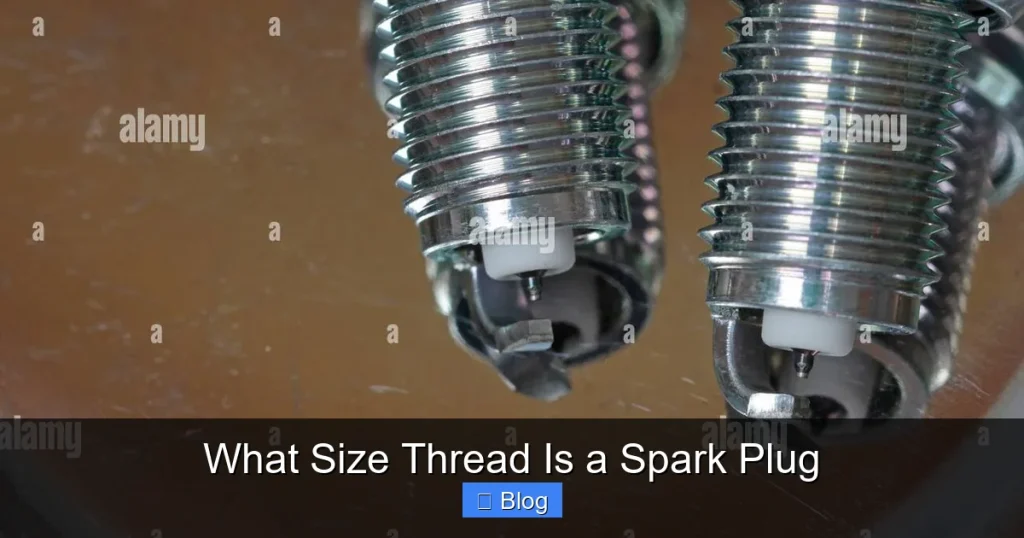
This guide explains how to determine the correct thread size for a spark plug, including common sizes, measurement methods, and compatibility tips. You’ll learn to avoid installation errors and ensure optimal engine performance.
When it comes to engine maintenance, few tasks are as critical—and as easily misunderstood—as replacing spark plugs. One of the most common questions DIY mechanics and car enthusiasts ask is: What size thread is a spark plug? The answer isn’t always straightforward, because spark plug thread sizes vary depending on the vehicle make, model, engine type, and year. Getting it wrong can lead to stripped threads, poor combustion, or even engine damage.
In this comprehensive guide, you’ll learn exactly how to identify the correct spark plug thread size for your engine. We’ll walk you through the most common thread sizes, show you how to measure them yourself, and explain how to cross-reference your findings with manufacturer specs. Whether you’re working on a classic car, a modern sedan, or a high-performance motorcycle, this guide will help you choose the right spark plug every time.
Key Takeaways
- Thread size matters: Using the wrong spark plug thread can damage your engine or cause poor performance.
- Common sizes include: M10, M12, M14, and M18, with M14 being the most widely used in modern vehicles.
- Measure accurately: Use a thread pitch gauge and caliper to confirm both diameter and pitch.
- Check your owner’s manual: Always verify the manufacturer’s recommended spark plug specifications.
- Don’t force it: If the spark plug doesn’t thread in smoothly, stop—you might have the wrong size or a damaged thread.
- Use anti-seize sparingly: A small amount can help prevent seizing, but too much can affect torque and heat transfer.
- Replace with OEM specs: Stick to original equipment manufacturer (OEM) recommendations when possible.
Quick Answers to Common Questions
Tip/Question?
Can I use a spark plug with a different thread size if it fits?
No—even if it seems to fit, a mismatched thread size can cause leaks, poor performance, or engine damage. Always use the correct specification.
Tip/Question?
How often should I replace my spark plugs?
Most modern iridium or platinum plugs last 60,000 to 100,000 miles. Check your owner’s manual for the recommended interval.
Tip/Question?
Do I need a torque wrench to install spark plugs?
Yes—over-tightening is a common cause of thread damage. Use a torque wrench set to the manufacturer’s specification.
Tip/Question?
Can I reuse old spark plugs?
Generally no. Spark plugs wear out over time and should be replaced as a set during routine maintenance.
Tip/Question?
What’s the difference between thread pitch and reach?
Thread pitch is the distance between threads (e.g., 1.25mm), while reach is the length of the threaded portion. Both must match your engine’s specs.
How to Find Your Vehicle’s Spark Plug Specs
Measuring the plug is one way to determine thread size, but the most reliable method is to consult your vehicle’s documentation.
Check the Owner’s Manual
The owner’s manual lists the exact spark plug specifications, including thread size, reach, heat range, and gap. Look for a section titled “Maintenance” or “Engine Specifications.”
Use Online Lookup Tools
Websites like NGK, Denso, or Bosch offer free spark plug lookup tools. Enter your vehicle’s year, make, model, and engine type to get the correct part number and thread size.
Inspect the Old Plug
If you’re replacing spark plugs, the old ones often have the thread size stamped on the hex (the metal nut at the base). Look for markings like “14×1.25” or “M14.”
Ask a Professional
When in doubt, consult a trusted mechanic or parts store. Bring your old spark plug for comparison if possible.
Troubleshooting Common Issues
Visual guide about What Size Thread Is a Spark Plug
Image source: cdn.autodoc.de
Even with the right thread size, problems can arise. Here’s how to handle common issues:
Spark Plug Won’t Thread In
This usually means the thread size is wrong or the cylinder head threads are damaged. Do not force it. Remove the plug and inspect both the plug and the hole. Use a thread chaser (not a tap) to clean the cylinder head threads if needed.
Spark Plug Feels Too Loose
If the plug spins easily without resistance, the thread diameter is too small. This can cause compression loss. Replace it with the correct size immediately.
Thread Damage After Installation
Over-tightening or cross-threading can strip the threads. Use a torque wrench set to the manufacturer’s specification (typically 15–25 ft-lbs for most passenger cars). Never use an impact wrench.
Plug Seizes After Removal
This happens when dissimilar metals corrode together. To prevent it, apply a small amount of anti-seize compound to the threads—but avoid getting any on the electrode or insulator.
Choosing the Right Spark Plug
Visual guide about What Size Thread Is a Spark Plug
Image source: wiseautotools.com
Why Spark Plug Thread Size Is Important
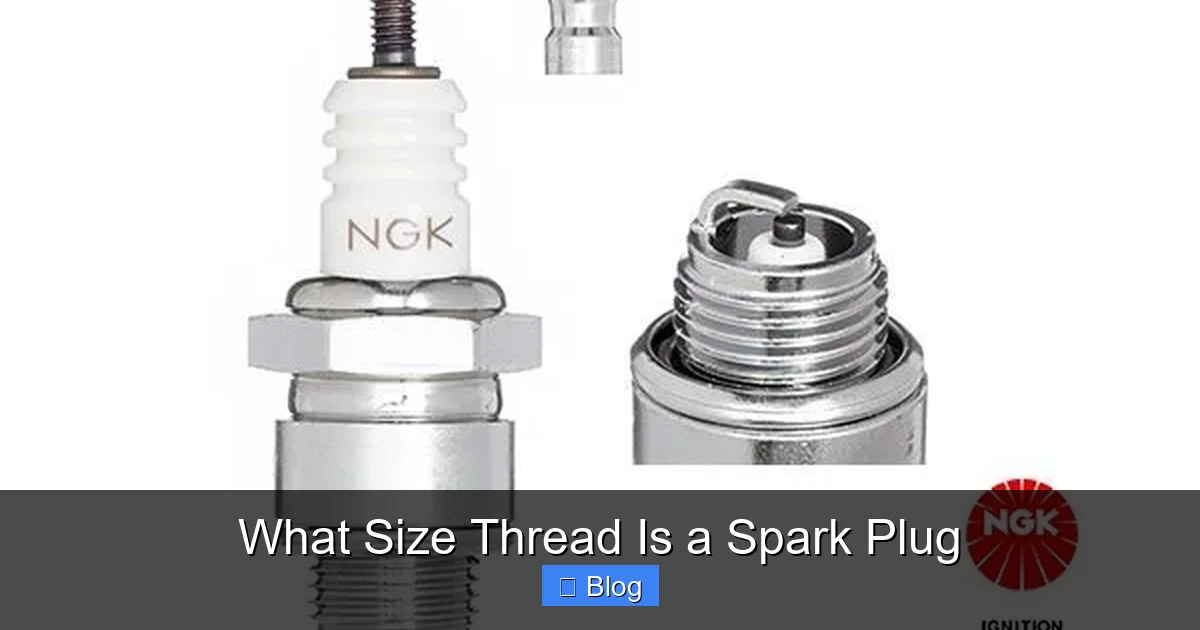
The thread size of a spark plug refers to two key dimensions: the diameter (measured across the threads) and the pitch (the distance between each thread). These two measurements together define the thread specification, such as M14x1.25. If the thread size doesn’t match your engine’s cylinder head, the spark plug won’t seat properly. This can cause a range of problems, including:
- Compression leaks
- Pre-ignition or knocking
- Thread damage during installation
- Overheating due to poor heat transfer
- Difficulty removing the plug later
Using the correct thread size ensures a tight seal, proper spark gap alignment, and reliable ignition. It also prevents cross-threading, which is a common and costly mistake.
Common Spark Plug Thread Sizes
While there are dozens of spark plug thread sizes in use worldwide, a few dominate the market. Here are the most common ones you’ll encounter:
M10 (10mm diameter)
Typically found in small engines, such as those in motorcycles, lawnmowers, and older European cars. The pitch is usually 1.0mm.
M12 (12mm diameter)
Common in older American and Japanese vehicles, especially from the 1970s and 1980s. Pitch is often 1.25mm.
M14 (14mm diameter)
The most popular size today, used in a wide range of modern cars, trucks, and SUVs. Most M14 plugs have a 1.25mm pitch, but some high-performance engines use a 1.0mm pitch.
M18 (18mm diameter)
Found in larger engines, such as those in vintage American V8s, industrial equipment, and some diesel engines. Pitch is typically 1.5mm.
Metric vs. SAE
Note that spark plug threads are almost always metric (measured in millimeters), not SAE (inches). However, some older American vehicles may use SAE threads like 1/4″-32 or 3/8″-24. Always double-check your vehicle’s specifications.
How to Measure Spark Plug Thread Size
If you’re unsure of your spark plug’s thread size, you can measure it yourself using basic tools. Here’s a step-by-step method:
Gather Your Tools
You’ll need:
- A digital caliper (preferred) or a metric ruler
- A thread pitch gauge (metric)
- A clean rag
- Optional: magnifying glass for worn threads
Step 1: Clean the Spark Plug
Remove the spark plug from the engine (if installed) and wipe it clean with a rag. Dirt, carbon buildup, or oil can interfere with accurate measurement.
Step 2: Measure the Thread Diameter
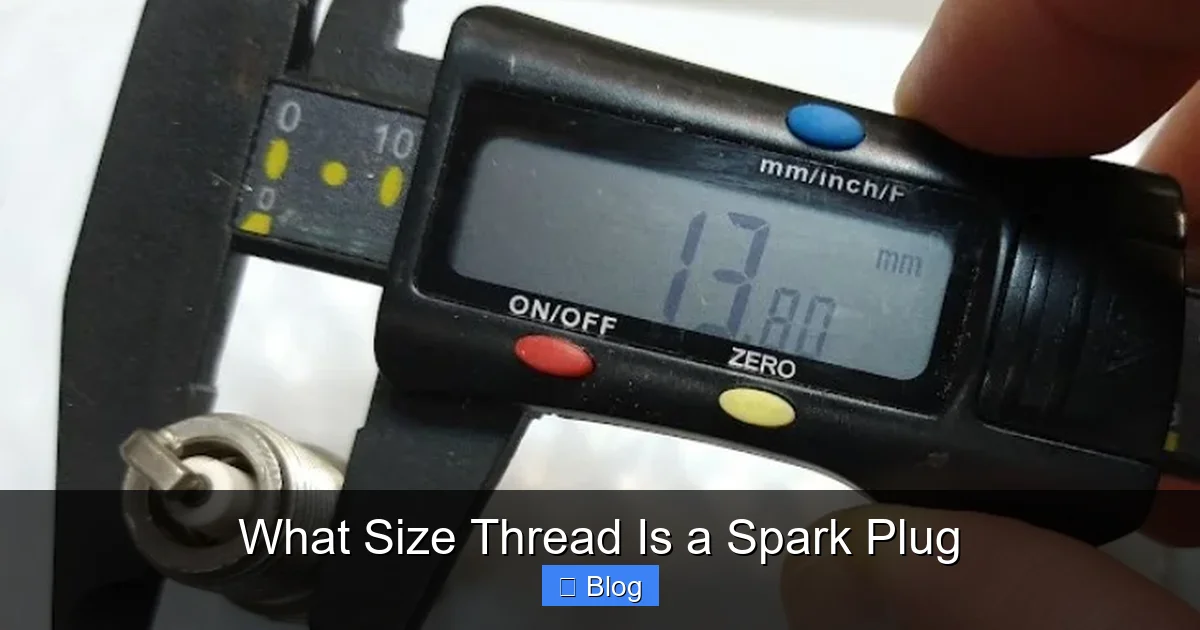
Using your caliper, measure the widest part of the threaded section (excluding the electrode). This gives you the major diameter. For example, if it measures 14mm, you likely have an M14 thread.
Step 3: Determine the Thread Pitch
Use a metric thread pitch gauge to find the number of threads per millimeter. Match the gauge teeth to the spark plug threads. If the gauge fits perfectly at 1.25, your pitch is 1.25mm.
Step 4: Confirm the Length
While not part of the thread size, the reach (length of the threaded portion) is equally important. Measure from the base of the hex to the tip of the threads. Common reaches include 12.7mm, 19mm, and 26.5mm.
Quick reference
| Thread Size | Diameter (mm) | Pitch (mm) | Common Applications |
|---|---|---|---|
| M10x1.0 | 10 | 1.0 | Motorcycles, small engines |
| M12x1.25 | 12 | 1.25 | Older Japanese & American cars |
| M14x1.25 | 14 | 1.25 | Most modern vehicles |
| M14x1.0 | 14 | 1.0 | High-performance engines |
| M18x1.5 | 18 | 1.5 | Vintage V8s, industrial engines |
Thread size is just one factor. You also need to consider:
- Heat range: Matches the plug’s operating temperature to your engine.
- Electrode material: Copper, platinum, or iridium affect longevity and performance.
- Gap size: Must be set correctly for proper spark generation.
- Reach: Too long can hit the piston; too short can cause pre-ignition.
Always match or exceed OEM specifications when selecting a replacement.
Final Tips for Success
- Label your spark plugs by cylinder when removing them to avoid mixing them up.
- Use dielectric grease on the boot (not the threads) to prevent moisture intrusion.
- Replace all spark plugs at the same time for even engine performance.
- Keep a record of your spark plug type and replacement date for future reference.
Conclusion
Knowing what size thread is a spark plug is essential for safe and effective engine maintenance. While M14x1.25 is the most common size today, always verify your vehicle’s specific requirements before purchasing or installing new plugs. By measuring accurately, consulting your manual, and following best practices, you’ll avoid costly mistakes and keep your engine running smoothly for miles to come.

Sagor Jahan is the founder and author of Automopromo.com, dedicated to delivering insightful tips, reviews, and updates in the automotive and promotional industry. With a passion for innovation and clear guidance, Sagor helps readers make informed decisions and stay ahead in the ever-evolving automotive world.

