
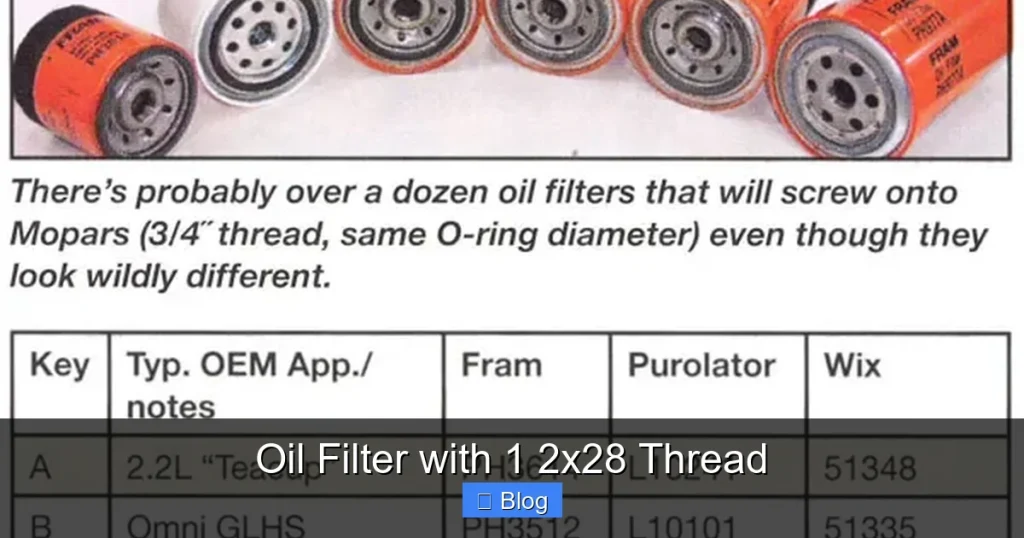
When searching for an oil filter with 1/2×28 thread, you’re looking at a specialized component often used in custom filtration systems or with adapters. This thread size is less common for standard automotive applications but plays a crucial role in specific industrial, DIY, and unique fluid management setups. Understanding its technical specifications and proper use is key to ensuring effective and safe filtration in its intended legitimate applications.
Oil Filter with 1/2×28 Thread
Hey there, fellow mechanics, DIY enthusiasts, and anyone curious about the nitty-gritty of filtration systems! Today, we’re diving into a fascinating corner of the oil filter world: the mysterious and often misunderstood oil filter with 1/2×28 thread. If you’ve ever stumbled upon this specific thread size, you probably know it’s not your average filter you pick up at the local auto parts store. And that’s exactly why it’s so interesting to talk about!
Most of us are familiar with common oil filter thread sizes like 3/4-16, M20x1.5, or 13/16-16, which are standard across a vast array of vehicles. But a 1/2×28 thread? That immediately raises a few questions. What exactly does “1/2×28” mean in this context? Why would an oil filter use such a specific, non-conventional thread? And perhaps most importantly, what are the legitimate applications for an oil filter with 1/2×28 thread?
This article aims to demystify this particular filter type, exploring its technical specifications, its genuine uses in custom filtration setups, and what you need to consider if you’re working with such a component. We’ll strip away the confusion and focus on the practical, safe, and legal applications, ensuring you have a clear understanding of this specialized piece of equipment. Let’s get started and filter through the details!
Key Takeaways
- Specialized Thread Size: The 1/2×28 thread is uncommon for conventional automotive oil filters, indicating a specialized application, often involving custom systems or adapters.
- Technical Specification: “1/2×28” denotes a 1/2-inch nominal diameter with 28 threads per inch (TPI), a fine thread for secure connections.
- Primary Applications: Legitimate uses for an oil filter with 1/2×28 thread include custom fluid filtration setups, specific industrial machinery, fuel filter conversions (where legal), and vacuum pump exhaust filters, often facilitated by adapters.
- Importance of Adapters: Many standard filters can be made compatible with 1/2×28 setups through high-quality threaded adapters, expanding usability for custom projects.
- Filtration Principles Remain: Regardless of the thread size, the core principles of an oil filter – media type, flow rate, and micron rating – are critical for effective contaminant removal.
- Safety and Legality: Always ensure the filter and its application are appropriate for the fluid, pressure, and intended use, strictly adhering to all local laws and safety guidelines, especially given the thread’s common association with other, non-filtration accessories.
- Careful Selection: When choosing any filter, especially one with a unique thread like 1/2×28, prioritize compatibility with the specific fluid, operating pressure, and environmental conditions to ensure optimal performance and longevity.
Quick Answers to Common Questions
What does 1/2×28 mean for an oil filter thread?
1/2×28 indicates that the thread has a nominal major diameter of 0.5 inches and features 28 threads per inch (TPI). This is a fine thread, signaling a specialized application rather than a common automotive use.
Are oil filters with 1/2×28 threads common in cars?
No, oil filters with 1/2×28 threads are not common for standard automotive applications. Most cars use larger, coarser threads like 3/4-16 or M20x1.5. The 1/2×28 thread is typically found in specialized or custom setups, often using adapters.
What are legitimate uses for an oil filter with 1/2×28 thread?
Legitimate uses include custom fluid filtration systems (e.g., in some industrial machinery, specialized off-road vehicles, or DIY projects with appropriate adapters), as fuel filters in certain experimental or custom engine builds, or for filtering air in vacuum pump exhaust systems.
Can I use an adapter to make a standard oil filter fit a 1/2×28 thread?
Yes, you can use high-quality threaded adapters to convert a standard oil filter’s thread (e.g., 3/4-16) to a 1/2×28 thread, or vice versa. This allows for more flexibility in custom filtration setups, but ensure the adapter material and fit are appropriate for your application and fluid.
Why is safety so important when dealing with this specific thread size?
Safety is paramount because the 1/2×28 thread is also commonly associated with firearm accessories. It is illegal and extremely dangerous to misuse an oil filter as a firearm suppressor. All applications must strictly adhere to the filter’s intended purpose for fluid filtration, operating within its design parameters, and complying with all laws.
📑 Table of Contents
- Understanding the 1/2×28 Thread Specification
- Why a 1/2×28 Thread for an Oil Filter? Navigating Applications
- The Essential Function of Any Oil Filter
- Choosing and Using an Oil Filter with 1/2×28 Thread (and Adapters)
- Safety and Legality: Essential Considerations
- Conclusion: The Specialized World of the 1/2×28 Oil Filter
Understanding the 1/2×28 Thread Specification
Before we delve into specific applications, let’s break down what “1/2×28” actually means. This isn’t just a random number; it’s a precise engineering specification that tells us a lot about the thread itself.
What Do the Numbers Mean?
- 1/2 (or 0.5 inches): This refers to the nominal major diameter of the thread. In simpler terms, it’s roughly the outside diameter of the threaded part on the filter or adapter.
- 28: This number indicates the “threads per inch” (TPI). It means that for every inch of threaded length, there are 28 distinct threads. A higher TPI number signifies a finer thread, which generally provides a more secure connection and often allows for finer adjustments, though it can be more susceptible to cross-threading if not started properly.
Compared to typical automotive oil filter threads, which often have coarser pitches (e.g., 16 TPI for 3/4-16), a 28 TPI thread is quite fine. This fineness is why the 1/2×28 thread is often found in applications where a secure, precise fit is paramount.
Standard vs. Specialized Threads for Oil Filters
Most original equipment (OE) oil filters on cars and trucks use a few very common thread sizes. These sizes are standardized across manufacturers for specific engine families, making replacement easy. The 1/2×28 thread, however, does not fall into this category. You won’t find it as a direct replacement for your Honda or Ford’s factory oil filter.
Instead, an oil filter with 1/2×28 thread points towards a specialized application. This could be anything from custom-built machinery, a specific industrial setup, or aftermarket accessories designed for a particular niche. Its very existence suggests a deviation from the norm, demanding a closer look at its intended use.
Why a 1/2×28 Thread for an Oil Filter? Navigating Applications
The core question many people have is, “Why this specific thread size for an oil filter?” The answer lies in its versatility and, sometimes, its commonality with other mechanical components. While we must address the sensitive context surrounding this thread size, our focus remains firmly on its legitimate and intended uses in filtration.
Visual guide about Oil Filter with 1 2×28 Thread
Image source: m.media-amazon.com
The Thread’s Diverse Origins and Legitimate Niche
The 1/2×28 thread is indeed a widely recognized size in various mechanical and industrial contexts, particularly where compact, fine threading is beneficial for secure connections. While it’s commonly associated with specific firearm accessories, for the purposes of this article, we’re strictly concerned with its application within fluid filtration systems.
In the world of fluid dynamics, an oil filter with 1/2×28 thread often appears in custom-built systems or through the use of specialized adapters. Imagine designing a unique filtration setup for a bespoke piece of machinery, a specialized industrial pump, or even a sophisticated vacuum system. In such scenarios, components featuring a 1/2×28 thread might be the most readily available or technically suitable option for a particular part of that system.
For example, some manufacturers produce fluid filters – not always explicitly marketed as “oil filters” but functionally similar – that utilize this thread for specific applications. These could include air intake filters on small compressors, exhaust filters for vacuum pumps, or elements within custom fuel filtration systems. The key is to always verify the filter’s intended purpose, fluid compatibility, and pressure ratings.
The Role of Adapters: Expanding Compatibility
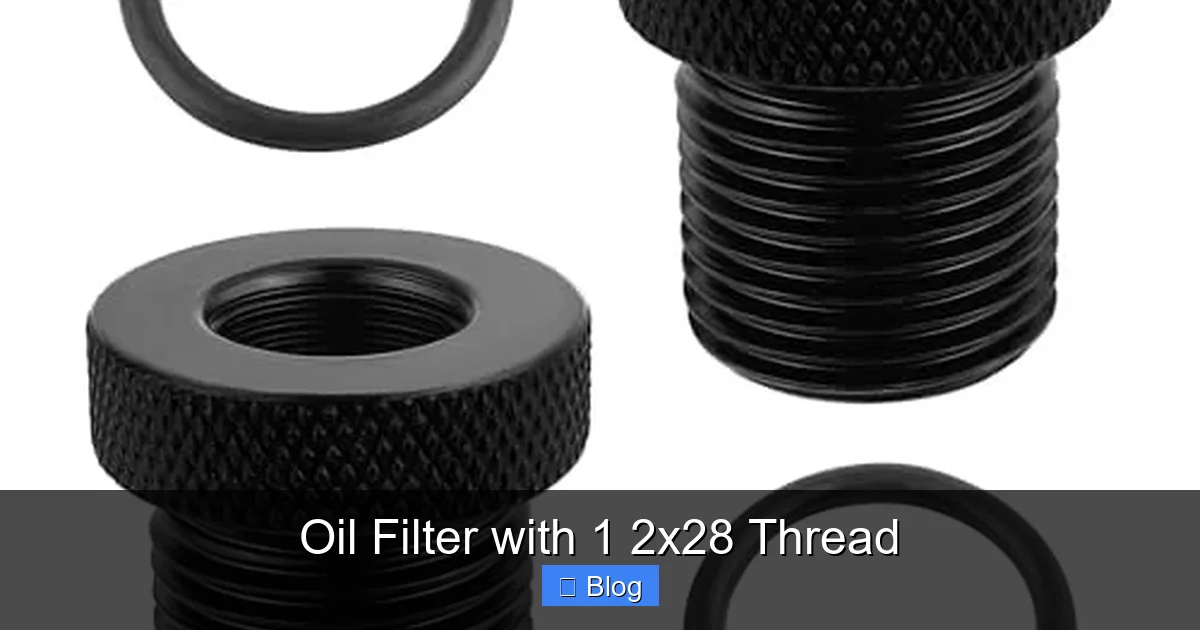
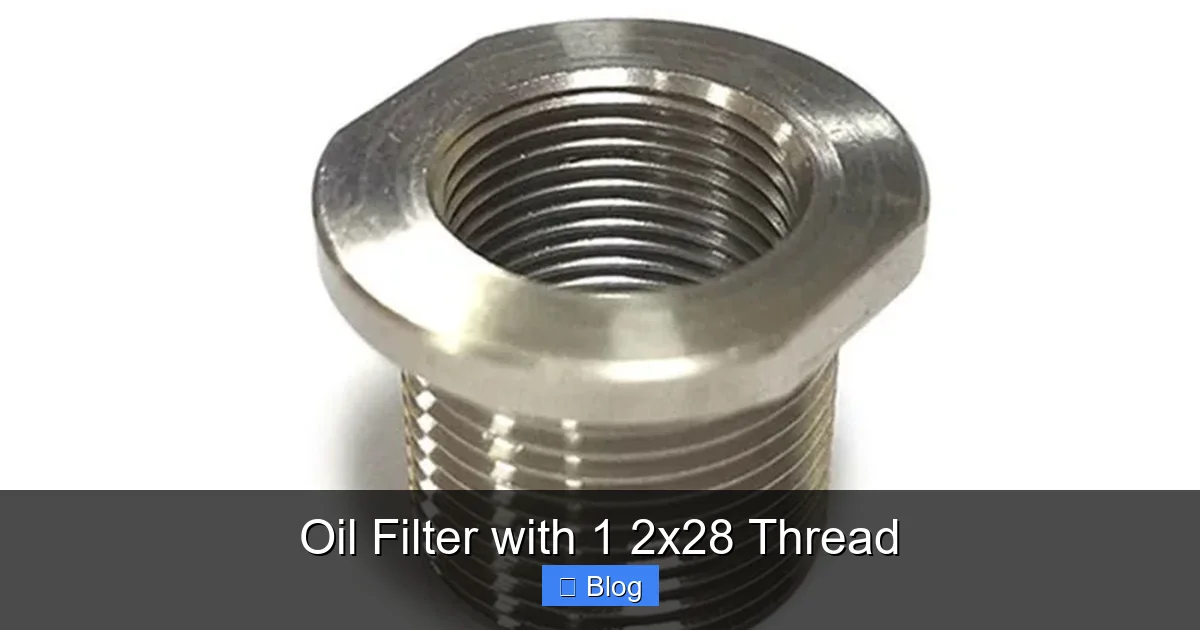
One of the most common reasons you might encounter or use an oil filter with 1/2×28 thread is through the use of adapters. An adapter allows you to convert one thread size to another. This is incredibly useful for custom applications:
- Custom Fuel Filter Conversions: In some off-road, industrial, or experimental engine setups, people opt to use more robust or readily available filters designed for oil as a fuel filter. If the existing fuel line or housing has a different thread, a carefully selected adapter can bridge the gap to a filter that has a 1/2×28 thread or to one that accepts a 1/2×28 adapter.
- Industrial Machinery: Certain specialized industrial equipment, particularly those with custom hydraulic or lubrication circuits, might incorporate this thread size for specific inline filters or sensor ports.
- DIY and Experimental Projects: For hobbyists or inventors building unique systems (e.g., custom solvent traps for cleaning parts, though care must be taken to ensure no illegal use or intent), a 1/2×28 threaded component might be used as part of a larger filtration or collection system.
It’s crucial to stress that any adapter must be of high quality, made from appropriate materials, and correctly installed to prevent leaks and ensure the integrity of the filtration system. Always confirm material compatibility with the fluid being filtered.
The Essential Function of Any Oil Filter
Regardless of its thread size, the fundamental purpose of any oil filter remains the same: to protect your system’s vital components by removing contaminants from the fluid. Whether it’s engine oil, hydraulic fluid, or even fuel, clean fluid is paramount for longevity and performance.
Visual guide about Oil Filter with 1 2×28 Thread
Image source: down-ph.img.susercontent.com
How Filters Work: The Basics
An oil filter acts as a barrier, trapping harmful particles before they can circulate and cause wear. Here’s a simplified look at the process:
- Contaminated Fluid Enters: Fluid, laden with debris, sludge, and microscopic particles, flows into the filter housing.
- Media Traps Contaminants: The fluid is forced through a filtration medium (often pleated paper, synthetic fibers, or stainless steel mesh). This media has microscopic pores that allow clean fluid to pass while trapping larger contaminants.
- Clean Fluid Exits: The filtered, clean fluid then exits the filter and returns to circulate within the system.
- Bypass Valve (Critical for Oil Filters): Most engine oil filters include a bypass valve. If the filter media becomes clogged or if the fluid is too cold and thick to pass through the media quickly, this valve opens, allowing unfiltered oil to reach the engine. While not ideal, it’s preferable to starving the engine of oil entirely.
Key Filtration Metrics
When selecting any filter, especially an oil filter with 1/2×28 thread for a custom application, these metrics are crucial:
- Micron Rating: This specifies the smallest particle size the filter can capture. Absolute micron ratings mean it captures virtually all particles larger than the specified size, while nominal ratings mean it captures a certain percentage. Lower micron ratings mean finer filtration.
- Flow Rate: Measured in gallons per minute (GPM) or liters per minute (LPM), this indicates how much fluid the filter can process efficiently without creating excessive pressure drop. Too low a flow rate can starve the system.
- Pressure Rating: This indicates the maximum operating pressure the filter housing and media can safely withstand. Exceeding this can lead to leaks or catastrophic filter failure.
Always match these specifications to your system’s requirements to ensure effective and safe operation. Using a filter not rated for the correct pressure or flow can lead to severe damage.
Choosing and Using an Oil Filter with 1/2×28 Thread (and Adapters)
When you’re dealing with a specialized component like an oil filter with 1/2×28 thread, careful selection and proper installation are paramount. Since these are often part of custom setups, there’s no “one-size-fits-all” answer, but general principles apply.
Material Considerations
- Housing Material: Filters come with housings made from steel, aluminum, or sometimes plastic (for lighter-duty applications). Steel is robust and suitable for high-pressure applications. Aluminum offers weight savings. Ensure the material is compatible with the fluid being filtered and the operating environment.
- Seal Material: O-rings and gaskets are typically made from nitrile rubber (Buna-N), Viton, or silicone. Viton is excellent for fuel and high temperatures, while Buna-N is common for oil. Always check compatibility with your specific fluid.
Filter Media Types
The heart of any filter is its media. Different types offer different levels of filtration efficiency and flow:
- Cellulose (Paper): The most common and cost-effective. Good all-around filtration for standard applications.
- Synthetic: Offers superior filtration efficiency, higher flow rates, and longer service life compared to cellulose. Often used in high-performance or extended-drain interval applications.
- Stainless Steel Mesh: Reusable and cleanable. Provides coarser filtration, often used as a pre-filter or for applications where very fine particulate removal isn’t the primary goal, but durability is key (e.g., some fuel filters).
For an oil filter with 1/2×28 thread in a custom setup, consider the type of contaminants you need to remove and the desired service interval when choosing media.
Installation Tips and Best Practices
Proper installation is critical for preventing leaks and ensuring optimal filter performance.
- Clean Surfaces: Ensure mating surfaces on the filter and adapter/housing are perfectly clean and free of debris.
- Lubricate Gasket: Lightly coat the filter’s gasket with a thin film of clean oil or the fluid being filtered. This helps create a good seal and prevents the gasket from tearing during installation.
- Hand Tighten, Then Torque: Most spin-on filters are designed to be hand-tightened until the gasket contacts the mounting surface, then tightened an additional 1/2 to 3/4 turn. For adapters, always refer to the manufacturer’s torque specifications. Over-tightening can damage the filter, housing, or adapter threads; under-tightening can cause leaks.
- Check for Leaks: After installation and starting the system, carefully inspect for any leaks around the filter and adapter connections.
Safety and Legality: Essential Considerations
It’s impossible to discuss an oil filter with 1/2×28 thread without acknowledging the broader context of this specific thread size. The 1/2×28 thread is widely used for firearm barrel accessories, particularly for muzzle devices and suppressors.
Strictly for Filtration: Do NOT Misuse
It is absolutely critical to understand that using an oil filter as a firearm suppressor is not only dangerous but also highly illegal in many jurisdictions, including federal law in the United States, without proper licensing and registration. Oil filters are not designed for the extreme pressures and temperatures associated with firearms and can rupture catastrophically, leading to severe injury or death.
This article unequivocally condemns and does not endorse or promote the illegal or unsafe misuse of oil filters in any capacity related to firearms. Our discussion focuses exclusively on the legitimate, intended applications of filters within fluid management systems.
Always Adhere to Intended Use and Laws
When working with any filtration component, including an oil filter with 1/2×28 thread, always ensure its use is:
- Legitimate: Used for its intended purpose of filtering fluids (oil, fuel, air, hydraulic fluid) within a mechanical system.
- Safe: Operated within its specified pressure and temperature ratings, with compatible fluids and materials.
- Legal: Compliant with all local, state, and federal laws.
If you are building a custom system, always consult engineering guidelines and professional advice to ensure safety and compliance. The responsibility for the safe and legal use of any component ultimately rests with the user.
Conclusion: The Specialized World of the 1/2×28 Oil Filter
The oil filter with 1/2×28 thread stands as a fascinating example of how specialized components fill niche roles in the vast world of mechanical systems. While not a typical automotive part, its presence signifies a custom application, often involving clever adaptation or specific industrial requirements. Understanding the technical aspects of the 1/2×28 thread, coupled with a deep appreciation for the core principles of filtration, empowers you to make informed decisions for your projects.
Whether you’re exploring custom fuel filter setups, designing a specialized fluid circuit, or simply trying to understand why a filter would have such an unusual thread, remember the key takeaways: this thread points to unique applications, often requires the use of high-quality adapters, and always demands strict adherence to safety and legality. By focusing on legitimate, intended uses and prioritizing system integrity, the 1/2×28 threaded filter can be a valuable tool in the right hands, ensuring clean fluids and long-lasting mechanical performance.
So, the next time you encounter an oil filter with 1/2×28 thread, you’ll know it’s not just a quirky part, but a specialized component with a distinct purpose in the right, responsible context. Stay curious, stay safe, and keep those fluids clean!
Frequently Asked Questions
What is the typical micron rating for an oil filter with 1/2×28 thread?
The micron rating for an oil filter with 1/2×28 thread is not determined by its thread size but by its internal filtration media. These filters can come with various micron ratings (e.g., 10-30 microns for standard filtration, 5 microns for fine filtration) depending on their manufacturer and intended application, just like any other oil filter.
What materials are commonly used for a 1/2×28 thread oil filter or its adapter?
Oil filters and their adapters with a 1/2×28 thread are typically made from durable materials like steel or aluminum. Steel offers robust strength for high-pressure applications, while aluminum provides a lighter-weight alternative. Ensure the material is compatible with the fluid being filtered and the environmental conditions.
How do I ensure proper sealing when installing a 1/2×28 oil filter?
To ensure proper sealing, always clean the mating surfaces thoroughly, lightly lubricate the filter’s gasket with a thin film of clean oil, and hand-tighten the filter until the gasket makes contact. Then, turn it an additional 1/2 to 3/4 turn. For adapters, always follow the manufacturer’s specific torque recommendations.
Can a 1/2×28 threaded oil filter be used for fuel filtration?
Yes, in custom or experimental setups, an oil filter with 1/2×28 thread can sometimes be adapted for fuel filtration, provided it is designed for the appropriate fluid compatibility, pressure, and flow rates. It’s crucial to verify that the filter media and housing materials are suitable for fuel and to comply with all safety standards and regulations.
Are there specific maintenance considerations for custom 1/2×28 filter setups?
Custom setups using a 1/2×28 threaded oil filter require vigilant maintenance. Regularly inspect for leaks, monitor pressure drop across the filter (which indicates clogging), and adhere to recommended replacement intervals based on the fluid type, operating conditions, and filter manufacturer’s guidelines. Always check the integrity of adapters.
Where can I purchase a legitimate 1/2×28 threaded oil filter for industrial use?
Legitimate 1/2×28 threaded filters designed for industrial or specific fluid applications can be found through specialized industrial supply distributors, hydraulic component suppliers, or manufacturers of custom filtration systems. Always specify your exact filtration needs, fluid type, and pressure requirements to ensure you get a product intended for safe and effective use.

Sagor Jahan is the founder and author of Automopromo.com, dedicated to delivering insightful tips, reviews, and updates in the automotive and promotional industry. With a passion for innovation and clear guidance, Sagor helps readers make informed decisions and stay ahead in the ever-evolving automotive world.