Struggling to remove a stubborn oil filter without a wrench? You don’t always need special tools—common items like a belt, rope, or rubber glove can do the trick. This guide shows you safe, effective ways to loosen and remove your oil filter using everyday objects.
To get an oil filter off without a wrench, first let the engine cool and place a pan underneath. Use rubber gloves or a thick cloth for better grip, then turn the filter counterclockwise by hand. If stuck, wrap sandpaper or a belt around it for traction, or gently tap with a screwdriver and hammer to loosen. Avoid puncturing too deep, and clean the mounting surface before installing a filter.
Key Takeaways
- Use a rubber glove for extra grip: A thick work glove or even a dishwashing glove can give you the traction needed to twist off a tight filter by hand.
- Try the belt or strap method: Wrap a leather belt, nylon strap, or even a long piece of rope around the filter and pull for leverage.
- Apply heat carefully: Warming the engine block near the filter can expand metal and break the seal, making removal easier.
- Use a screwdriver and hammer (as a last resort): Tap a screwdriver through the filter casing to create a lever point—only if other methods fail.
- Prevent future issues: Always lubricate the new filter’s gasket with fresh oil and hand-tighten only to avoid over-tightening.
- Work safely: Let the engine cool slightly to avoid burns, but don’t wait too long—warm oil flows easier and reduces resistance.
- Have a drain pan ready: Oil will spill when the filter is removed, so position a container underneath before starting.
Quick Answers to Common Questions
Can I use duct tape to remove an oil filter?
Yes! Wrap several layers of duct tape around the filter, leaving a tail. Pull the tail counterclockwise to create leverage. It’s not the strongest method, but it can work in a pinch.
Is it safe to drive with a loose oil filter?
No. A loose filter can leak or fall off, causing oil loss and engine damage. Always tighten the new filter properly and check for leaks after starting the engine.
What if the filter is upside down or hard to reach?
Use a long-handled screwdriver or a flexible strap tool. You can also try the “glove and rag” method with a helper pulling from the opposite side.
Can I reuse an oil filter?
No. Oil filters are designed for single use. Reusing one can lead to clogging, poor oil flow, and engine damage.
How tight should a new oil filter be?
Hand-tighten only. Once the gasket touches the engine, turn it another three-quarters of a turn. Over-tightening can make future removal difficult.
How to Get Oil Filter Off Without Wrench
Changing your car’s oil is one of the most basic—and important—maintenance tasks you can do yourself. But what happens when you’re halfway through the job and realize you don’t have an oil filter wrench? Don’t panic. You’re not stuck. With a little creativity and some common household items, you can remove even the tightest oil filter without specialized tools.
In this guide, we’ll walk you through several proven methods to get that stubborn oil filter off—no wrench required. Whether you’re in your garage, on the side of the road, or just forgot your tools, these techniques use items you likely already have at home. We’ll cover everything from improving grip to using leverage, heat, and even emergency puncture methods. Plus, we’ll share tips to prevent this problem in the future.
Let’s get that filter off—safely and efficiently.
Why Oil Filters Get Stuck
Before we dive into solutions, it helps to understand why oil filters can become so difficult to remove. Most filters are installed by hand and should only be tightened about three-quarters of a turn after the gasket touches the engine block. However, over time, heat, corrosion, and over-tightening can fuse the filter to the engine.
Additionally, if the previous installer used sealant or tightened the filter with a wrench, it can create a nearly impossible seal to break. Metal expands when hot and contracts when cool, so a filter installed when the engine was hot may tighten further as it cools—making removal even harder.
The good news? Even the most stubborn filters can usually be removed with the right technique and a bit of patience.
Method 1: Improve Your Grip with a Rubber Glove
One of the simplest and most effective ways to remove an oil filter without a wrench is to improve your grip. Many filters are made of smooth metal, which becomes slippery when coated in oil.
What You’ll Need
- A thick rubber work glove or dishwashing glove
- A clean rag (optional, for wiping excess oil)
Steps to Follow
- Put on the rubber glove. The textured surface provides much better traction than bare hands.
- Wipe the filter with a rag to remove excess oil, if possible.
- Grab the filter firmly with both hands, using the glove for maximum grip.
- Turn the filter counterclockwise (lefty loosey) with steady, increasing pressure.
- If it starts to move, keep turning until it’s completely off.
Pro Tip: If one glove isn’t enough, try wearing two—or use a rubber jar opener pad for even more grip.
Method 2: Use a Belt, Rope, or Strap for Leverage
When hand strength isn’t enough, adding leverage can make all the difference. A belt, nylon strap, or even a long piece of rope can act as a makeshift wrench.
What You’ll Need
- A leather belt, nylon strap, or strong rope (at least 3 feet long)
- A flathead screwdriver or small pry bar (optional, for tightening the loop)
Steps to Follow
- Wrap the belt or rope tightly around the oil filter, making sure it’s snug and won’t slip.
- Cross the ends of the belt to create a loop or knot that tightens when pulled.
- Insert a screwdriver or pry bar through the loop to act as a handle.
- Pull the handle in a counterclockwise direction to turn the filter.
- Apply steady pressure—don’t jerk or twist too hard, as this can damage the filter or engine.
Example: A leather belt works especially well because it’s stiff enough to transmit force but flexible enough to conform to the filter’s shape.
Method 3: Apply Heat to Break the Seal
Heat can expand the metal of the engine block slightly, breaking the bond between the filter and the engine. This method is particularly useful if the filter has been on for a long time or was over-tightened.
What You’ll Need
- A heat gun or hair dryer (do not use an open flame)
- Safety gloves and eye protection
Steps to Follow
- Let the engine cool for 10–15 minutes after running—hot enough to expand metal, but not so hot it burns you.
- Use the heat gun or hair dryer to warm the area around the base of the oil filter for 1–2 minutes.
- Focus the heat on the engine block, not the filter itself, to encourage expansion.
- After heating, try removing the filter by hand or with a glove.
Warning: Never use a torch or open flame near engine oil—it’s highly flammable.
Method 4: The Screwdriver and Hammer Technique (Last Resort)
If all else fails, you can puncture the filter to create a lever point. This method should only be used when the filter is already being replaced and other options have failed.
What You’ll Need
- A long flathead screwdriver
- A hammer
- Safety goggles and gloves
Steps to Follow
- Put on safety gear—oil will spray when the filter is punctured.
- Position the screwdriver at a 45-degree angle against the side of the filter, near the base.
- Tap the screwdriver firmly with the hammer to drive it through the metal casing.
- Once the screwdriver is embedded, use it as a lever to twist the filter counterclockwise.
- Be careful—this method can damage the filter and cause oil to spill quickly.
Note: This method is messy and should only be used in emergencies. Clean up spilled oil immediately to avoid slipping hazards.
Method 5: Use a Plastic Bag or Rubber Mat for Extra Grip
Sometimes, the simplest solutions work best. A plastic grocery bag or a piece of rubber matting can add just enough friction to help you twist the filter loose.
What You’ll Need
- A clean plastic bag or rubber shelf liner
Steps to Follow
- Cut a strip of plastic bag or rubber mat about 6 inches wide and 12 inches long.
- Wrap it tightly around the filter.
- Grab both ends and pull in opposite directions to create tension and turn the filter.
- Use your body weight if needed—brace your foot against the car frame for leverage.
This method works best on filters that are only slightly tight.
Troubleshooting Common Problems
Problem: The filter won’t budge at all
Try combining methods—use heat first, then a belt for leverage. Sometimes a two-step approach is all you need.

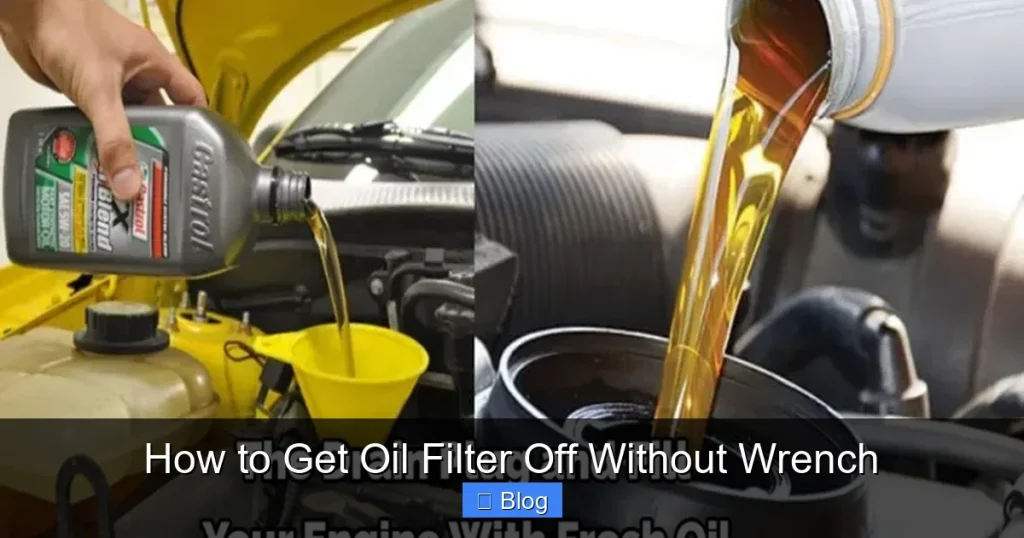
Visual guide about How to Get Oil Filter Off Without Wrench
Image source: toolsadvisers.com

Visual guide about How to Get Oil Filter Off Without Wrench
Image source: ourhometools.com
Problem: Oil is leaking everywhere
Keep a drain pan directly under the filter at all times. Have rags ready to catch spills. If oil hits hot engine parts, it can smoke—let it cool before cleaning.
Problem: The filter is in a tight space
Use a shorter screwdriver or a flexible strap. If visibility is poor, use a flashlight or phone light to see what you’re doing.
Problem: The filter cracks or breaks
If the filter splits, oil will gush out quickly. Turn the car off immediately and use a rag or duct tape to temporarily seal the opening until you can install a new filter.
How to Prevent This Problem in the Future
Once you’ve successfully removed the old filter, take steps to make the next oil change easier:
- Hand-tighten only: After the gasket touches the engine, turn the filter another three-quarters of a turn—no more.
- Lubricate the gasket: Apply a thin layer of fresh oil to the new filter’s rubber seal before installing. This prevents binding and makes future removal easier.
- Use a filter with a textured surface: Some filters have ridges or rubber coatings that improve grip.
- Keep a filter wrench in your toolbox: Even a basic strap wrench is inexpensive and worth having on hand.
Conclusion
You don’t need a special tool to remove an oil filter—just a little ingenuity and the right technique. Whether you use a rubber glove, a belt, heat, or even a screwdriver, there’s a method that will work for your situation. The key is to stay calm, work safely, and apply steady pressure.
Remember, the goal isn’t to force the filter off with brute strength, but to break the seal gently and efficiently. With the tips in this guide, you’ll be ready for your next oil change—even if your wrench is missing.
Keep these methods in mind, and you’ll never be stuck with a stubborn filter again.

Sagor Jahan is the founder and author of Automopromo.com, dedicated to delivering insightful tips, reviews, and updates in the automotive and promotional industry. With a passion for innovation and clear guidance, Sagor helps readers make informed decisions and stay ahead in the ever-evolving automotive world.