

The question of whether to change your oil filter every oil change is common among car owners. While some sources suggest it’s not always necessary with modern oils and filters, the overwhelming consensus for optimal engine health and longevity is to replace the oil filter with every oil change. This ensures clean oil circulation, prevents contaminants from harming vital engine components, and safeguards your vehicle’s performance over time, offering peace of mind.
So, do I need to change oil filter every oil change? Yes, it’s recommended to change the oil filter at every oil change. A new filter ensures proper oil flow and removes contaminants that can damage the engine. Reusing an old filter may reduce filtration efficiency and shorten engine life, especially in modern vehicles.
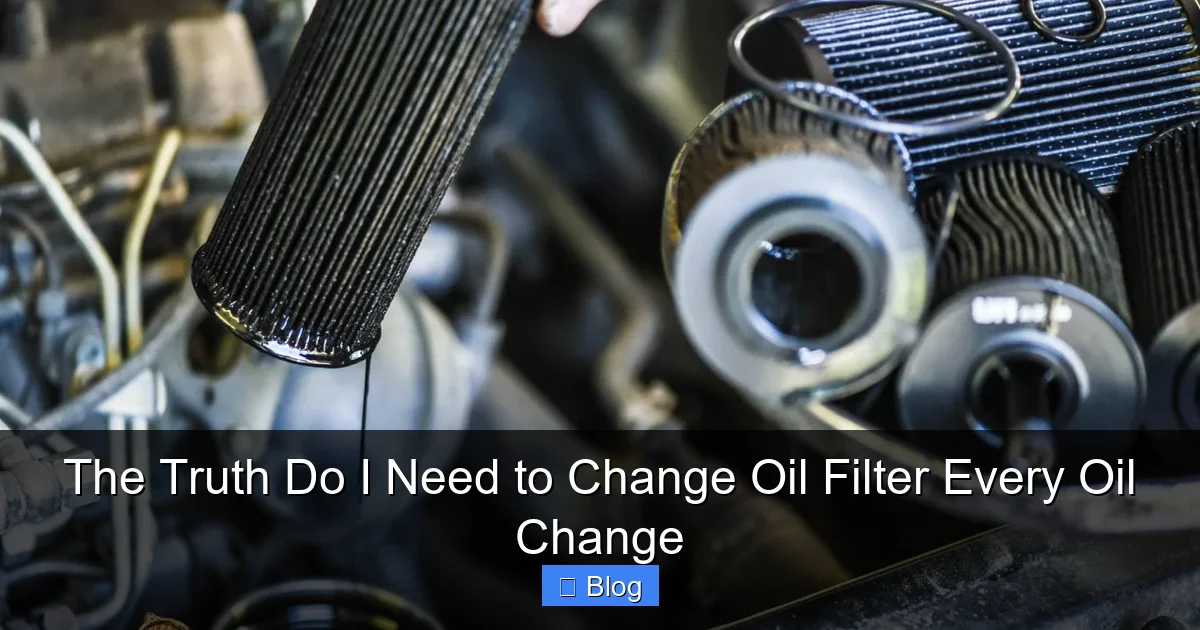
The Truth Do I Need to Change Oil Filter Every Oil Change
Ah, the classic car maintenance dilemma! You’re standing in the auto parts store, staring at rows of shiny oil filters, and a question pops into your head that has puzzled drivers for decades: “Do I really need to change oil filter every oil change?” It’s a question that sparks debates in garages, online forums, and even around the backyard barbecue.
Some people swear by changing it every single time, no matter what. Others claim that with modern synthetic oils and advanced filter technology, you can skip a change or two. So, who’s right? What’s the real truth? If you’ve ever felt confused or unsure about whether to change oil filter every oil change, you’re in the right place.
This comprehensive guide will cut through the noise, debunk myths, and provide you with clear, practical advice based on expert recommendations. By the end, you’ll understand the vital role your oil filter plays, the factors that influence its lifespan, and most importantly, whether you need to change oil filter every oil change for your specific vehicle and driving habits. Let’s dive in and keep your engine purring!
Key Takeaways
- Optimal Practice: For most vehicles and driving conditions, changing the oil filter with every oil change is the recommended best practice for maximum engine protection.
- Filter’s Crucial Role: The oil filter is essential for removing harmful contaminants from your engine oil, preventing wear and tear on internal components.
- Oil Type Matters: While synthetic oils allow for longer drain intervals, the filter’s capacity to hold contaminants can still be reached, making regular filter changes important.
- Manufacturer Recommendations: Always consult your vehicle’s owner’s manual first, as it provides the most accurate and specific guidance for your car model.
- Filter Quality: Investing in a high-quality oil filter, especially with extended oil change intervals, is crucial to ensure it can perform effectively throughout its service life.
- Cost vs. Risk: The relatively low cost of an oil filter pales in comparison to potential engine damage caused by a clogged or degraded filter, making it a wise investment.
- Peace of Mind: Regularly replacing your oil filter ensures consistently clean oil, contributing significantly to your engine’s longevity and reliable performance.
Quick Answers to Common Questions
Does oil filter quality truly matter?
Absolutely. A higher quality oil filter offers superior filtration, greater capacity for contaminants, and often better bypass valve reliability, especially crucial for extended oil change intervals or demanding driving conditions. Don’t skimp on this vital component.
Can I visually inspect my oil filter to see if it needs changing?
Unfortunately, no. The contaminants are trapped inside the filter media, making it impossible to judge its condition from the outside. Only by cutting it open can you truly assess its saturation, which isn’t practical for routine maintenance.
Is it possible for a new oil filter to be defective?
While rare, it can happen. Common defects might include a faulty anti-drain back valve, improperly sealed gaskets, or poor filter media. Always purchase reputable brands and inspect the filter for obvious damage or manufacturing flaws before installation.
Should I pre-fill my new oil filter with oil before installing it?
For most spin-on filters, yes, it’s a good practice. Pre-filling helps reduce the time the engine runs without oil pressure during startup after an oil change, minimizing wear. However, avoid overfilling or spilling, and don’t do it if the filter mounts horizontally or upside down where oil would just spill out.
What’s the “anti-drain back valve” in an oil filter?
This valve prevents oil from draining out of the filter and oil passages back into the oil pan when the engine is off. It ensures immediate oil pressure upon startup, reducing wear on critical engine components, making it a very important feature.
The Oil Filter’s Unsung Hero Role
Before we tackle the “every oil change” question, let’s appreciate the humble oil filter. It’s small, often out of sight, but absolutely critical for your engine’s health and longevity. Think of it as your engine’s kidney, constantly working to keep things clean.
What Does Your Oil Filter Actually Do?
Your engine oil isn’t just a lubricant; it’s also a cleaner. As your engine runs, tiny bits of metal, dirt, dust, combustion byproducts, and other contaminants inevitably get into the oil. Without a filter, these impurities would circulate freely, turning your engine oil into a gritty, abrasive paste. This paste would then accelerate wear and tear on vital engine components like bearings, camshafts, and cylinder walls.
This is where the oil filter steps in. It’s designed to trap these harmful particles, preventing them from recirculating through your engine. Inside the filter housing, there’s a pleated paper or synthetic fiber material, known as the filter media, which acts as a sieve. Oil flows through this media, leaving contaminants behind, and then clean oil is sent back into the engine.
Why a Clean Filter is Non-Negotiable
An effectively working oil filter ensures that your engine always receives a steady supply of clean, pure oil. This is paramount for several reasons:
- Reduced Friction and Wear: Clean oil provides optimal lubrication, minimizing friction between moving parts and significantly reducing engine wear.
- Optimal Performance: Proper lubrication helps your engine run smoothly and efficiently, contributing to better fuel economy and power.
- Engine Longevity: By preventing abrasive particles from damaging internal components, a good oil filter directly contributes to a longer, healthier life for your engine.
- Maintained Oil Pressure: A clear, unobstructed filter ensures proper oil flow and pressure, which is vital for all parts of the engine to receive adequate lubrication.
The Core Question: Every Oil Change, Really?
Now, let’s get to the heart of the matter. The debate around “do I need to change oil filter every oil change” often boils down to two main perspectives.

Visual guide about The Truth Do I Need to Change Oil Filter Every Oil Change
Image source: c8.alamy.com
The Traditional Stance: A No-Brainer
For decades, the common wisdom, and what most mechanics will still tell you, is a resounding yes. Whenever you change your engine oil, you should also change the oil filter. This practice originated in an era of conventional oils, shorter oil change intervals (think 3,000 miles), and less advanced filter technology. The reasoning is straightforward: if you’re putting fresh, clean oil into your engine, why would you let it immediately get contaminated by running it through an old, dirty filter?
This approach offers maximum protection and ensures that your new oil can do its job effectively from day one. It removes any doubt and ensures that the filter never becomes a bottleneck for clean oil circulation.
The Modern Debate: Factors That Influence the Decision
With advancements in automotive technology, some people argue that the “every oil change” rule might be outdated in certain scenarios. Here’s why this debate exists:
Oil Type: Conventional vs. Synthetic
- Conventional Oil: Typically used for shorter drain intervals (3,000-5,000 miles). With these shorter intervals, the filter’s capacity to hold contaminants is often reached by the time the oil needs changing. Therefore, with conventional oil, you almost certainly need to change oil filter every oil change.
- Synthetic Oil: Engineered with superior additives and molecular structures, synthetic oils can last much longer—often 7,500, 10,000, or even 15,000+ miles. This longer lifespan is what fuels the debate. If the oil lasts longer, does the filter also last longer?
Filter Technology: Standard vs. Extended-Life
Just as oils have evolved, so have filters. “Extended-life” or “long-life” oil filters are designed with more robust filter media (often synthetic blends) and greater capacity to trap contaminants over longer periods. These are typically recommended when using synthetic oils for extended drain intervals.
Driving Conditions: Severe vs. Normal
Your driving habits play a huge role. “Severe service” conditions—like frequent short trips, stop-and-go city driving, towing heavy loads, extreme temperatures, or driving on dusty roads—put more stress on your oil and filter. Under these conditions, contaminants build up faster, making frequent changes even more critical. “Normal service” involves highway driving at consistent speeds, which is less demanding.
Your Vehicle’s Age and Mileage
Older engines or those with high mileage might accumulate more wear particles, causing the filter to get dirty faster. A newer engine, especially one meticulously maintained, might produce fewer contaminants in its early life.
Why You Absolutely *Should* Change Your Oil Filter Every Time
Despite the nuances introduced by modern technology, the overwhelming expert consensus leans heavily towards replacing your oil filter with every oil change. Here’s why this remains the safest and smartest approach for almost all drivers.
Visual guide about The Truth Do I Need to Change Oil Filter Every Oil Change
Image source: minit-tune.com
Preventing Contaminant Saturation
Even if your synthetic oil is designed for 10,000 miles, the filter has a finite capacity to hold contaminants. As the filter traps more and more particles, it gradually becomes saturated. Once saturated, its effectiveness plummets. It can no longer capture new impurities, and the oil passing through it is no longer being adequately cleaned. If you don’t change oil filter every oil change, you risk allowing dirty oil to circulate, regardless of how new the oil itself is.
Maintaining Optimal Oil Flow and Pressure
A clogged or saturated filter also restricts the flow of oil. Imagine trying to drink through a straw that’s partially blocked. Your engine’s oil pump has to work harder to push oil through a dirty filter, which can lead to reduced oil pressure in critical areas. This lack of proper oil pressure can starve parts of your engine of lubrication, causing severe and irreversible damage.
The Bypass Valve Conundrum
Every oil filter has a bypass valve. This is a safety feature designed to open if the filter becomes too clogged, allowing unfiltered oil to reach the engine. This is preferable to starving the engine of oil altogether. However, the downside is obvious: if the bypass valve is open, dirty, unfiltered oil is circulating through your engine. Relying on the bypass valve to kick in is a sign of a neglected filter, and definitely not something you want to happen regularly. If you don’t change oil filter every oil change, you increase the chances of the bypass valve activating.
Cost-Effectiveness and Engine Longevity
An oil filter is a relatively inexpensive component, typically costing anywhere from $5 to $25, even for premium models. When you compare this small cost to the potential expense of repairing or replacing an engine damaged by dirty oil (which can run into thousands of dollars), it’s clear that changing the filter every time is a minimal investment for maximum protection. It’s cheap insurance for your most expensive car component.
Peace of Mind: A Priceless Benefit
Knowing that your engine is consistently protected by clean oil and a fresh, effective filter offers invaluable peace of mind. You won’t have to worry about whether your filter is “good enough” or if it’s nearing saturation. This simple, consistent maintenance practice helps ensure your vehicle runs reliably and efficiently for years to come.
Navigating Exceptions: When *Might* You Stretch It (With Caution)?
While the strong recommendation is to change oil filter every oil change, there are very specific, nuanced situations where the interval might be different. However, these are exceptions that require careful consideration and specialized systems.
Ultra-Long Drain Intervals with Specialized Systems
Some modern vehicles, often high-end or diesel trucks, are engineered with highly advanced filtration systems and specific synthetic oils that allow for truly extended drain intervals, sometimes up to 20,000 miles or more. In these cases, the manufacturer explicitly designs the filter to last as long as the oil. These systems often use larger, multi-stage filters with significantly greater capacity. If your owner’s manual explicitly states a different filter interval than the oil interval, and you are using the precise oil and filter combination recommended, then you might follow that guidance. This is rare for most everyday passenger vehicles.
Consulting Your Mechanic and Owner’s Manual (Again)
If you’re ever considering extending your oil filter interval beyond an oil change, you must do two things:
- Consult Your Owner’s Manual: This is your vehicle’s Bible. It contains the manufacturer’s specific recommendations for your model, factoring in its unique engine design, typical usage, and recommended oil/filter types. If it says to change oil filter every oil change, then that’s your definitive answer.
- Talk to a Trusted Mechanic: A professional who knows your vehicle and your driving habits can offer personalized advice. They might even perform an oil analysis to check the actual condition of your oil and filter if you’re truly looking for a data-driven approach to extended intervals.
For the vast majority of drivers, these extreme exceptions don’t apply. It’s always safer to err on the side of caution and change oil filter every oil change.
Your Practical Guide to Making the Right Decision
So, given all this information, how do you make the best decision for your car? It’s simpler than you think.
Step 1: Always Consult Your Owner’s Manual
This is your number one resource. Your vehicle’s manufacturer knows your engine best and provides specific oil type, oil change interval, and oil filter replacement recommendations. They’ve tested these intervals extensively. If it states to change oil filter every oil change, follow it without question.
Step 2: Consider Your Oil and Filter Combination
- Conventional Oil: If you use conventional oil, you should absolutely change oil filter every oil change.
- Synthetic Oil: If you use synthetic oil and have standard oil change intervals (e.g., 5,000-7,500 miles), you should still change oil filter every oil change. If you’re going for extended intervals (10,000+ miles), use an extended-life filter and still plan to change it with every oil change unless your owner’s manual explicitly states otherwise for a specific filter/oil combination.
Step 3: Assess Your Driving Habits
If you primarily drive under “severe service” conditions (short trips, heavy traffic, dusty roads, towing), you should always change oil filter every oil change, and you might even consider changing your oil and filter more frequently than the standard recommendation. Severe conditions accelerate filter saturation.
Step 4: When in Doubt, Opt for the Change
If you’re still unsure, or if you don’t fall into a clear exception category, the safest and most beneficial choice for your engine is to change oil filter every oil change. The minimal cost is far outweighed by the protection it provides and the peace of mind you gain.
What Happens If You Don’t Change Your Oil Filter?
Neglecting your oil filter can lead to a cascade of negative consequences for your engine. Understanding these potential issues might just convince you that it’s always worth it to change oil filter every oil change.
Reduced Oil Flow and Starvation
As the filter media becomes clogged with debris, it restricts the path for oil. This reduces the volume of oil reaching critical engine components, leading to “oil starvation.” When parts don’t receive adequate lubrication, friction increases dramatically, causing rapid wear and overheating.
Contaminated Oil Re-Circulation
If the filter gets too clogged, the bypass valve will open (as discussed earlier). While this prevents complete oil starvation, it means that unfiltered, dirty oil is now circulating through your engine. All those abrasive particles that the filter was supposed to catch are now free to cause damage to bearings, camshafts, lifters, and other precision-machined surfaces.
Engine Wear and Damage
The cumulative effect of reduced oil flow and contaminated oil circulation is accelerated engine wear. This can manifest as:
- Increased Noise: Tapping, knocking, or rattling sounds as parts wear out.
- Reduced Performance: Loss of horsepower and fuel efficiency.
- Premature Engine Failure: In severe cases, extensive wear can lead to catastrophic engine failure, requiring extremely costly repairs or even a full engine replacement.
Dispelling Common Myths About Oil Filters
Let’s clear up a few persistent misconceptions that might be influencing your decision on whether to change oil filter every oil change.
“Filters Last Longer Than Oil”
Myth Busted: This is generally false for most conventional setups. While synthetic oils can last longer, the filter’s capacity for contaminants is what truly matters. An “extended-life” filter is designed to match the longer lifespan of synthetic oil, but you still change them together. For conventional oil, the filter and oil are typically exhausted around the same time.
“Only Change Filter with Synthetic Oil”
Myth Busted: This is entirely incorrect. Your engine generates contaminants regardless of the oil type. Conventional oil still needs proper filtration, and its shorter drain intervals mean the filter gets dirty just as quickly, if not faster, in terms of mileage. You absolutely need to change oil filter every oil change with conventional oil.
“Any Filter Will Do”
Myth Busted: Not all oil filters are created equal. Cheap, generic filters might use lower-quality filter media, have less capacity, or feature inferior bypass and anti-drain back valves. Investing in a reputable, quality oil filter (OEM or a well-regarded aftermarket brand) is crucial for effective filtration and engine protection. This is especially true if you’re using synthetic oil and aiming for longer oil change intervals.
Conclusion
So, do you need to change oil filter every oil change? For the vast majority of drivers and vehicles, the answer is a resounding YES. While modern oils and filters have improved, the benefits of consistently using a clean, fresh oil filter far outweigh any perceived savings from skipping a change.
Changing your oil filter with every oil change is not just a traditional habit; it’s a proactive step towards ensuring your engine receives optimal lubrication, preventing harmful contaminants from circulating, and safeguarding its performance and longevity for years to come. It’s a small investment that delivers huge returns in engine health and peace of mind.
Always consult your vehicle’s owner’s manual for the most accurate recommendations specific to your car. When in doubt, play it safe and change that filter! Your engine will thank you for it.

Sagor Jahan is the founder and author of Automopromo.com, dedicated to delivering insightful tips, reviews, and updates in the automotive and promotional industry. With a passion for innovation and clear guidance, Sagor helps readers make informed decisions and stay ahead in the ever-evolving automotive world.

