
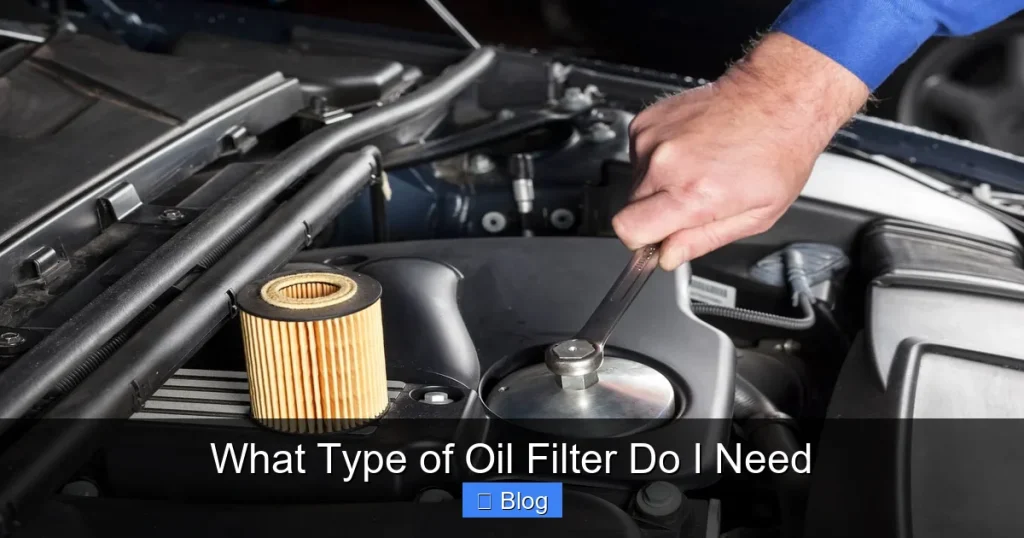
Choosing the correct oil filter is essential for engine health and performance. This guide walks you through how to identify the right filter by checking your owner’s manual, understanding filter types, and matching it to your vehicle and oil. You’ll also learn tips for installation and common mistakes to avoid.
What type of oil filter do I need? The type of oil filter you need depends on your vehicle’s make, model, engine size, and year. Most cars use either a spin-on oil filter or a cartridge (insert) oil filter. Check your owner’s manual or use your VIN number at an auto parts store to find the exact match. Using the correct oil filter ensures proper fit, oil flow, and engine protection.
Key Takeaways
- Check your owner’s manual: It lists the exact oil filter part number and specifications for your vehicle.
- Match the filter to your oil type: Synthetic, conventional, and high-mileage oils may require different filter designs.
- Know your filter types: Spin-on, cartridge, and reusable filters each have pros and cons depending on your needs.
- Consider driving conditions: Severe driving (towing, stop-and-go traffic) may require a heavy-duty or high-capacity filter.
- Buy from trusted brands: Stick with reputable manufacturers like Fram, Bosch, Mobil 1, or OEM parts for reliability.
- Replace during every oil change: Never reuse an old filter—it can cause leaks or engine damage.
- Double-check fitment: Use online tools or consult a parts specialist to ensure compatibility before buying.
Quick Answers to Common Questions
Can I reuse an oil filter?
No, oil filters should never be reused. They trap contaminants and lose efficiency over time. Always install a new filter during every oil change.
Is a more expensive filter always better?
Not necessarily. While premium filters often offer better filtration and durability, a mid-range filter from a trusted brand is usually sufficient for most drivers.
Can I use any filter that fits?
No. Even if a filter physically fits, it may not have the right bypass valve pressure or filtration efficiency. Always use the recommended or compatible model.
Do I need a special filter for synthetic oil?
Not always, but synthetic-specific filters are designed for longer drain intervals and better flow. They’re a smart choice if you use full synthetic oil.
How tight should I install the oil filter?
Hand-tighten only—usually about 3/4 to 1 full turn after the gasket contacts the engine. Over-tightening can damage the seal or housing.
What Type of Oil Filter Do I Need? A Complete How-To Guide
Changing your car’s oil is one of the most important maintenance tasks you can do to keep your engine running smoothly. But while many drivers focus on the oil itself, the oil filter is just as critical. A good filter traps dirt, metal particles, and sludge, preventing them from circulating through your engine. Using the wrong filter—or a low-quality one—can lead to poor performance, leaks, or even engine damage.
In this guide, you’ll learn exactly how to choose the right oil filter for your vehicle. We’ll cover how to find your filter specs, understand different filter types, match filters to your oil and driving habits, and avoid common mistakes. By the end, you’ll feel confident picking the perfect filter every time.
Step 1: Check Your Owner’s Manual
The easiest and most reliable way to find the correct oil filter is to consult your vehicle’s owner’s manual. This small book is packed with essential information, including the recommended oil type, oil capacity, and—most importantly—the exact oil filter part number.

Visual guide about What Type of Oil Filter Do I Need
Image source: gardenerpoints.com
How to Use the Manual
- Look for the “Maintenance” or “Lubrication” section.
- Find the recommended oil filter model (e.g., Fram PH6607, Motorcraft FL-820S).
- Note any special instructions, such as torque specs or gasket requirements.
If you don’t have the manual, don’t worry. Most manufacturers publish digital versions online. Just search “[Your Car Make] [Model] [Year] owner’s manual PDF” to find it.
Step 2: Use an Online Filter Lookup Tool
Many auto parts stores and filter manufacturers offer free online tools to help you find the right filter. These are especially helpful if you’ve lost your manual or bought a used car.

Visual guide about What Type of Oil Filter Do I Need
Image source: i2.wp.com
Popular Lookup Tools
- Fram Filter Lookup: Enter your vehicle’s year, make, model, and engine size.
- Bosch Filter Finder: Offers filters for cars, trucks, motorcycles, and more.
- AutoZone, Advance Auto Parts, or O’Reilly Auto Parts: Their websites have built-in fitment guides.
Simply enter your vehicle details, and the tool will show compatible filters. Always double-check the results with your manual or a parts expert if you’re unsure.
Step 3: Understand the Different Types of Oil Filters
Not all oil filters are created equal. Knowing the types available will help you make a smarter choice based on your needs.
Spin-On Filters
The most common type, spin-on filters are self-contained units that screw directly onto the engine. They’re easy to replace and widely available. Most passenger cars use this style. Look for features like anti-drain back valves and high-efficiency media for better protection.
Cartridge Filters
These filters use a replaceable element inside a reusable housing. You remove the housing, swap out the old filter element, and reinstall it. Cartridge systems are common in European and some newer domestic vehicles. They’re more eco-friendly since you’re not throwing away the entire housing each time.
Reusable or High-Performance Filters
Popular among car enthusiasts, these filters (like K&N) are designed to be cleaned and reused. They often have higher flow rates and better filtration but require more maintenance. Not recommended for everyday drivers unless you’re experienced.
Step 4: Match the Filter to Your Oil Type
The type of oil you use affects which filter is best. Filters are designed to work with specific oil viscosities and additive packages.
Conventional Oil
Standard filters work well with conventional oil. Look for a filter with good dirt-holding capacity and a reliable bypass valve.
Synthetic Oil
Synthetic oils flow better and last longer, so they benefit from high-efficiency filters with advanced media (like synthetic fibers). Some synthetic-specific filters are labeled “for synthetic oil” and offer extended change intervals.
High-Mileage Oil
Vehicles with over 75,000 miles often use high-mileage oil, which contains conditioners for seals. Pair it with a filter that has extra capacity to handle sludge and debris common in older engines.
Tip: If you switch oil types (e.g., from conventional to synthetic), make sure your filter can handle the change. Most modern filters are compatible, but it’s worth checking.
Step 5: Consider Your Driving Conditions
Your daily driving habits play a big role in filter selection. Harsh conditions demand more from your oil and filter.
Severe Driving Conditions
- Frequent short trips (engine doesn’t fully warm up)
- Stop-and-go traffic
- Towing or hauling heavy loads
- Dusty or dirty environments
- Extreme temperatures (very hot or cold)
If you experience any of these, consider a heavy-duty or high-capacity filter. These have larger media areas and stronger construction to handle more contaminants and longer service intervals.
Normal Driving Conditions
If you mostly drive on highways with regular oil changes, a standard filter will work perfectly. Stick to OEM (Original Equipment Manufacturer) or trusted aftermarket brands.
Step 6: Choose a Reputable Brand
Not all filters are built the same. Cheap filters may save you a few dollars upfront but can fail prematurely, causing leaks or engine damage.
Top Oil Filter Brands
- Fram: Known for affordability and wide availability. Great for everyday drivers.
- Bosch: High-quality filters with excellent filtration and durability.
- Mobil 1: Designed for synthetic oil users; offers extended protection.
- K&N: Reusable and high-flow options for performance vehicles.
- OEM (Original Equipment): Filters made by your car’s manufacturer (e.g., Toyota Genuine, Honda Genuine). Best match for your engine.
Tip: Avoid no-name or extremely cheap filters. Look for certifications like ISO/TS 16949, which ensures quality manufacturing.
Step 7: Double-Check Fitment Before Buying
Even with the right part number, fitment issues can happen—especially with aftermarket filters. A filter that’s slightly too long or has the wrong thread size can cause leaks or won’t seal properly.
How to Verify Fitment
- Compare the old filter’s dimensions (height, diameter, thread size) with the new one.
- Check the gasket size—it should match exactly.
- Use a fitment guarantee from the retailer (many offer refunds if the part doesn’t fit).
- Ask a parts counter associate for help if you’re unsure.
Pro tip: Take your old filter to the store for a side-by-side comparison. It’s the best way to ensure a perfect match.
Step 8: Replace the Filter During Every Oil Change
Never skip replacing the oil filter. Over time, the filter becomes clogged with debris and loses efficiency. Reusing an old filter can lead to:
- Reduced oil flow
- Increased engine wear
- Oil leaks
- Premature engine failure
Most experts recommend changing the filter with every oil change—whether you’re doing it every 3,000 miles (conventional) or 7,500–10,000 miles (synthetic).
Troubleshooting Common Oil Filter Problems
Even with the right filter, issues can arise. Here’s how to handle common problems:
Oil Leak After Installation
This is usually caused by a damaged or missing gasket, over-tightening, or using the wrong filter. Solution: Drain the oil, remove the filter, inspect the gasket, and reinstall with a new filter. Hand-tighten only—don’t use a wrench unless specified.
Filter Won’t Screw On
Check the thread size and pitch. Some filters look similar but have different threads. Never force it—this can damage the engine block.
Low Oil Pressure Warning
A clogged or defective filter can restrict oil flow. Replace the filter immediately and check for sludge buildup in the engine.
Final Tips for Choosing the Right Oil Filter
Choosing the right oil filter doesn’t have to be complicated. Follow these golden rules:
- Always start with your owner’s manual.
- Match the filter to your oil type and driving habits.
- Buy from trusted brands.
- Replace the filter every time you change the oil.
- When in doubt, ask a professional.
Taking a few extra minutes to pick the right filter can save you hundreds—or thousands—in engine repairs down the road.
Conclusion
Now you know exactly how to choose the right oil filter for your vehicle. It’s not just about picking any filter off the shelf—it’s about matching the right type, size, and quality to your car, oil, and driving style. By following the steps in this guide, you’ll protect your engine, improve performance, and extend the life of your vehicle.
Remember: A small part like an oil filter plays a big role in your car’s health. Don’t overlook it. With the right knowledge and a little attention to detail, you can make the best choice every time.

Sagor Jahan is the founder and author of Automopromo.com, dedicated to delivering insightful tips, reviews, and updates in the automotive and promotional industry. With a passion for innovation and clear guidance, Sagor helps readers make informed decisions and stay ahead in the ever-evolving automotive world.

