
When tackling spark plug replacement, many wonder: should you replace ignition coils when replacing spark plugs? This guide breaks it down, showing how worn coils can mimic bad plugs and why replacing them together often prevents future headaches. You’ll get step-by-step advice, tools needed, and troubleshooting to keep your engine running smoothly.
Should You Replace Ignition Coils When Replacing Spark Plugs
Hey there, fellow car enthusiast! If you’re diving into some DIY maintenance, you might be asking yourself: should you replace ignition coils when replacing spark plugs? This guide is your go-to resource. We’ll explore the basics, spot the signs of trouble, and walk you through the process step by step. By the end, you’ll know if it’s time to swap those coils too, saving you trips to the shop and keeping your ride purring like new. Let’s get started on making your engine maintenance smarter and easier.
Key Takeaways
- Assess wear first: Check ignition coils for cracks or corrosion before deciding to replace them alongside spark plugs to avoid misdiagnosis.
- Save time and money: Replacing ignition coils during spark plug service prevents repeat labor and potential engine damage down the line.
- Look for symptoms: Misfires, rough idling, or poor fuel economy signal when you should replace ignition coils when replacing spark plugs.
- Use quality parts: Opt for OEM or trusted aftermarket coils and plugs to ensure compatibility and longevity in your vehicle.
- DIY with caution: If you’re experienced, follow steps to replace both; otherwise, consult a mechanic for safety.
- Maintenance schedule: Coils typically last 100,000 miles, so align replacement with spark plugs every 30,000-100,000 miles depending on your car.
Quick Answers to Common Questions
Always gap your plugs?
Yes, even pre-gapped ones can shift in shipping. Use a feeler gauge for precision to match your manual’s spec.
Can I drive with a bad coil?
Short distances only—prolonged use risks engine damage or stranded situations. Address it soon.
What’s the difference between coil packs and individual coils?
Coil packs serve multiple cylinders; individual (coil-on-plug) are per cylinder. Replacement is similar but packs are bulkier.
Do I need a special socket for iridium plugs?
No, a standard thin-wall socket works fine. Just handle gently to avoid damaging the fine electrode.
How do I know if it’s the coil or the plug?
Swap the suspect coil to another cylinder. If the misfire moves, it’s the coil—simple test!
Understanding Ignition Coils and Spark Plugs
Spark plugs and ignition coils work hand in hand to fire up your engine. Spark plugs create the spark that ignites the fuel-air mix in your cylinders. Ignition coils, on the other hand, boost the battery’s low voltage to the high voltage needed for that spark—think of them as the power amplifiers.
Over time, both wear out. Spark plugs get fouled with carbon or oil, while ignition coils can crack from heat or fail due to electrical issues. The big question is whether to replace ignition coils when replacing spark plugs. The short answer? It depends on your car’s age, mileage, and symptoms. But often, yes—doing both at once makes sense. Why? Because accessing the coils usually involves pulling the plugs anyway, and old coils can quickly ruin new plugs.
For example, in a typical sedan like a Honda Civic, spark plugs last 30,000 to 100,000 miles depending on the type (copper vs. iridium). Ignition coils? They often go 100,000 miles or more, but heat and vibrations take a toll faster in high-mileage vehicles.
Signs That You Should Replace Ignition Coils When Replacing Spark Plugs
Not every spark plug job needs coil replacement. But ignoring coil issues can lead to bigger problems, like engine misfires or even catalytic converter damage. Here are key signs to watch for.
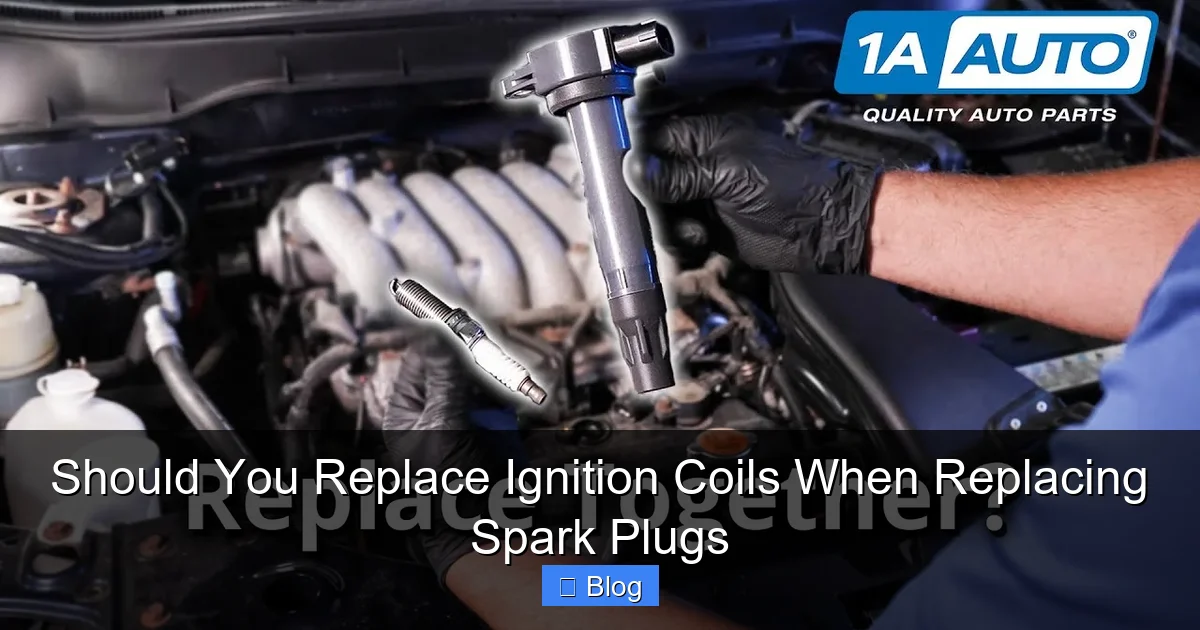
Visual guide about Should You Replace Ignition Coils When Replacing Spark Plugs
Image source: i.ytimg.com
Engine Misfires or Rough Idling
If your car shakes at idle or hesitates under acceleration, a failing coil might be the culprit. It delivers weak sparks, causing incomplete combustion. This symptom overlaps with bad plugs, so diagnose carefully.
Check Engine Light and Error Codes
A glowing check engine light with codes like P0300 (random misfire) or P0301 (cylinder 1 misfire) often points to coils. Use an OBD-II scanner to pinpoint it. If you’re already replacing plugs due to similar codes, inspect the coils too.
Poor Fuel Economy or Power Loss
Struggling to get good MPG or feeling a lack of pep? Weak coils reduce efficiency. In one case, a driver noticed a 10% drop in fuel economy after 80,000 miles—swapping coils with plugs fixed it right up.
Visual Inspection Clues
Pop the hood and look for cracked coil boots, corrosion on connectors, or oil leaks around them. These are red flags, especially if you’re in there for plugs.
Practical tip: If your vehicle has coil-on-plug design (common in modern cars), it’s easy to test each coil by swapping positions and seeing if the misfire follows. This simple swap can confirm if you should replace ignition coils when replacing spark plugs.
Pros and Cons of Replacing Both at Once
Deciding to replace ignition coils when replacing spark plugs isn’t always straightforward. Let’s weigh the options.

Visual guide about Should You Replace Ignition Coils When Replacing Spark Plugs
Image source: vehq.com
On the pro side, it saves labor. You’re already removing valve covers or intake manifolds—why not do it all? It also prevents “limp mode” failures shortly after a plug job. For instance, in trucks like the Ford F-150, coils fail around 100,000 miles, aligning with platinum plug intervals.
Cons? Cost. A full set of coils can run $100-300, plus plugs. If your coils are fine, it’s overkill. But statistically, if one coil fails, others are often on their way out due to shared heat exposure.
Bottom line: If your car has over 80,000 miles or shows symptoms, yes—replace them together for peace of mind.
Tools and Materials Needed
Before jumping in, gather your supplies. This ensures a smooth job without last-minute trips to the auto parts store.
| Tool/Material | Purpose | Estimated Cost |
|---|---|---|
| Spark Plug Socket | Grips and removes plugs without slipping | $10-15 |
| Torque Wrench | Tightens plugs and coils to spec to prevent damage | $20-50 |
| Dielectric Grease | Prevents corrosion on coil boots and plug threads | $5-10 |
| Coil Puller Tool | Safely removes stuck ignition coils without breaking | $15-25 |
| OBD-II Scanner | Diagnoses misfire codes before starting work | $20-100 |
| Anti-Seize Compound | Lubricates threads to ease future removals | $5-8 |
| Ratchet and Extensions | Reaches deep-set coils and plugs | $15-30 |
Essential tools include a ratchet set (3/8-inch drive), spark plug socket (usually 5/8-inch or 13/16-inch with rubber insert), torque wrench, and dielectric grease. For coils, you’ll need a coil puller tool if they’re stuck, plus anti-seize compound.
Materials: New spark plugs (gap them per your manual), ignition coils (match your vehicle’s specs), and fresh engine oil if needed. Safety gear like gloves and eye protection is a must.
Quick Reference
With these in hand, you’re set. Pro tip: Buy parts from reputable brands like NGK for plugs and Delphi for coils to match OEM quality.
Step-by-Step Guide to Replacing Spark Plugs and Ignition Coils
Ready to roll up your sleeves? This guide assumes a coil-on-plug system, common in cars from the 2000s onward. Always consult your owner’s manual for specifics. Park on a flat surface, let the engine cool, and disconnect the battery for safety.
Step 1: Prepare Your Vehicle
Start by locating the spark plugs—usually under the valve cover. Remove any plastic engine covers with a screwdriver. Label wires if needed, though modern cars have individual coils.
Tip: Work on one cylinder at a time to avoid mix-ups. For a four-cylinder engine, this takes about 2-3 hours total.
Step 2: Remove Ignition Coils (If Replacing)
If you’ve decided to replace ignition coils when replacing spark plugs, unplug the electrical connector on each coil. Press the tab gently—don’t yank. Then, remove the mounting bolt (usually 10mm) and pull the coil straight up.
If it’s stubborn, twist slightly or use the puller tool. Inspect the old coil for cracks or wear. Example: In a Toyota Camry, coils are right on top, making this step a breeze.
Practical advice: Clean the area with a rag to spot any debris that could harm new parts.
Step 3: Remove Old Spark Plugs
With coils out, use your spark plug socket and extension to loosen each plug counterclockwise. Turn slowly to avoid stripping threads. Blow out debris from the well with compressed air.
Examine the plugs: Black and sooty means rich fuel mix; white and blistered indicates lean. This can clue you in on other issues.
Step 4: Install New Spark Plugs
Apply a thin layer of anti-seize to the threads (sparingly!). Hand-thread the new plugs to avoid cross-threading, then torque to spec—typically 13-21 ft-lbs for most cars.
Don’t over-torque; it can crack the porcelain. For iridium plugs, which last longer, gap them if not pre-gapped.
Step 5: Install New Ignition Coils
Push new coils onto the plugs firmly until they seat. Reinstall bolts and reconnect wiring. Add dielectric grease to the boot for a weatherproof seal.
Tighten everything snug but not overtight—overdoing it warps components.
Step 6: Reassemble and Test
Replace covers, reconnect the battery, and start the engine. Let it idle and check for smooth running. Clear any codes with your scanner and take a short drive.
If all’s well, you’ve just boosted performance. Expect better starts and efficiency.
Troubleshooting Common Issues
Even with careful work, hiccups happen. Here’s how to handle them.
Misfires Persist After Replacement
If the engine still stutters, double-check connections or swap coils to isolate a faulty new one. It could also be wiring or a deeper issue like a bad ECU.
Difficulty Removing Stuck Parts
For seized plugs, apply penetrating oil and wait 10 minutes. Never force it—risk of thread damage means pro help.
Oil in Spark Plug Wells
This signals a valve cover gasket leak. Clean thoroughly before reinstalling to prevent shorts in the coils.
Example: A Subaru owner found oil contamination causing coil failures—replacing the gasket fixed recurring issues.
Tip: If you’re unsure, a compression test can rule out bigger engine problems before you replace ignition coils when replacing spark plugs.
Cost and Maintenance Tips
Budget-wise, spark plugs cost $5-20 each, coils $20-80. DIY saves $200-500 in labor versus a shop. Schedule this every 60,000 miles for optimal health.
Preventive maintenance: Use high-quality fuel and change oil regularly to extend part life. In hot climates, check coils yearly for heat damage.
Conclusion
So, should you replace ignition coils when replacing spark plugs? If symptoms point to it or your mileage is high, absolutely—it’s a smart, efficient move that keeps your engine reliable. You’ve now got the knowledge to tackle this job confidently, whether DIY or guiding a mechanic. Regular upkeep like this not only saves money but also ensures safer, smoother drives. Got questions? Drop a comment below. Happy wrenching!

Sagor Jahan is the founder and author of Automopromo.com, dedicated to delivering insightful tips, reviews, and updates in the automotive and promotional industry. With a passion for innovation and clear guidance, Sagor helps readers make informed decisions and stay ahead in the ever-evolving automotive world.

