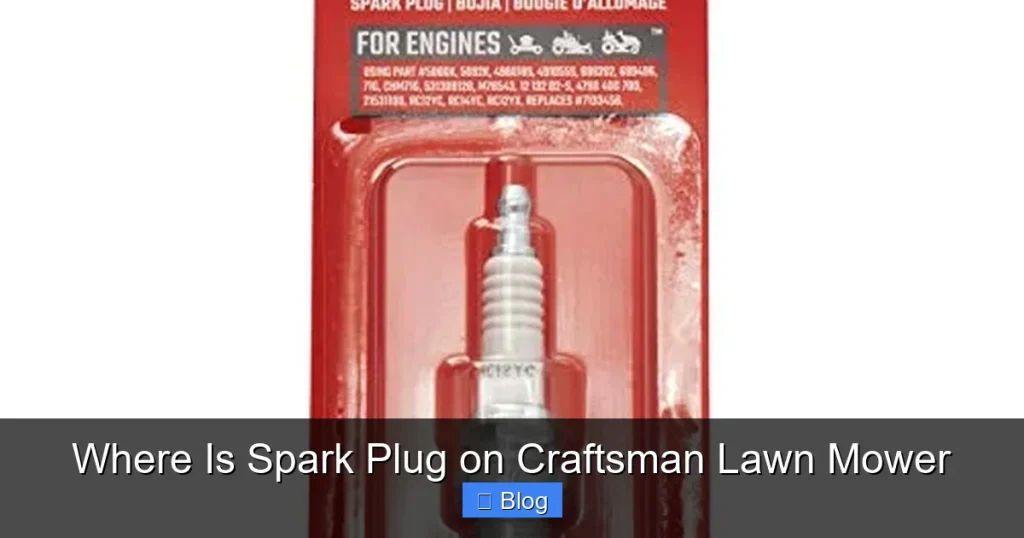
If you’re wondering where is spark plug on Craftsman lawn mower, it is usually located on the side or front of the engine, connected to a thick rubber wire (spark plug wire). You can easily identify it by following this wire to a small metal part screwed into the engine block. This component is essential for starting the mower, as it ignites the fuel-air mixture.
In most Craftsman lawn mowers, the spark plug is positioned in an accessible spot to make maintenance simple. Depending on the model, it may be slightly hidden under a protective cover, but it’s still easy to find once you locate the wire. Always ensure the mower is turned off and cool before checking it.
Regularly inspecting and cleaning the spark plug can improve your mower’s performance and make starting easier. If the engine struggles to start or runs unevenly, the spark plug may be dirty or worn out and needs replacement.
Where Is Spark Plug on Craftsman Lawn Mower: A Complete How-To Guide
Maintaining your Craftsman lawn mower is key to a long-lasting, efficient machine that keeps your yard looking its best. One of the most fundamental yet often overlooked maintenance tasks is locating, inspecting, and occasionally replacing the spark plug. If your mower is hard to start, runs rough, or seems to lack power, a faulty or dirty spark plug is often the culprit. Understanding where the spark plug is on your Craftsman lawn mower, how to check its condition, and how to replace it, is an essential skill for any homeowner.
In this comprehensive guide, we’ll walk you through everything you need to know. We’ll cover the common locations for spark plugs on various Craftsman models, the tools you’ll need, step-by-step instructions for inspection and replacement, and practical tips to ensure your mower stays in top shape. By the end of this guide, you’ll be confident in finding and servicing the spark plug on your Craftsman lawn mower, empowering you to tackle basic engine maintenance like a pro.
Key Takeaways
- General Location: The spark plug on a Craftsman lawn mower is almost always found on the engine block itself, usually protruding from the cylinder head.
- Safety First: Always disconnect the spark plug wire and remove the ignition key (if applicable) before performing any maintenance to prevent accidental starting.
- Engine Variation Matters: While Craftsman makes the mower, the engine is often from brands like Briggs & Stratton, Kohler, or Honda. Knowing your engine type can help locate the spark plug more quickly.
- Tools You’ll Need: Essential tools include a spark plug wrench (or deep socket), a gap tool, a wire brush for cleaning, and potentially a new spark plug.
- Inspection is Key: Don’t just find it; inspect its condition. A healthy spark plug should have light brown or grayish deposits, while black, oily, or carbon-fouled plugs indicate problems.
- Replacement Frequency: Most manufacturers recommend replacing the spark plug annually or every 25 hours of operation, whichever comes first, for optimal performance.
- Proper Gapping: Ensure the new spark plug is gapped correctly according to your engine’s specifications for efficient ignition.
Quick Answers to Common Questions
What if I can’t find the spark plug wire?
If the spark plug wire is difficult to spot, try looking for the cylinder head on the engine block. The spark plug will always be connected to this. Sometimes, the wire might be tucked away or partially obscured by other components. Feel around the engine block; the thick rubber boot is usually quite distinct.
Can I clean a really dirty spark plug instead of replacing it?
While you can clean a slightly fouled spark plug with a wire brush, it’s generally recommended to replace heavily fouled, worn, or damaged spark plugs. Cleaning often doesn’t restore them to optimal performance, and a new spark plug is an inexpensive way to ensure reliable ignition.
How do I know the correct spark plug gap?
The correct spark plug gap is crucial and can be found in your Craftsman lawn mower’s owner’s manual or sometimes on a decal directly on the engine. If you can’t find it, a common range for small engines is between 0.020 and 0.030 inches (0.5 to 0.75 mm), but always try to find the exact specification for your model.
What if the spark plug is stuck?
If the spark plug feels stuck, don’t force it excessively. Try applying a penetrating oil (like WD-40) around the base and let it soak for 15-30 minutes. Then, apply firm, steady pressure counter-clockwise. If it still won’t budge, it’s best to consult a professional to avoid damaging the engine block threads.
Should I check the spark plug if my mower isn’t starting after winter storage?
Absolutely! A dirty or worn spark plug is one of the most common reasons a lawn mower won’t start after sitting for the winter. Fuel can leave deposits on the plug, or it may have simply reached the end of its lifespan. It’s a great first diagnostic step for spring startup issues.
Understanding Your Craftsman Lawn Mower Engine
Before we dive into the exact location, it’s helpful to understand that while your lawn mower carries the Craftsman brand, the engine itself is often manufactured by another company. Common engine brands found on Craftsman lawn mowers include Briggs & Stratton, Kohler, Honda, or sometimes Tecumseh (though less common on newer models). The specific engine type will slightly influence the spark plug’s exact position and the tools required.
Generally, the spark plug will be located on the cylinder head of the engine block. This is usually on the front, side, or sometimes the top of the engine, designed to be accessible for maintenance. It’s identifiable by a thick, rubber-insulated wire (the spark plug wire) connected to its top. This wire delivers the high voltage needed to create the spark that ignites the fuel-air mixture.
Safety First: Essential Precautions
Before you even think about touching any part of your Craftsman lawn mower’s engine, safety must be your absolute top priority. Working with engines involves potential hazards, and taking a few moments to prepare can prevent accidents.
Disconnect the Spark Plug Wire
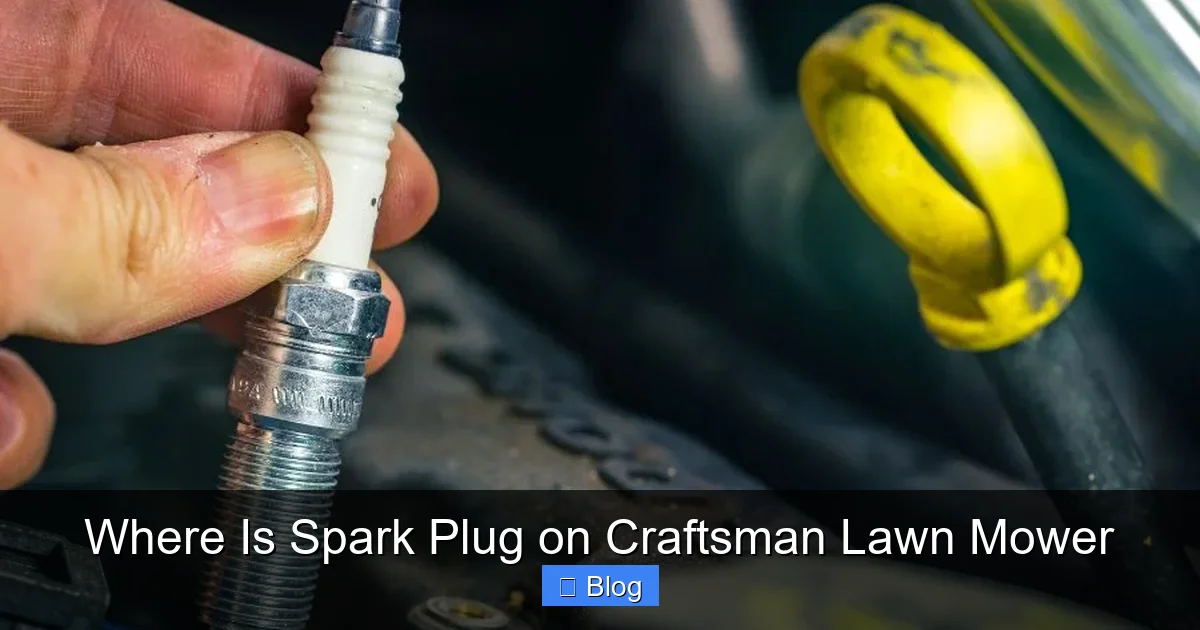
This is the most critical step. Always, always disconnect the spark plug wire from the spark plug before performing any work on the mower. This prevents the engine from accidentally starting, even if the ignition key is off or the safety bail is released. Simply grasp the rubber boot firmly and pull it straight off the spark plug terminal. Do not pull on the wire itself.
Visual guide about Where Is Spark Plug on Craftsman Lawn Mower
Image source: mowing.expert
Allow the Engine to Cool
If you’ve recently used your lawn mower, the engine will be hot. Hot metal can cause severe burns. Give the engine plenty of time to cool down completely before you begin. This usually means waiting at least 30 minutes to an hour after the last use.
Work in a Well-Ventilated Area
If you need to start the engine for any reason (e.g., troubleshooting after reassembly), do so in a well-ventilated area to avoid inhaling exhaust fumes.
Gather Your Tools
Having all your tools within reach before you start saves time and reduces frustration. Make sure you have the right spark plug wrench or socket size for your specific spark plug. We’ll detail the necessary tools below.
Locating the Spark Plug on Your Craftsman Lawn Mower
Now, let’s get down to business. Finding the spark plug on your Craftsman lawn mower is typically a straightforward process.
Step 1: Identify Your Engine Type
While not strictly necessary to find it, knowing your engine manufacturer (Briggs & Stratton, Kohler, Honda, etc.) can sometimes help. Look for a label or decal on the engine block itself. This information can also be found in your mower’s owner’s manual.
Visual guide about Where Is Spark Plug on Craftsman Lawn Mower
Image source: mowing.expert
Step 2: Position the Mower for Access
Park your Craftsman lawn mower on a flat, stable surface. For walk-behind mowers, you might find it easier to tilt the mower slightly backward (raising the front wheels) to get a better view and working angle. If tilting, make sure the air filter and carburetor are facing upwards to prevent fuel or oil leaks.
Step 3: Scan the Engine Block
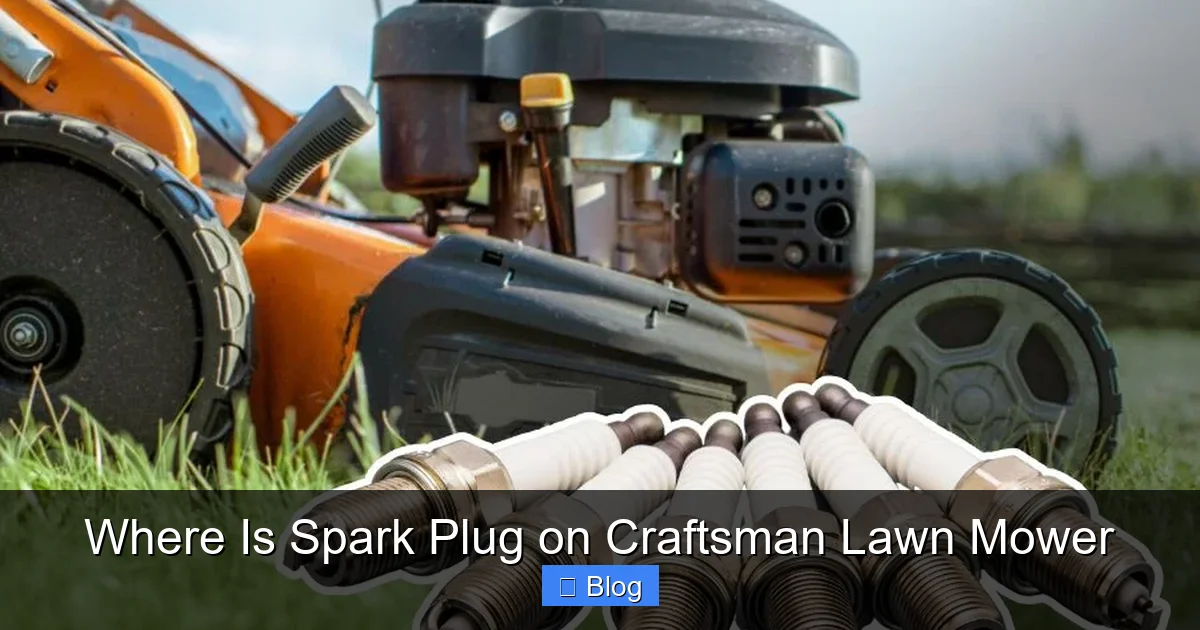
Look for a thick, rubber-insulated wire coming out of the engine block. This is the spark plug wire. Follow this wire to where it connects to a ceramic insulator and a metal hexagonal base. That hexagonal base is the visible part of the spark plug.
- For Briggs & Stratton Engines: Often found on the front or side of the engine, usually slightly above the center line.
- For Kohler Engines: Typically located on the front or side, similar to Briggs & Stratton, but sometimes a bit higher on the cylinder head.
- For Honda Engines: Frequently positioned towards the front or top of the engine block, often angled slightly.
The spark plug is rarely hidden under covers on most walk-behind Craftsman mowers. If you have a riding mower, you might need to open the hood or remove a side panel for better access.
Step 4: Disconnect the Spark Plug Wire
Once you’ve located it, grasp the rubber boot firmly and pull it straight off the spark plug. Be careful not to pull on the wire itself, as this can damage the internal conductors. Set the wire aside where it won’t accidentally reconnect.
Tools and Materials You’ll Need
Having the right tools makes the job much easier and prevents potential damage to the spark plug or engine. Here’s what you’ll typically need:
| Tool/Material | Purpose |
|---|---|
| Spark Plug Wrench or Deep Socket Set | To remove and install the spark plug. Common sizes are 13/16 inch, 5/8 inch, or 3/4 inch. |
| Ratchet Wrench (for socket) | Provides leverage for turning the deep socket. |
| Spark Plug Gap Tool | Measures and adjusts the gap between the spark plug electrodes. Essential for proper ignition. |
| Wire Brush | To gently clean carbon deposits from the old spark plug if you plan to reuse it. |
| New Spark Plug (optional) | If replacement is necessary. Match the type and heat range to your engine specifications. |
| Clean Cloth/Rag | To wipe away dirt or debris around the spark plug well before removal. |
| Anti-Seize Lubricant (optional) | Helps prevent the new spark plug from seizing in the engine block, especially for aluminum heads. |
Inspecting and Replacing the Spark Plug
Once you’ve located and disconnected the spark plug wire, you’re ready to inspect or replace the spark plug itself.
Step 1: Clean Around the Spark Plug Well
Before you remove the spark plug, use a clean cloth or a small brush to clear any dirt, grass, or debris from around the base of the spark plug. This prevents foreign particles from falling into the engine cylinder once the plug is removed, which could cause significant damage.
Step 2: Remove the Old Spark Plug
- Select the Correct Wrench: Choose the appropriate spark plug wrench or deep socket that fits snugly over the hexagonal base of the spark plug.
- Loosen the Plug: Attach your ratchet wrench to the socket. Turn counter-clockwise to loosen the spark plug. It might be tight initially, so apply steady pressure. Once it breaks loose, it should turn relatively easily by hand or with the wrench.
- Extract the Plug: Carefully unscrew the spark plug completely by hand to avoid cross-threading the engine block. Once loose, pull it straight out of the engine.
Step 3: Inspect the Old Spark Plug
This is where you can learn a lot about your engine’s health. Examine the firing end of the spark plug (the ceramic insulator and electrodes).
- Normal Condition: The insulator tip should be light tan or grayish-brown with minimal electrode wear. This indicates healthy combustion.
- Carbon Fouling (Black, Sooty): A dry, black, sooty appearance suggests a rich fuel mixture, a clogged air filter, or extended idling. Your engine might be running too rich.
- Oil Fouling (Black, Oily): A wet, black, oily appearance indicates oil leaking into the combustion chamber, possibly due to worn piston rings or valve guides. This is a more serious engine issue.
- Ash Deposits (White/Grayish Deposits): Hard, brittle deposits can come from fuel additives or oil additives. Excessive deposits can cause pre-ignition.
- Overheating (Blistered/Melted Electrodes): A white or gray insulator with blistered electrodes suggests the engine is running too hot, possibly due to incorrect timing, too lean a fuel mixture, or an incorrect spark plug heat range.
- Worn Electrodes: If the center and ground electrodes are significantly worn or rounded, the spark plug has reached the end of its life and needs replacement, regardless of color.
Based on your inspection, you’ll decide whether to clean and reuse the old plug (if it’s in good condition) or replace it.
Step 4: Prepare the New (or Cleaned) Spark Plug
If Reusing:
If the old spark plug is otherwise healthy but just slightly carbon-fouled, you can try cleaning it with a wire brush. Gently brush away deposits from the electrodes and insulator. Be careful not to damage the ceramic insulator.
If Replacing:
Always use a spark plug recommended by your Craftsman lawn mower’s engine manufacturer. This information is usually in your owner’s manual or stamped on the old spark plug itself. Make sure the new spark plug is the correct type and heat range.
New spark plugs often come pre-gapped, but it’s crucial to verify and adjust the gap if necessary. Use your spark plug gap tool to set the gap according to your engine’s specifications (again, found in your owner’s manual). Gently bend the ground electrode to adjust the gap.
Optional: Apply a thin layer of anti-seize lubricant to the threads of the new spark plug. This helps prevent it from seizing in the engine block over time, making future removals easier.
Step 5: Install the Spark Plug
- Hand-Tighten First: Carefully thread the new (or cleaned) spark plug into the engine block by hand. Turn it clockwise. It should thread in smoothly without resistance. If it binds, stop immediately and re-align to avoid cross-threading, which can severely damage the engine block.
- Tighten with Wrench: Once hand-tight, use your spark plug wrench or socket to tighten the spark plug. Do not overtighten! Overtightening can strip the threads in the engine block or crack the spark plug’s ceramic insulator. A good rule of thumb for new spark plugs (without anti-seize) is to tighten about 1/2 to 2/3 of a turn past finger-tight. If using anti-seize, reduce this to about 1/4 to 1/2 turn past finger-tight. Consult your owner’s manual for specific torque specifications if you have a torque wrench.
Step 6: Reconnect the Spark Plug Wire
Push the rubber boot of the spark plug wire firmly back onto the terminal of the spark plug until you feel it seat securely. Give it a gentle tug to ensure it’s firmly connected.
Troubleshooting Common Spark Plug Issues
A failing spark plug can manifest in several ways. Here are common symptoms and what they might indicate:
- Hard Starting or No Start: This is the most common symptom. If the spark plug is fouled, worn, or incorrectly gapped, it won’t produce a strong enough spark to ignite the fuel.
- Rough Idling or Engine Misfires: An inconsistent spark can lead to the engine sputtering, vibrating excessively, or occasionally missing a combustion cycle.
- Loss of Power: A weak spark means incomplete combustion, leading to reduced engine power, especially under load.
- Excessive Fuel Consumption: Inefficient combustion due to a bad spark plug means the engine is using more fuel to produce less power.
- Black Smoke from Exhaust: Often accompanied by carbon-fouled spark plugs, indicating a rich fuel mixture that isn’t burning completely.
If you experience these symptoms, inspecting the spark plug on your Craftsman lawn mower is an excellent first step in diagnosing the problem.
Maintenance Tips for Your Craftsman Lawn Mower Spark Plug
Regular maintenance of your spark plug will keep your Craftsman lawn mower running smoothly for years.
- Follow Manufacturer Recommendations: Check your owner’s manual for specific spark plug replacement intervals. A common recommendation is to replace it annually or every 25 operating hours, whichever comes first.
- Always Use the Correct Spark Plug: Don’t just grab any spark plug. Ensure it’s the correct type, heat range, and has the proper gap for your specific engine. Using the wrong plug can lead to poor performance or engine damage.
- Keep it Clean: Regularly check and clean the area around the spark plug well to prevent debris from entering the engine.
- Store Properly: When storing your lawn mower for the off-season, consider removing the spark plug and adding a small amount of engine oil (or fogging oil) into the cylinder for winterization. This helps prevent rust and corrosion.
Conclusion
Locating, inspecting, and replacing the spark plug on your Craftsman lawn mower is a fundamental maintenance task that can significantly impact its performance and longevity. It’s a simple, cost-effective repair that can resolve many common starting and running issues. By following the steps outlined in this guide, prioritizing safety, and using the correct tools, you can confidently perform this maintenance yourself. Regular checks of your spark plug will not only ensure your Craftsman mower starts easily and runs efficiently but also help you catch potential engine problems early, saving you time and money in the long run. Keep your mower in peak condition, and enjoy a perfectly manicured lawn!

Sagor Jahan is the founder and author of Automopromo.com, dedicated to delivering insightful tips, reviews, and updates in the automotive and promotional industry. With a passion for innovation and clear guidance, Sagor helps readers make informed decisions and stay ahead in the ever-evolving automotive world.