
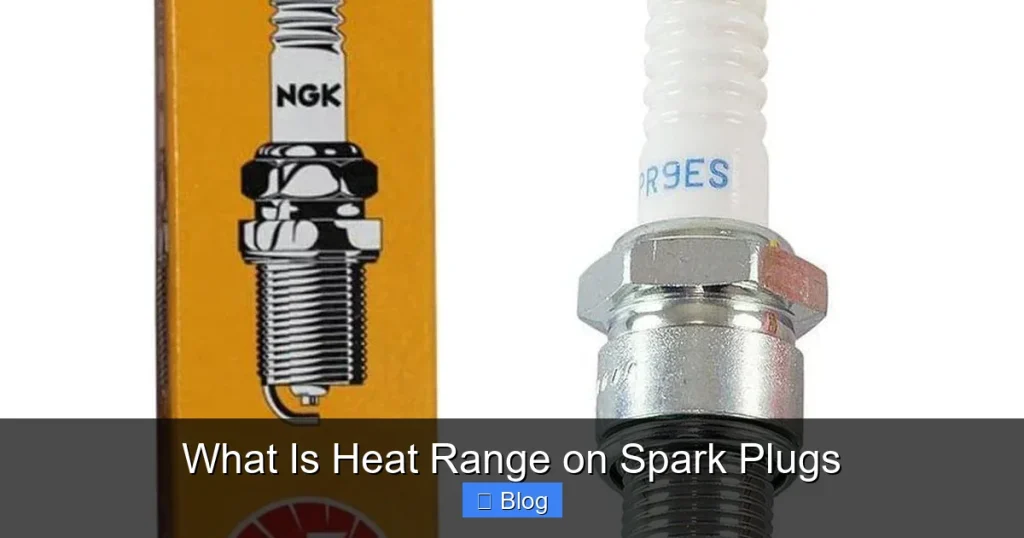
Spark plugs are vital for your engine’s ignition, but what is heat range on spark plugs? It’s a measure of how quickly the plug dissipates heat to prevent fouling or pre-ignition. This guide breaks it down simply, helping you select the ideal heat range for better performance and engine health. (78 words)
What Is Heat Range on Spark Plugs
Hey there, fellow car enthusiast! If you’ve ever popped open your engine bay and wondered about those little spark plugs, you’re in the right place. Spark plugs ignite the air-fuel mixture in your engine, but not all are created equal. One key spec that often confuses folks is heat range on spark plugs. In this guide, we’ll dive deep into what it means, why it matters, and how to pick the right one for your ride. By the end, you’ll feel confident swapping plugs or troubleshooting issues like a pro. Whether you’re a weekend warrior or just curious about auto basics, stick around—we’ll keep it simple and fun.
We’ll cover the basics of heat range, how it works in your engine, steps to choose and install the right plugs, plus tips to avoid common pitfalls. Let’s spark some knowledge!
Quick Answers to Common Questions
What’s the difference between hot and cold plugs?
Hot plugs keep more heat at the tip for better cleaning in cooler engines, while cold plugs shed heat quickly to avoid damage in high-output setups. Choose based on your engine’s needs to prevent fouling or knock.
How do I know if my heat range is wrong?
Inspect plugs for black soot (too cold) or white melting (too hot). Symptoms like misfires or pinging during acceleration are red flags—adjust accordingly for smoother performance.
Can I use a different brand’s heat range?
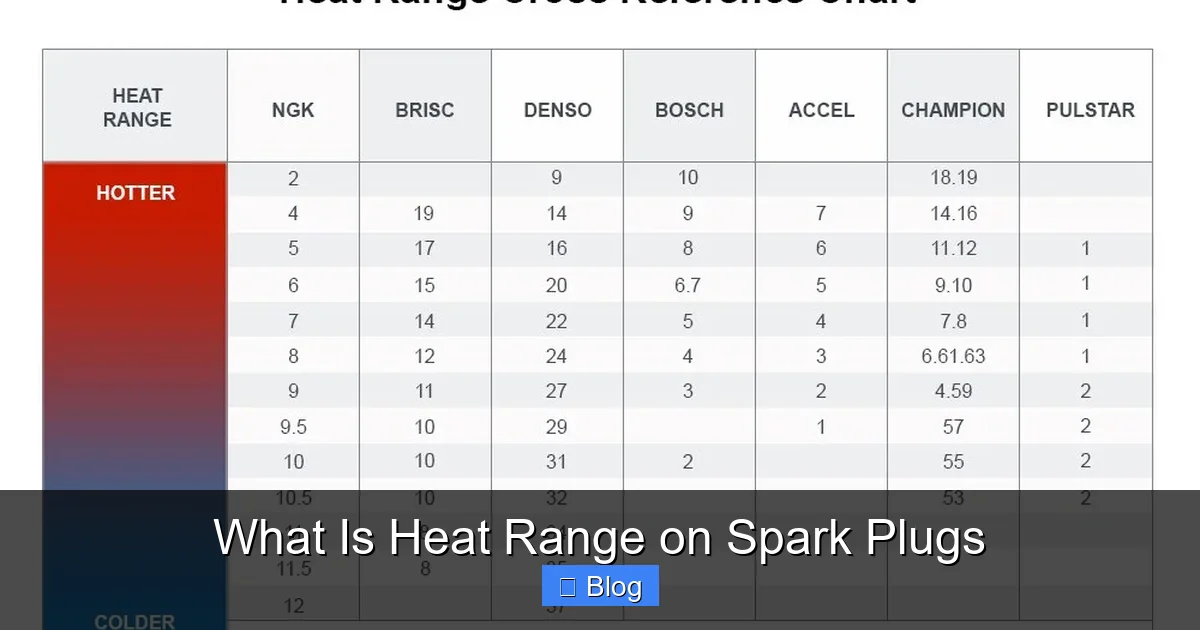
Yes, but cross-reference charts first, as numbering varies. For example, NGK’s 6 might match Bosch’s 8—always verify to ensure compatibility with your engine.
Does altitude affect heat range choice?
Absolutely—higher altitudes mean thinner air and cooler combustion, so opt for a hotter plug to compensate and maintain efficient burning.
Quick tip for installation?
Torque plugs to spec (around 15 ft-lbs for most) and use dielectric grease on boots to prevent corrosion. This ensures a reliable connection and easier future swaps.
Understanding the Basics of Heat Range
So, what is heat range on spark plugs? At its core, heat range describes how a spark plug handles the intense heat from combustion. Think of it as the plug’s “thermal personality.” It tells you how quickly the firing end (the tip) sheds heat to the cooler parts of the engine, like the threads or insulator.
Spark plugs operate in extreme conditions—temps can hit 2,000°F or more during a firing cycle. The heat range ensures the tip stays within a sweet spot: hot enough to burn off deposits but cool enough to avoid melting or pre-igniting the mixture. Manufacturers like NGK or Bosch rate plugs on a scale, often from 2 (coldest) to 12 (hottest), though numbers vary by brand.
Why Heat Range Matters for Your Engine
A mismatched heat range can lead to big problems. Too hot, and the plug overheats, causing detonation or engine knock. Too cold, and it fouls with carbon buildup, leading to misfires. Getting it right boosts fuel efficiency, power, and plug life—sometimes up to 100,000 miles!
For example, in a daily driver like a Honda Civic, a standard heat range keeps things balanced. But if you’re tuning for racing, you might need a colder plug to handle the extra heat from forced induction.
How Heat Range Works in Your Engine
Let’s break down the mechanics. Every spark plug has a ceramic insulator around the center electrode. This insulator controls heat flow. In a “hot” plug, the insulator is thicker or longer, trapping heat at the tip to self-clean. In a “cold” plug, it’s shorter or thinner, letting heat escape faster to the cylinder head.
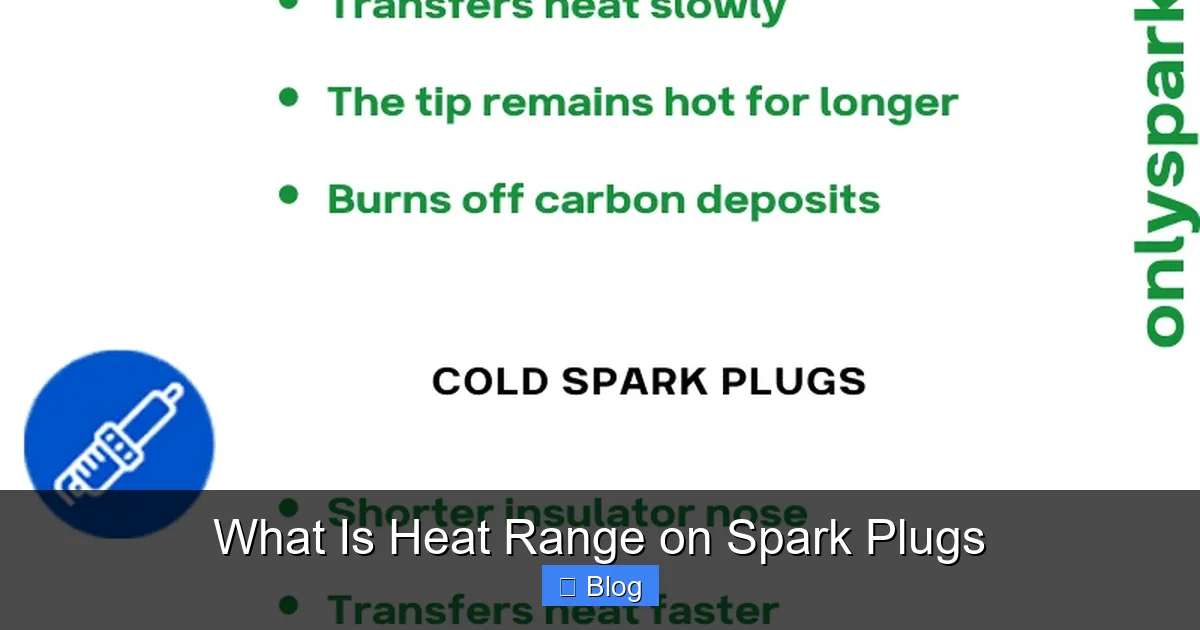
Visual guide about What Is Heat Range on Spark Plugs
Image source: plugspecs.com
During operation, the plug’s tip must reach about 500–900°C to vaporize oil and carbon. Below that, fouling happens. Above 900°C, the electrodes can glow and ignite fuel prematurely. Heat range keeps it just right.
Factors Influencing Heat Range Needs
- Engine Type: Stock engines favor mid-range plugs; high-compression or turbo setups need colder ones.
- Climate: Cold winters? Go hotter to warm up faster. Hot deserts? Colder to prevent overheating.
- Driving Habits: Stop-and-go city driving builds heat slowly, so hotter plugs shine. Highway cruising? Mid-range works fine.
- Modifications: Aftermarket cams or exhausts change combustion temps, often requiring a colder heat range.
Real-world tip: If you’re in a mild climate with a unmodified Subaru, stick to the OEM spec. But add a turbo? Drop one or two heat range numbers for safety.
Step-by-Step Guide to Choosing the Right Heat Range
Now, let’s get hands-on. Selecting the correct heat range on spark plugs isn’t guesswork—follow these steps for a perfect match.
Visual guide about What Is Heat Range on Spark Plugs
Image source: images.powersportsid.com
Step 1: Consult Your Vehicle Manual
Start simple. Grab your owner’s manual or look up your model’s specs online via sites like RockAuto or the manufacturer’s site. They’ll list the recommended plug and its heat range number. For instance, a Ford F-150 might call for an Autolite 3924, which has a heat range of 5 on their scale.
Pro tip: Cross-reference with plug charts from brands like Champion. Numbers differ—NGK’s 7 might equal Bosch’s 6—so always verify.
Step 2: Assess Your Engine and Driving Conditions
Evaluate your setup. Is your engine stock? Measure compression if unsure. High performance? Factor in boost levels or RPMs.
Consider environment too. In snowy Minnesota, a hotter plug (higher number) aids cold starts. In sunny Arizona, colder (lower number) prevents knock.
Example: A modified VW Golf with a chip tune might need to step down from stock NGK BKR6E (heat range 6) to BKR7E (range 7, colder in NGK’s inverted scale—yes, some brands reverse numbering!).
Step 3: Select and Compare Plug Options
Head to an auto parts store or online. Look for plugs in your thread size (14mm most common) and reach, then filter by heat range.
Use tools like gap gauges later, but first, match the range. Budget? Copper plugs are cheap but short-lived; iridium lasts longer and handles heat better.
Practical advice: Buy a set with one extra. Test one plug first if experimenting with ranges.
Quick Reference: Heat Range Comparison Table
Need a fast visual? This table summarizes common heat ranges across popular brands, showing when to use each based on conditions. It helps you compare without digging through catalogs.
| Heat Range Type | NGK Example | Bosch Example | Best For | Typical Engine Temp Handling |
|---|---|---|---|---|
| Very Hot | BKR5E (5) | FR7DC (7) | Cold climates, low-load engines | Retains heat for quick warm-up; fouls in high heat |
| Hot | BKR6E (6) | FR8DC (8) | Standard daily drivers, mild winters | Balances cleaning and cooling; good for stock setups |
| Mid-Range | BKR7E (7) | FR9DC (9) | Most OEM applications, varied conditions | Versatile; handles 80% of unmodified engines |
| Cold | BKR8E (8) | FR10DC (10) | High-performance, turbocharged | Dissipates heat fast; prevents pre-ignition |
| Very Cold | BKR9E (9) | FR11DC (11) | Racing, extreme modifications | Max cooling; ideal for sustained high RPMs |
| Projector Tip (Special) | PFR7G-11 (7) | N/A | Modern EFI engines | Enhanced dissipation for fine-wire electrodes |
Step 4: Install and Test the Plugs
With plugs in hand, time to install. Park on a flat surface, disconnect the battery, and remove old plugs with a ratchet and extension. Check the gap (usually 0.030–0.040 inches) with a feeler gauge—adjust if needed.
Torque to spec (10–20 ft-lbs typically) to avoid stripping. Reconnect wires or coils, then start the engine. Drive 50 miles and inspect for smooth idle.
Tip: Use anti-seize on threads for easy future removal. If DIY isn’t your thing, a mechanic charges about $100 for a tune-up.
Troubleshooting Common Heat Range Issues
Sometimes, things go wrong. Here’s how to spot and fix heat range mismatches on spark plugs.
Identifying Fouled or Overheated Plugs
Pull a plug after 5,000 miles. Black, sooty tip? Too cold—fouling from unburned fuel. White, blistered insulator? Too hot—overheating.
Other signs: Rough idle, poor acceleration, or check engine light (codes like P0300 for misfires). Use an OBD scanner to confirm.
Fixing the Problem
- For Fouling: Switch to a hotter plug (higher number). Clean intake if dirty fuel is the culprit.
- For Overheating: Go colder. Check timing or coolant levels too—heat range isn’t the only factor.
- Testing Method: Run a “plug chop”: Accelerate hard in high gear, then kill the engine and read the plug. Tan insulator means perfect range.
Example: A buddy of mine had misfires in his Jeep Wrangler after off-roading. Turns out, dusty conditions fouled his mid-range plugs. Swapping to hotter ones fixed it—no more stalling on trails!
If issues persist, consult a pro. Advanced diagnostics might reveal lean mixtures or bad sensors mimicking heat range woes.
Advanced Tips for Optimal Performance
Once basics are down, level up. Pair heat range with the right gap for your ignition system—wider for high-energy coils.
Monitor via data loggers if racing. And remember, ethanol fuels run hotter, so adjust range accordingly.
Maintenance hack: Rotate plug positions every oil change to even wear. This extends life and spots range issues early.
Conclusion: Ignite Your Engine’s Potential
There you have it—everything you need to know about heat range on spark plugs. From understanding the concept to troubleshooting on the fly, you’re now equipped to keep your engine firing smoothly. The right heat range isn’t just tech jargon; it’s the key to reliability, efficiency, and that satisfying roar.
Next time you’re under the hood, think about how these tiny plugs pack such a punch. Grab your manual, pick wisely, and hit the road with confidence. If you’ve got questions or a success story, drop it in the comments below. Safe driving!
(Word count: 1624)

Sagor Jahan is the founder and author of Automopromo.com, dedicated to delivering insightful tips, reviews, and updates in the automotive and promotional industry. With a passion for innovation and clear guidance, Sagor helps readers make informed decisions and stay ahead in the ever-evolving automotive world.

