
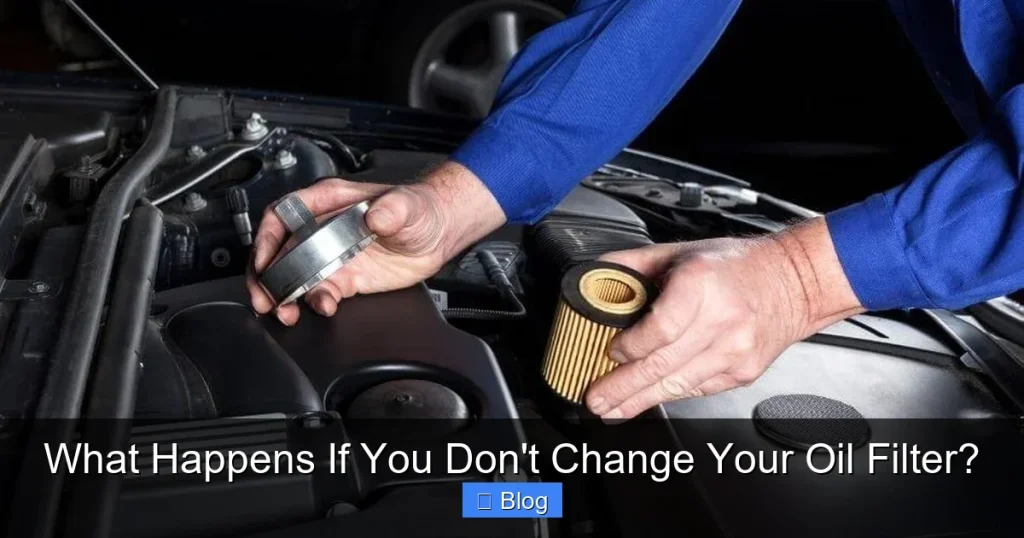
Neglecting to change your oil filter can lead to a cascade of serious engine problems. Initially, a clogged oil filter restricts oil flow, forcing the engine to run with dirty, unfiltered oil, or even activating a bypass valve that circulates contaminants. Over time, this accelerates wear and tear on vital engine components, leading to decreased fuel efficiency, increased emissions, overheating, and ultimately, expensive repairs or complete engine failure. Regular oil filter replacement is crucial for your vehicle’s health and longevity.
If you don’t change your oil filter, it becomes clogged with dirt and debris. This reduces oil flow, causing dirty oil to circulate through the engine. Over time, this leads to increased engine wear, overheating, poor performance, and possible engine damage. In severe cases, it can shorten engine life and result in costly repairs.
What Happens If You Don’t Change Your Oil Filter?
Hey there, fellow car enthusiast (or just someone who wants their car to last!). Let’s talk about something small but mighty: your car’s oil filter. It’s often overlooked, sitting quietly under the hood, doing its unsung job. But neglecting this little hero can lead to big, expensive headaches. If you’ve ever wondered, “what happens if I don’t change my oil filter?”, you’ve come to the right place. We’re about to dive deep into the consequences of oil filter neglect, how your engine suffers, and why regular replacement is absolutely non-negotiable for your vehicle’s health.
In this comprehensive guide, we’ll explain exactly what your oil filter does, the immediate and long-term impacts of leaving an old one in place, the warning signs to look out for, and the simple steps you can take to keep your engine happy and healthy. Get ready to empower yourself with knowledge that could save you thousands in repair bills!
Key Takeaways
- Restricted Oil Flow: A dirty oil filter chokes the engine’s supply of clean oil, leading to inadequate lubrication and potential damage.
- Contaminated Oil Circulation: When the filter is full, unfiltered, dirty oil circulates through your engine, accelerating wear on internal parts.
- Bypass Valve Activation: If the filter is severely clogged, a bypass valve opens to ensure some oil flow, but this means unfiltered contaminants are directly entering your engine.
- Accelerated Engine Wear: Lack of proper filtration and lubrication causes pistons, bearings, and other critical components to wear out much faster than they should.
- Decreased Performance & Efficiency: A struggling engine due to poor lubrication will perform worse, consume more fuel, and emit more pollutants.
- Risk of Catastrophic Engine Failure: Continuous neglect can lead to severe damage, necessitating costly repairs or even a complete engine replacement.
- Prevention is Simple & Affordable: Changing your oil filter along with your regular oil changes is a minor cost that prevents major headaches and expenses.
Quick Answers to Common Questions
What’s the best time to change my oil filter?
The best time to change your oil filter is every time you change your engine oil. Most manufacturers recommend this to ensure your fresh oil isn’t immediately contaminated by an old filter.
Can I just change the oil filter without changing the oil?
While technically possible, it’s not recommended. Changing only the filter leaves dirty, degraded oil in your engine, which will quickly contaminate the new filter. Always perform an oil and filter change together for optimal engine health.
How can I tell if my oil filter is clogged without taking it out?
You can’t visually inspect a clogged oil filter without removing it. However, warning signs like an illuminated oil pressure light, reduced engine performance, or unusual engine noises can indicate a severely clogged filter or other lubrication issues.
Are expensive oil filters worth it?
Not necessarily “expensive,” but investing in a good quality oil filter from a reputable brand (often OEM or a known aftermarket brand) is wise. Better filters offer superior filtration and flow, providing better protection for your engine than cheaper, generic options.
What if my car mostly sits and I don’t drive much?
Even if you don’t drive many miles, oil still degrades over time due to heat cycles and condensation. The oil filter can also become saturated. It’s recommended to change your oil and oil filter at least once a year, regardless of mileage, if you drive infrequently.
The Unsung Hero: What Does Your Oil Filter Actually Do?
Before we talk about what happens when you don’t change your oil filter, let’s appreciate its vital role. Think of your engine as the heart of your car, and engine oil as its lifeblood. This oil lubricates moving parts, reduces friction, helps cool the engine, and cleans internal components by picking up dirt, metal shavings, and sludge.
How It Works: A Filtration Marvel
The oil filter’s job is to catch all those harmful particles before they can recirculate through your engine. As oil is pumped through the engine, it passes through the oil filter, which contains a special filtration medium (usually paper or synthetic fibers). This medium traps contaminants, allowing only clean oil to flow back into the engine. It’s like a mini kidney for your car’s circulatory system.
Why It’s Crucial: Keeping It Clean
Without a functioning oil filter, all the grit, grime, and metallic bits that the oil collects would be continuously sloshing around your engine. Imagine sand in a perfectly crafted clock – it wouldn’t take long before things started to grind to a halt. The oil filter prevents this destructive scenario, ensuring the oil remains clean enough to do its job effectively. That’s why changing your oil filter regularly is so important.
The Chain Reaction: Immediate Impacts of a Clogged Oil Filter
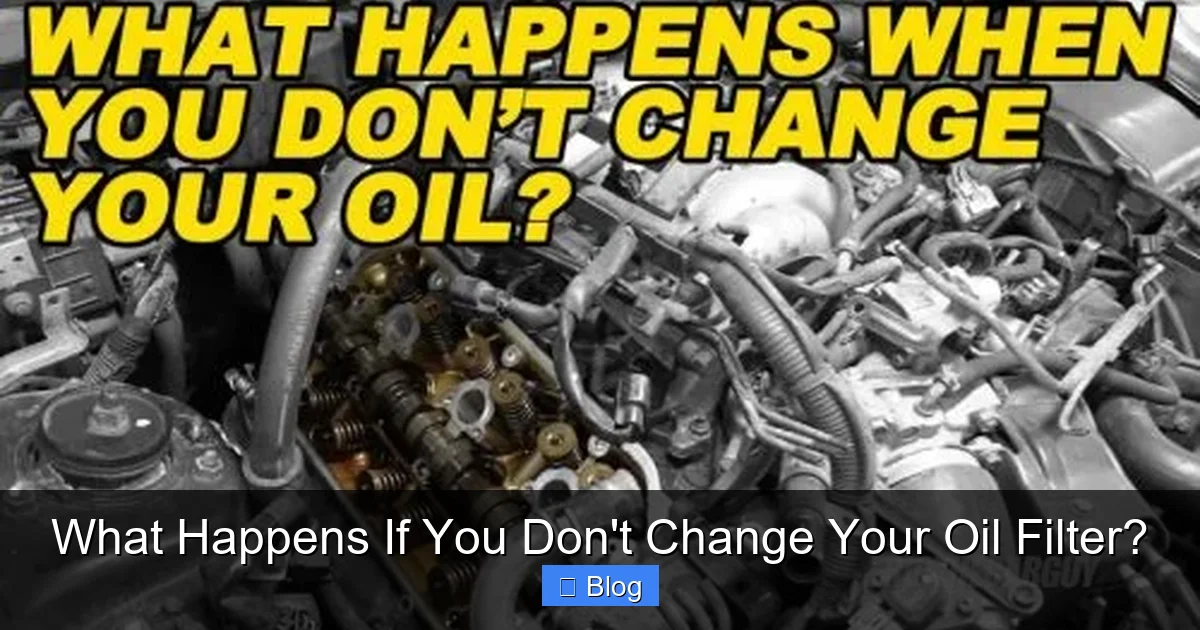
Visual guide about What Happens If You Don’t Change Your Oil Filter?
Image source: ericthecarguy.com
When you don’t change your oil filter, it doesn’t just stop working instantly. Instead, it slowly becomes less effective, leading to a cascade of problems. Here’s what starts to happen.
Reduced Oil Flow and Starvation
As the oil filter collects more and more debris, its filtration medium becomes clogged. Think of a coffee filter filled with grounds – water struggles to pass through. Similarly, oil struggles to pass through a clogged oil filter. This restricts the flow of oil to critical engine components like the crankshaft, camshafts, and cylinder walls.
When these parts don’t receive enough clean, fresh oil, they experience “oil starvation.” This means they’re not getting adequate lubrication, leading to increased friction and heat. Over time, this causes premature wear and can even result in components seizing up. The engine has to work harder, and you might notice a dip in performance or a slight increase in engine noise. This is one of the primary reasons you should always change your oil filter when you change your oil.
Contaminated Oil Circulation
Even if some oil manages to squeeze through a partially clogged oil filter, it won’t be as clean as it should be. The filter’s efficiency drops significantly, meaning smaller, more abrasive particles are now making their way back into the engine’s lubrication system.
These contaminants act like tiny sandpaper particles, grinding away at precision-machined surfaces. Bearings, pistons, and cylinder walls, which rely on a smooth, clean film of oil for protection, are now subject to increased abrasion. This accelerates wear and tear, reducing the lifespan of these vital parts. The job of the oil filter is to prevent this, making its timely replacement critical.
Bypass Valve Activation: The Last Resort
Most modern oil filters are equipped with a bypass valve. This valve is a safety feature designed to open if the oil filter becomes so severely clogged that oil can no longer pass through it efficiently. The purpose of the bypass valve is to ensure that *some* oil still reaches the engine, even if it’s dirty, rather than no oil at all. No oil is far worse than dirty oil.
However, relying on the bypass valve is a temporary measure and a sign of serious neglect. When the bypass valve is open, *all* the oil circulating through your engine is completely unfiltered. Every speck of dirt, every metal shaving, and every bit of sludge is freely moving through your engine, causing maximum damage. This accelerates wear exponentially and drastically shortens your engine’s life. If your oil filter reaches this point, you’re looking at a significant risk of severe engine damage.
The Slow Decay: Long-Term Consequences for Your Engine
Visual guide about What Happens If You Don’t Change Your Oil Filter?
Image source: magictune.com.au
While the immediate impacts are bad enough, consistently failing to change your oil filter leads to a series of escalating long-term problems.
Accelerated Engine Wear
This is the most direct and pervasive consequence. The continuous circulation of dirty, abrasive oil, coupled with inadequate lubrication, grinds down critical engine components. This includes:
- Bearings: These support rotating parts like the crankshaft and camshaft. Worn bearings can lead to knocking sounds and eventual failure.
- Piston Rings: These seal the combustion chamber and scrape oil from cylinder walls. Worn rings lead to loss of compression, increased oil consumption, and excessive exhaust smoke.
- Cylinder Walls: The inner surfaces of the cylinders can become scored, reducing efficiency and sealing.
- Camshaft and Lifters: Components responsible for opening and closing valves can suffer from premature wear, affecting valve timing and engine performance.
All of this accelerated wear means your engine is living on borrowed time. Changing your oil filter is the easiest way to prevent this.
Decreased Fuel Efficiency
When engine components wear down, they don’t operate as smoothly or efficiently. Increased friction means the engine has to work harder to produce the same amount of power, leading to higher fuel consumption. You’ll find yourself visiting the gas station more often, directly costing you money. A healthy engine, maintained with regular oil and oil filter changes, runs smoother and uses less fuel.
Increased Emissions
A worn engine that’s not running efficiently will inevitably produce more harmful exhaust emissions. Worn piston rings can allow oil to enter the combustion chamber and burn, leading to blue smoke from the exhaust and increased pollutants. This isn’t just bad for the environment; it can also cause your car to fail emissions tests, which are required in many regions.
Overheating Engine
Oil plays a crucial role in cooling the engine by carrying away heat from moving parts. When oil flow is restricted and friction increases due to a clogged oil filter and dirty oil, the engine generates more heat. The oil itself can also degrade faster when it’s hotter and dirtier, further reducing its cooling capacity. This cycle can lead to your engine overheating, which can cause severe damage like warped cylinder heads or a blown head gasket – extremely expensive repairs.
Engine Sludge Formation
Dirty oil, especially when exposed to high temperatures and combustion byproducts, degrades and breaks down faster. This leads to the formation of thick, tar-like engine sludge. Sludge can clog oil passages, restrict oil flow even further, and insulate parts, preventing heat dissipation. Once sludge starts to build up, it’s a vicious cycle that’s very difficult to reverse without a major engine overhaul. Keeping the oil clean with a functioning oil filter is key to preventing this.
Catastrophic Engine Failure
This is the ultimate, most devastating consequence of not changing your oil filter. All the issues mentioned above – accelerated wear, extreme friction, overheating, and sludge – build up over time. Eventually, a critical component can fail entirely. This might manifest as:
- A thrown connecting rod (resulting in a hole in the engine block).
- Seized bearings.
- Complete piston failure.
Any of these scenarios typically means the engine is beyond economical repair and requires a complete replacement or a costly rebuild. This can cost thousands of dollars, far outweighing the minor cost of regular oil and oil filter changes.
Warning Signs: How to Tell Your Oil Filter is Failing
While you should never wait for symptoms, knowing the signs can help you identify a problem if you suspect your oil filter (or oil) needs attention.
Dashboard Warning Lights
- Oil Pressure Warning Light: This is often the first and most critical warning. If this light illuminates (it looks like an oil can), it means your engine is experiencing low oil pressure. This could be due to a severely restricted oil filter, low oil level, or a failing oil pump. Stop driving immediately and check your oil.
- Check Engine Light: While more general, severe engine performance issues related to lubrication or excessive wear can trigger the check engine light.
Engine Performance Issues
- Reduced Power and Acceleration: A struggling engine due to poor lubrication will feel sluggish and respond slowly.
- Decreased Fuel Economy: As mentioned, your car will start drinking more fuel than usual.
- Rough Idling or Stalling: A severely damaged engine might run poorly even at idle, or stall entirely.
Unusual Engine Noises
- Ticking or Tapping Sounds: Often heard from the top of the engine (valvetrain area), these sounds indicate a lack of oil reaching components like lifters or camshafts.
- Knocking or Rattling: Deeper, louder knocking sounds from the bottom of the engine can indicate severely worn main or connecting rod bearings – a sign of advanced damage.
Visible Exhaust Smoke
- Blue Smoke: This is a tell-tale sign that oil is being burned in the combustion chambers, usually due to worn piston rings or valve seals. A clogged oil filter can accelerate this wear.
If you experience any of these symptoms, especially the oil pressure light, it’s crucial to address the issue immediately. Driving with these warning signs can lead to irreversible engine damage.
The Cost of Neglect vs. The Cost of Prevention
Let’s put this into perspective. A new oil filter typically costs between $5 and $20, depending on your car and the quality of the filter. When combined with an oil change, the total service usually ranges from $30 to $70, sometimes more for synthetic oil or specialized vehicles. This is a routine maintenance item that’s part of taking care of your car.
Now, consider the cost of what happens if you don’t change your oil filter.
- Minor Engine Repairs: Replacing worn components like camshafts, lifters, or a head gasket can easily run into several hundreds to a few thousands of dollars.
- Major Engine Rebuild: If bearings fail or components seize, a rebuild can cost $2,000 to $5,000+.
- Engine Replacement: A complete engine replacement for most vehicles can range from $3,000 to $10,000 or more, not including labor.
The choice is clear: a small, regular investment in oil and oil filter changes is infinitely more affordable than facing catastrophic engine failure due to neglect.
When to Change Your Oil Filter: The Golden Rule
So, how often should you change your oil filter to avoid all these problems?
Manufacturer Recommendations
The most important rule of thumb is to follow your vehicle manufacturer’s recommendations outlined in your owner’s manual. For most modern vehicles, the general guideline is to change the oil filter every time you change your engine oil. This could be every 3,000 to 5,000 miles for conventional oil, or 7,500 to 10,000 miles (or even more) for synthetic oil, typically every 6-12 months.
Driving Conditions
If you subject your vehicle to “severe” driving conditions, you might need more frequent oil and oil filter changes. Severe conditions include:
- Frequent short trips (especially in cold weather).
- Driving in dusty or dirty environments.
- Towing heavy loads.
- Frequent stop-and-go city driving.
- Extreme hot or cold temperatures.
In these cases, consider changing your oil and oil filter at the lower end of the manufacturer’s recommended interval.
Type of Oil
While not directly dictating the filter’s lifespan, the type of oil you use can influence your change intervals. Synthetic oils last longer and maintain their properties better, allowing for extended change intervals. However, even with synthetic oil, the oil filter still collects contaminants at a similar rate, so it’s wise to change the filter with every oil change. A new oil filter ensures the clean, fresh synthetic oil stays clean.
Beyond the Filter: The Importance of a Complete Oil Change
While we’ve focused on the oil filter, it’s crucial to remember that it’s part of a larger system. When you get an oil change, always ensure the technician replaces both the engine oil and the oil filter. Putting fresh, clean oil into an engine with an old, clogged oil filter is like taking a shower and then putting on dirty clothes – you’re undoing much of the benefit. The new oil will quickly become contaminated by the particles trapped in the old filter and the dirty passages it now has to flow through.
Conclusion
The oil filter might be a small, inexpensive part, but its role in your engine’s health is monumental. Ignoring this humble component can set off a dangerous chain reaction, from restricted oil flow and contaminated oil circulation to accelerated wear, decreased performance, and ultimately, catastrophic engine failure. The question isn’t “what happens if you don’t change your oil filter?” but rather, “how much damage are you willing to risk?”
The good news is that preventing these dire consequences is incredibly simple and affordable. By adhering to your vehicle’s recommended oil and oil filter change schedule, you’re investing in your car’s longevity, reliability, and your own peace of mind. So, next time you’re due for an oil change, remember to give that little oil filter the attention it deserves. Your engine will thank you for it by running smoothly for years to come!

Sagor Jahan is the founder and author of Automopromo.com, dedicated to delivering insightful tips, reviews, and updates in the automotive and promotional industry. With a passion for innovation and clear guidance, Sagor helps readers make informed decisions and stay ahead in the ever-evolving automotive world.

