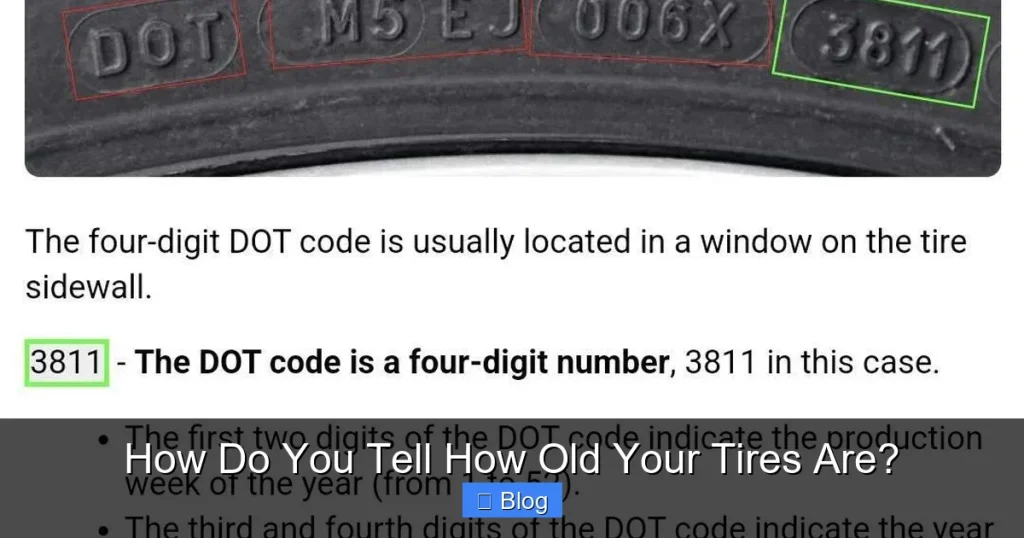
How do you twll how old your tires are? You can tell how old your tires are by checking the DOT code on the sidewall. The last four digits show the week and year the tire was made. For example, “3521” means the tire was manufactured in the 35th week of 2021.
Knowing how old your tires are is critical for your safety on the road. Tires don’t just wear out from use; they also age over time, with rubber degrading even if they look fine. This guide will walk you through finding and deciphering the crucial DOT code on your tire’s sidewall, helping you understand its manufacturing date and when it’s time for replacement.
How Do You Tell How Old Your Tires Are?
Ever wondered if your car’s tires are getting a bit long in the tooth? It’s a really important question that many drivers overlook. We often focus on tread depth, which is certainly crucial, but the age of your tires plays an equally significant role in your safety on the road. Tires aren’t like fine wine; they don’t get better with age. In fact, their rubber compounds degrade over time, making them less safe, even if they still have plenty of tread.
In this comprehensive guide, we’re going to dive deep into how you can easily figure out exactly how old your tires are. We’ll show you where to look for the vital information, how to decode it, and why knowing your tire’s birthdate is so important. By the end of this article, you’ll be a pro at checking tire age, empowering you to make informed decisions about your vehicle’s safety and performance.
Key Takeaways
- The DOT Code is Your Key: The most accurate way to tell how old your tires are is by finding the Department of Transportation (DOT) code on the sidewall, which includes the manufacturing date.
- Decode the Last Four Digits: The final four numbers of the DOT code indicate the week and year the tire was manufactured (e.g., “2318” means the 23rd week of 2018).
- Tires Degrade Over Time: Even with good tread, rubber compounds in tires break down due to factors like UV light, heat, and oxygen, leading to reduced performance and increased risk of failure.
- Manufacturer Recommendations Matter: Most tire manufacturers and vehicle experts recommend replacing tires that are 6 years old, regardless of visible wear, and absolutely no later than 10 years.
- Check All Tires, Including the Spare: Don’t forget to inspect your spare tire and tires on trailers, as they also age and can pose a safety risk if too old.
- Visual Cues Aren’t Enough: While important, checking for cracks or bulges shouldn’t be your only method. Tires can look good on the outside but be compromised internally due to age.
- Safety First: Prioritize safety by regularly checking tire age and replacing them proactively to prevent potential blowouts, loss of traction, and other age-related failures.
Quick Answers to Common Questions
What if I can only see a partial DOT code?
If you only see a partial DOT code (without the four-digit date) on the outer sidewall, it means the full code with the manufacturing date is stamped on the inner sidewall. You might need to look underneath your vehicle or have a professional lift it to check.
Does tire age apply to brand new tires I buy that were manufactured a year ago?
Yes, the aging process starts from the date of manufacture, not the date of sale or installation. However, tires stored correctly by retailers age very slowly. A tire that’s a year or two old when you buy it is perfectly fine, but its “age clock” started ticking from its birthdate.
Can I extend the life of my tires past 6 or 10 years if they look perfect?
No, it’s strongly advised against. The 6-year recommendation and 10-year maximum are based on extensive research into rubber degradation. Internal damage that isn’t visible can still lead to catastrophic failure, regardless of how good the tire looks externally.
Should I replace all four tires at once, even if only one is old?
It’s generally recommended to replace tires in sets of two (on the same axle) or all four, especially for All-Wheel Drive (AWD) vehicles, to maintain consistent handling and prevent stress on the drivetrain. If only one tire is old, it’s likely its companions are also nearing their end.
What about tires on recreational vehicles (RVs) or trailers that sit for long periods?
Tires on RVs, campers, and trailers are particularly susceptible to age degradation because they often sit unused for long stretches in varying weather conditions. They should be checked for age and condition even more diligently, often requiring replacement sooner due to age-related issues rather than tread wear.
Why Knowing Your Tire’s Age is Critical
Before we jump into the “how-to,” let’s quickly understand the “why.” You might think, “My tires look fine, and the tread is good, so what’s the big deal about age?” The big deal is safety. Here’s why:
- Rubber Degradation: Over time, the rubber in tires breaks down. This process, called “dry rot” or “ozone checking,” is caused by exposure to oxygen, UV light, heat, and even general usage. This degradation can lead to cracking in the sidewall and tread, and eventually, the internal structure of the tire can weaken.
- Reduced Performance: As tires age, their grip on the road diminishes. The rubber becomes harder and less flexible, reducing traction, especially in wet or cold conditions. This means longer stopping distances and a higher risk of hydroplaning.
- Increased Risk of Failure: Older tires are far more susceptible to sudden failures like tread separation or blowouts. These can occur without warning, even at highway speeds, leading to loss of vehicle control and potentially serious accidents.
- Manufacturer Recommendations: Most tire manufacturers and vehicle experts recommend replacing tires after a certain period, typically 6 to 10 years from their manufacturing date, regardless of how much tread they have left.
Understanding how old your tires are gives you the power to proactively manage your vehicle’s safety, preventing potential hazards before they arise.
Step 1: Locate the DOT Code on Your Tire Sidewall
The first and most crucial step in determining how old your tires are is finding the Department of Transportation (DOT) code. This code is a series of letters and numbers molded into the sidewall of every tire sold in the United States, and similar codes are used globally. It provides a wealth of information, including the manufacturing plant, tire size, and, most importantly for us, the date of manufacture.
Visual guide about How Do You Tell How Old Your Tires Are?
Image source: replacetiresinfo.com
What Does the DOT Code Look Like?
The full DOT code usually starts with the letters “DOT” followed by a string of 8 to 13 characters. This string typically includes two characters for the plant code, two for the tire size code, and then the critical date code at the very end.
Where to Find It
You’ll need to physically inspect your tires. The DOT code is usually on the outer sidewall, which is the side facing away from the vehicle. However, sometimes the full code, including the date, is only stamped on one side of the tire (the side that might be facing inwards towards the vehicle). If you don’t see the date code on the visible sidewall, you might need to peek underneath or even jack up your car and remove the wheel to check the inner sidewall. Always remember safety first if you’re jacking up your car.
Step 2: Deciphering the Manufacturing Date from the DOT Code
Once you’ve found the DOT code, your focus should immediately shift to the very end of the string. The manufacturing date is always represented by the last four digits of the DOT code for tires manufactured after the year 2000. For tires manufactured before 2000, it would be three digits, but it’s highly unlikely you’d encounter such old tires on a vehicle still in use today.

Visual guide about How Do You Tell How Old Your Tires Are?
Image source: dww-live-media-perma-cdn.b-cdn.net
How to Read the Last Four Digits
These four digits are a simple two-part code:
First Two Digits: Represent the week of the year the tire was manufactured.
Last Two Digits: Represent the year the tire was manufactured.
Practical Examples: Decoding Your Tire’s Birthdate
- Example 1: DOT XXXX 2318
- Here, “23” means the 23rd week of the year.
- “18” means the year 2018.
- So, this tire was manufactured in the 23rd week of 2018.
- Example 2: DOT XXXX 0522
- “05” means the 5th week of the year.
- “22” means the year 2022.
- This tire was manufactured in the 5th week of 2022.
- Example 3: DOT XXXX 4815
- “48” means the 48th week of the year.
- “15” means the year 2015.
- This tire was manufactured in the 48th week of 2015.
It’s really that straightforward! Once you identify these four numbers, you instantly know how old your tires are.
Step 3: What if the DOT Code is Missing or Unreadable?
Sometimes, despite your best efforts, the DOT code might be obscured, worn away, or you might only find a partial code without the date. Here’s what to do:
- Check Both Sides: As mentioned, the full DOT code (with the date) is often only stamped on one sidewall. If you can’t find it on the outside, check the inner sidewall of the tire. This might require getting down on the ground or, ideally, having the car lifted or the wheels removed by a professional.
- Look for “Partial” Codes: On the opposite sidewall, you might see a partial DOT code. This code will usually have the same series of letters and numbers but without the final four-digit date code. This is normal, but it doesn’t help you determine how old your tires are.
- Consult Documentation: If you recently bought the tires, check your purchase receipts or installation records. These documents often list the DOT code or at least the date of purchase, which can give you a good estimate of the tire’s age.
- Professional Inspection: If you’re truly stumped, visit a reputable tire shop or mechanic. They have the tools and expertise to properly inspect your tires, including lifting the vehicle to check inner sidewalls.
- Assume the Worst: If you absolutely cannot determine how old your tires are, and you suspect they might be old based on the vehicle’s history or any visible signs of age (which we’ll cover next), it’s always safest to err on the side of caution and consider replacing them.
Step 4: Beyond the DOT Code – Other Indicators of Tire Age and Wear
While the DOT code is the most precise way to tell how old your tires are, it’s not the only factor to consider. You should also regularly inspect your tires for visual cues of aging and wear, as these can tell you if the tire needs replacement sooner than its age might suggest.
Visual Inspection for Aging
- Sidewall Cracking (Dry Rot): Look for small cracks or crazing on the sidewall, especially near the rim or in the grooves of the tread. These are tell-tale signs of rubber degradation and dry rot.
- Tread Cracking: Cracks can also appear in the grooves of the tread pattern. This is another indicator that the rubber is hardening and losing its integrity.
- Bulges or Blisters: Any bulges or blisters on the sidewall or tread indicate internal structural damage. This is extremely dangerous and requires immediate tire replacement, regardless of age.
- Discoloration: Older tires might appear faded or discolored, especially if they’ve been exposed to a lot of sunlight.
Visual Inspection for Wear (and when it relates to age)
- Tread Depth: Use a tread depth gauge or the penny test to check if your tread is worn down. While this isn’t about age, an old tire with low tread depth is a double whammy for safety.
- Uneven Wear: Uneven wear patterns can indicate alignment issues, improper inflation, or suspension problems. These issues can accelerate tire aging and reduce their lifespan.
- Tread Wear Indicators: Most tires have small bars molded into the tread grooves at 2/32nds of an inch. If your tread is flush with these bars, it’s time for new tires.
Step 5: When to Replace Your Tires Based on Age
Now that you know how to tell how old your tires are, the big question is: when should you replace them?
The “6-Year Rule”
Many tire manufacturers (including Michelin, Continental, Goodyear, and Bridgestone) and automotive experts recommend replacing tires that are 6 years old from their manufacturing date, regardless of how much tread is left or how they look visually. This recommendation is based on the understanding that rubber degrades internally over time, compromising the tire’s structural integrity and performance.
The “10-Year Max”
Most experts and manufacturers agree that tires should never be used beyond 10 years from their manufacturing date. Even if a tire looks perfectly fine, has deep tread, and has been stored impeccably, the internal components will have degraded to a point where they are unsafe. This applies to your spare tire as well, which often goes unchecked for years.
Considerations for Spare Tires
It’s easy to forget about your spare tire, especially if it’s stored in the trunk or under the vehicle. However, it ages just like the other four tires. Make sure to check the DOT code on your spare tire too. If it’s significantly older than your primary tires, or past the 10-year mark, it won’t be a reliable emergency replacement.
Factors That Can Accelerate Tire Aging
While time is the ultimate factor, several environmental and usage conditions can speed up the aging process of your tires:
- Extreme Heat and UV Exposure: Living in a hot climate or parking your car in direct sunlight frequently accelerates rubber degradation. UV radiation is particularly damaging.
- Lack of Use: Ironically, tires that sit unused for long periods can age faster than those in regular use. When a car sits, the tires aren’t flexing and chemicals within the rubber aren’t distributed, leading to localized degradation.
- Improper Inflation: Consistently under- or over-inflated tires put undue stress on the rubber and internal structure, potentially leading to premature aging and failure.
- Harsh Chemicals: Exposure to certain chemicals, oils, or fuels can quickly break down tire rubber.
- Road Hazards: Frequent encounters with potholes, curbs, or rough roads can cause internal damage that compromises the tire’s integrity and shortens its lifespan.
The Dangers of Driving on Old Tires
Driving on tires that are past their prime is a serious safety risk. Here’s a quick recap of the potential dangers:
- Blowouts: The most dramatic and dangerous failure. Aged rubber can suddenly give way, causing rapid air loss and loss of control.
- Tread Separation: The tread can delaminate from the tire casing, often at high speeds, creating a very dangerous situation.
- Reduced Braking and Handling: Aged rubber provides less grip, especially in adverse weather, increasing stopping distances and making the vehicle harder to control.
- Hydroplaning: Worn or hardened tread patterns are less effective at displacing water, increasing the risk of hydroplaning on wet roads.
Tips for Extending Tire Life (and Ensuring Safety)
While you can’t stop the aging process, you can certainly take steps to extend the useful life of your tires and keep them safe:
- Maintain Proper Tire Pressure: Check your tire pressure at least once a month using a reliable gauge. Refer to your vehicle’s owner’s manual or the sticker on the driver’s side door jamb for the correct PSI.
- Regular Tire Rotation: Have your tires rotated every 5,000 to 7,500 miles, or as recommended by your vehicle manufacturer. This promotes even wear across all four tires.
- Wheel Alignment: Get your wheel alignment checked annually or if you notice uneven tire wear, pulling, or vibration.
- Balance Your Tires: Ensure your tires are properly balanced. Unbalanced tires can cause vibrations and uneven wear.
- Store Spare Tires Properly: If your spare is full-sized and stored externally, consider a cover to protect it from UV light. If it’s a compact spare or stored internally, ensure it’s clean and at the correct pressure.
- Avoid Harsh Chemicals: Be mindful of what chemicals come into contact with your tires. Use tire cleaners specifically designed for automotive use.
- Drive Responsibly: Avoid aggressive driving, sudden starts, and hard braking, which can accelerate wear and tear.
Conclusion
Knowing how old your tires are is a fundamental part of responsible vehicle ownership and, more importantly, a critical aspect of road safety. The simple act of locating and decoding the DOT code empowers you with vital information that visual inspections alone cannot provide. While tread depth tells you about wear, the DOT code tells you about the tire’s inherent structural integrity over time.
Remember the 6-year rule and the 10-year absolute maximum. Don’t gamble with your safety or the safety of your passengers. Take a few minutes today to check the age of your tires. If they’re showing signs of age or are approaching the recommended replacement timeframe, consult with a trusted tire professional. Investing in new tires when needed is an investment in your peace of mind and safety on every journey.

Sagor Jahan is the founder and author of Automopromo.com, dedicated to delivering insightful tips, reviews, and updates in the automotive and promotional industry. With a passion for innovation and clear guidance, Sagor helps readers make informed decisions and stay ahead in the ever-evolving automotive world.