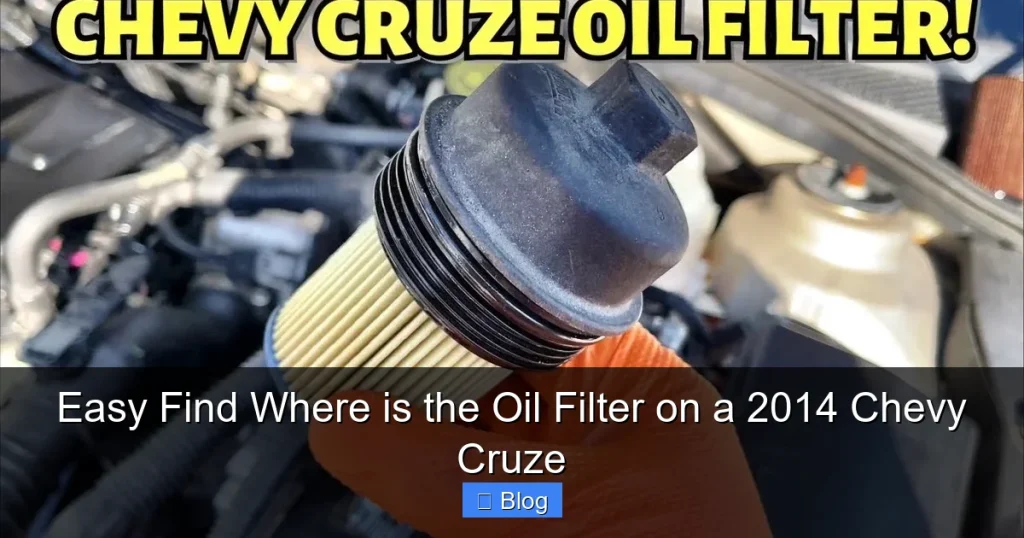
Finding the oil filter on your 2014 Chevy Cruze doesn’t have to be a mystery. This comprehensive guide breaks down the exact locations for both the 1.4L Turbo and 1.8L Ecotec engines, which have very different filter placements. You’ll learn the necessary tools, crucial safety steps, and a clear, easy-to-follow process to confidently locate and prepare for your oil change.
Easy Find Where is the Oil Filter on a 2014 Chevy Cruze
Ever tried to do an oil change on your 2014 Chevy Cruze, only to spend more time searching for the oil filter than actually changing it? You’re not alone! It’s a common experience for many DIYers. The truth is, the 2014 Chevy Cruze is a bit unique because the oil filter’s location isn’t a one-size-fits-all situation. It actually depends on which engine your car has.
Don’t worry, though! This comprehensive guide is here to clear up the confusion once and for all. We’ll walk you through exactly where to find the oil filter on your 2014 Chevy Cruze, whether it’s equipped with the popular 1.4L Turbo engine or the reliable 1.8L Ecotec engine. We’ll cover everything from the tools you’ll need to crucial safety steps, ensuring you can tackle your next oil change with confidence and ease.
By the end of this guide, you’ll know precisely where the oil filter on a 2014 Chevy Cruze is hiding, how to access it safely, and even some practical tips to make the job smoother. Let’s get started and make your next oil change a breeze!
Key Takeaways
- Engine Type Matters: The location of the oil filter on your 2014 Chevy Cruze depends entirely on whether you have the 1.4L Turbo or the 1.8L Ecotec engine.
- 1.4L Turbo Location: For 1.4L Turbo models, the oil filter is a cartridge type, conveniently located on top of the engine, usually under a plastic cap, making it accessible from the engine bay.
- 1.8L Ecotec Location: If you have the 1.8L Ecotec engine, you’ll find a traditional spin-on canister filter underneath the vehicle, typically near the front passenger side, requiring the car to be lifted.
- Safety First: Always prioritize safety by using jack stands, wearing protective gear, and allowing the engine to cool before starting any work.
- Right Tools, Right Job: Make sure you have the correct wrench or socket size for your specific engine’s filter cap or canister to avoid stripping parts.
- Prepare for Spills: Have plenty of rags and a large drain pan ready, especially when accessing the filter from underneath the vehicle, to manage inevitable oil drips.
- Proper Installation: Always lubricate the O-rings (for cartridge filters) or the gasket (for spin-on filters) with fresh oil before installing to ensure a proper seal and easy removal next time.
Quick Answers to Common Questions
What type of oil filter does my 2014 Chevy Cruze use?
The 2014 Chevy Cruze uses either a cartridge-style filter (for 1.4L Turbo engines) or a spin-on canister filter (for 1.8L Ecotec engines). It’s crucial to know your engine type to buy the correct filter.
Do I need to lift my car to change the oil filter?
Only if your 2014 Chevy Cruze has the 1.8L Ecotec engine. The oil filter for this engine is located underneath the vehicle. If you have the 1.4L Turbo engine, the filter is on top of the engine, accessible from the engine bay.
What’s the best way to avoid stripping the plastic oil filter cap on a 1.4L Turbo?
Always use the correct size hexagonal socket (typically 24mm or 27mm) that fits snugly over the cap. Apply even, steady pressure when turning, and use a torque wrench for reinstallation to avoid overtightening.
Should I pre-fill the new oil filter?
For cartridge filters (1.4L), pre-filling isn’t necessary as they fill quickly. For spin-on filters (1.8L), some mechanics prefer to pre-fill them to reduce engine dry start time, but it’s not strictly required and can be messy. Always lubricate the gasket regardless.
How do I dispose of old engine oil and filters?
Never pour used oil down the drain or throw filters in the trash. Most auto parts stores, service centers, and local recycling facilities accept used engine oil and filters for free recycling. Store used oil in a sealed container.
Before You Begin: Gathering Your Tools and Supplies
Having the right tools ready makes any job easier and safer. Here’s what you’ll likely need to locate and change the oil filter on your 2014 Chevy Cruze:
- New Oil Filter: Ensure it’s the correct one for your specific 2014 Chevy Cruze engine (1.4L Turbo or 1.8L Ecotec). Check your owner’s manual or an auto parts store for the exact part number.
- Engine Oil: The correct type and amount for your 2014 Chevy Cruze. Refer to your owner’s manual for the recommended viscosity and capacity (e.g., 5W-30 synthetic blend).
- Oil Filter Wrench/Socket: This is critical.
- For 1.4L Turbo engines, you’ll likely need a large socket (often 24mm or 27mm) to remove the plastic oil filter housing cap.
- For 1.8L Ecotec engines, you’ll need a standard oil filter wrench (the cap-style or strap-style works well) to remove the spin-on canister filter.
- Socket Wrench and Sockets: For the oil filter cap (1.4L) and potentially the drain plug (usually 13mm or 15mm, depending on your Cruze).
- Oil Drain Pan: Large enough to hold all the old oil (typically 4-5 quarts).
- Funnel: For refilling new engine oil without spills.
- Gloves: Nitrile or mechanic’s gloves protect your hands.
- Safety Glasses: Always protect your eyes.
- Jack and Jack Stands (for 1.8L engines): Essential for safely lifting the front of your car if your oil filter is underneath. Never rely solely on a jack.
- Wheel Chocks: For extra safety when lifting the car.
- Rags or Shop Towels: You’ll definitely need these for inevitable drips and clean-up.
- Torque Wrench: Recommended for properly tightening the drain plug and oil filter cap/canister to specification, preventing leaks or overtightening damage.
Pro Tip: Always have a few extra rags handy. Oil changes can be messy, even when you’re careful!
Safety First: Essential Precautions
Before you even think about looking for the oil filter on your 2014 Chevy Cruze, let’s talk safety. This is the most important part of any DIY car maintenance.
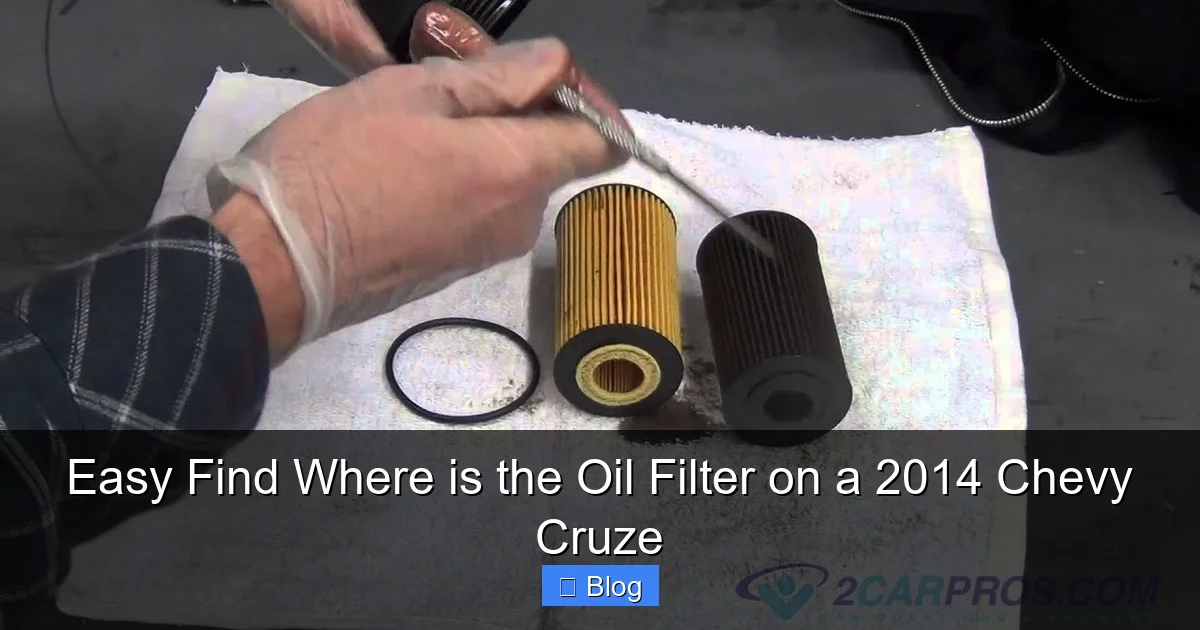
Visual guide about Easy Find Where is the Oil Filter on a 2014 Chevy Cruze
Image source: i.ytimg.com
- Let the Engine Cool: Hot oil can cause severe burns. Allow your car to sit for at least 30 minutes, or even an hour, after driving before you start. Warm oil drains better, but scalding hot oil is dangerous.
- Wear Protective Gear: Always wear safety glasses to protect your eyes from splashes and gloves to protect your hands from hot oil and chemicals.
- Work on a Level Surface: Ensure your car is parked on flat, stable ground. This is crucial for safety, especially if you need to lift the vehicle.
- Secure the Vehicle (for 1.8L Ecotec engines):
- Engage the parking brake firmly.
- If lifting the car, place wheel chocks behind the rear wheels.
- Use a reliable jack to lift the front of the vehicle.
- Crucially, always place sturdy jack stands under the vehicle’s frame at designated lift points. Never work under a vehicle supported only by a jack. Give the car a gentle shake to ensure it’s stable on the jack stands before getting underneath.
Locating the Oil Filter on Your 2014 Chevy Cruze: Engine Specifics
Here’s where the journey to finding your 2014 Chevy Cruze oil filter gets specific. As mentioned, the location differs significantly between the two main engine types offered in 2014 models.
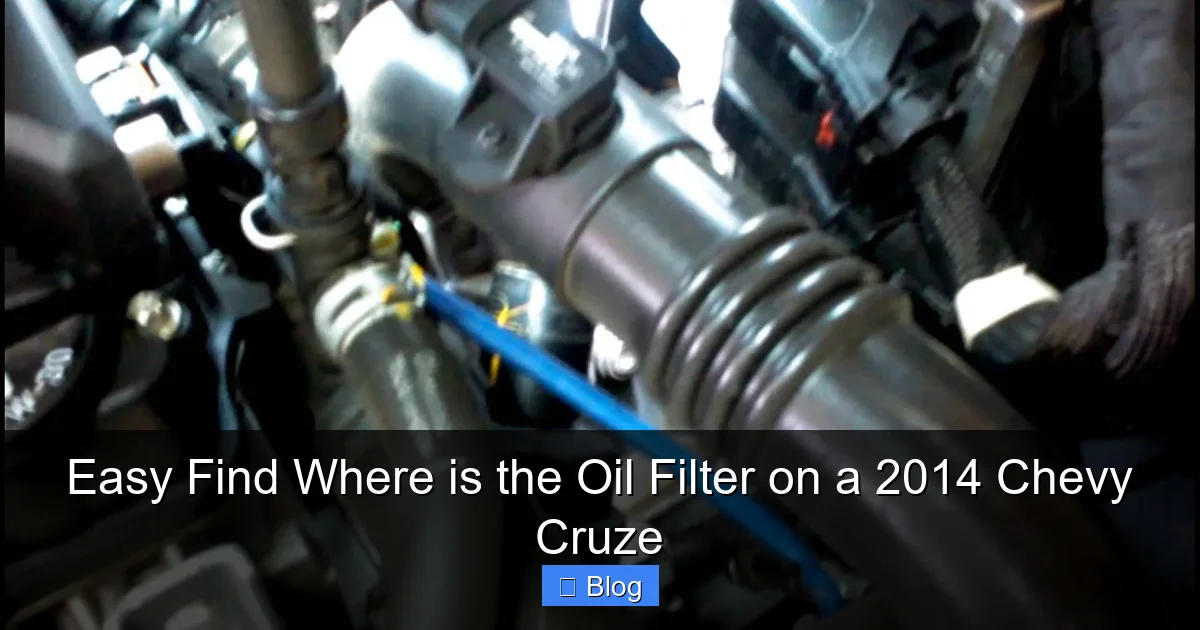
Visual guide about Easy Find Where is the Oil Filter on a 2014 Chevy Cruze
Image source: i.ytimg.com
For 1.4L Turbo Engines (LUJ/LUV)
If your 2014 Chevy Cruze has the 1.4-liter turbocharged engine, you’re in for a relatively easy time finding the oil filter. This engine uses a cartridge-style filter, which means it’s housed within a reusable plastic or metal housing, and you only replace the paper filter element inside.
Open the Hood and Locate the Engine Cover
First things first, pop the hood of your Cruze. Look at the top of the engine. You’ll likely see a large, black plastic engine cover with the “ECOTEC” or “TURBO” badge on it. This cover usually just pulls straight up to remove it, often held in place by friction clips. Gently but firmly pull it off and set it aside.
Identify the Oil Filter Housing Cap
Once the engine cover is off, look towards the passenger side of the engine bay, usually near the front or slightly towards the middle-front, often close to the exhaust manifold. You’re looking for a black plastic cap, typically hexagonal (six-sided) in shape. This cap is usually quite prominent and will have a distinct appearance, often with ribs or grooves.
- Visual Cue: It might be labeled with an arrow indicating “UP” or have some oil change related text molded into it. It will also be the only cap of its size and shape on the top of the engine block.
- Common Location: Often found just behind the radiator fill cap, towards the center-right (passenger side) of the engine.
This hexagonal cap is the top of your oil filter housing. The cartridge oil filter for your 2014 Chevy Cruze 1.4L Turbo engine is directly underneath it.
For 1.8L Ecotec Engines (LUW/LWE)
If your 2014 Chevy Cruze comes with the naturally aspirated 1.8-liter Ecotec engine, the oil filter location is more traditional, but requires a bit more effort to access. This engine uses a spin-on canister-style filter, which is a metal can that you replace entirely.
Prepare to Lift the Vehicle
Since the oil filter is underneath the car, you’ll need to lift the front of your 2014 Chevy Cruze safely. Follow the safety precautions mentioned earlier:
- Park on a level surface.
- Engage the parking brake.
- Chock the rear wheels.
- Use a jack to lift the front of the car.
- Place sturdy jack stands under the designated frame points and ensure the car is stable.
Get Underneath and Look Towards the Front Passenger Side
Once the car is safely on jack stands, slide underneath the front of the vehicle. You’ll want to look towards the front passenger side. The oil filter is typically located on the engine block itself, often near the front corner of the engine, above the front axle and steering components.
- Visual Cue: You’re looking for a cylindrical metal canister, usually about 3-4 inches in diameter and 4-6 inches long. It will be screwed directly into the engine block. It’s often white, black, or blue, depending on the brand.
- Common Location: It might be slightly tucked away or partially obscured by other engine components or a splash shield. If your Cruze has a plastic splash shield under the engine, you might need to remove a few bolts to gain better access to the oil filter on your 2014 Chevy Cruze.
This metal canister is the spin-on oil filter for your 2014 Chevy Cruze 1.8L Ecotec engine.
Draining the Old Oil
Before you remove the oil filter, you always drain the old engine oil first.
- Place Drain Pan: Position your oil drain pan directly under the oil pan drain plug.
- Remove Drain Plug: Use the appropriate socket wrench to loosen and remove the drain plug. Be careful, as oil will start flowing out immediately and can be hot.
- Let it Drain: Allow all the old oil to drain completely into the pan. This usually takes 10-15 minutes.
- Reinstall Drain Plug: Once the oil stops dripping, clean the drain plug and the area around the drain pan. Reinstall the drain plug, ideally with a new washer (crush gasket) if supplied with your oil filter, and tighten it to the manufacturer’s specified torque using a torque wrench. Do not overtighten!
Removing the Old Oil Filter
Now that the oil is drained, it’s time to get that old filter out. Remember, this step varies by engine type.
For 1.4L Turbo Engines (Cartridge Filter)
- Position Drain Pan: Place a small secondary drain pan or plenty of rags directly under the oil filter housing to catch any drips.
- Remove Filter Cap: Use your large socket (e.g., 24mm or 27mm) and a ratchet to loosen the black plastic oil filter housing cap. Turn counter-clockwise.
- Extract Filter: Once the cap is loose, carefully unscrew it completely. The old paper filter element will often come out attached to the cap. If not, gently pull it out from the housing.
- Clean and Replace O-Rings: On the cap, you’ll see a large rubber O-ring and sometimes a smaller one. Carefully remove these old O-rings and replace them with the new ones that usually come with your new cartridge filter. Lubricate the new O-rings with a little bit of fresh engine oil.
- Install New Cartridge: Insert the new paper filter element into the housing or onto the cap (depending on how it came out). Ensure it seats properly.
- Reinstall Cap: Carefully screw the cap back into the housing by hand, making sure it threads correctly. Then, use your socket and torque wrench to tighten it to the manufacturer’s specified torque (usually around 18-25 ft-lbs). Do not overtighten, as this is a plastic cap and can crack.
For 1.8L Ecotec Engines (Spin-On Filter)
- Position Drain Pan: With the car still safely on jack stands, place your drain pan directly under the old spin-on oil filter.
- Loosen Filter: Use your oil filter wrench to loosen the old filter. Turn it counter-clockwise. Once it’s loose, you can usually unscrew it by hand.
- Remove Filter: Be prepared for residual oil to spill out as you remove the filter. Let it drain into your pan.
- Clean Mounting Surface: Once the old filter is off, use a clean rag to wipe the engine’s mounting surface where the filter attaches. Make sure there’s no old gasket material stuck to it.
Installing the New Oil Filter (1.8L Ecotec)
- Lubricate Gasket: Take your new spin-on oil filter. Apply a thin film of fresh engine oil to the rubber gasket on top of the new filter. This helps ensure a good seal and makes future removal easier.
- Thread New Filter: Carefully screw the new filter onto the engine block by hand. Make sure it threads smoothly. If it feels like it’s binding, stop and re-thread it. You don’t want to cross-thread it.
- Tighten Filter: Once the filter is hand-tight, use your oil filter wrench to give it an additional quarter to half turn. Most manufacturers recommend tightening by hand until snug, then an additional specified turn. Check the instructions on the new filter for exact specifications. Do not overtighten!
Refilling the Engine Oil
With the new oil filter securely in place, it’s time to add fresh engine oil to your 2014 Chevy Cruze.
- Lower the Vehicle (if lifted): Carefully lower your car from the jack stands back onto level ground. This is important for an accurate oil level reading.
- Locate Oil Fill Cap: Open the hood and find the oil fill cap on top of the engine. It’s usually clearly labeled with an oil can symbol or “ENGINE OIL.”
- Insert Funnel: Place your clean funnel into the oil fill opening.
- Add New Oil: Slowly pour the recommended amount of new engine oil into the fill opening. Consult your owner’s manual for the exact capacity (typically 4.2 to 4.5 quarts for the Cruze, but always confirm). Pour slowly to avoid splashing.
- Check Oil Level: After adding most of the oil (e.g., 4 quarts), remove the funnel and replace the oil fill cap. Wait a few minutes for the oil to settle into the oil pan. Then, pull out the dipstick, wipe it clean, reinsert it fully, and pull it out again to check the oil level.
- Adjust as Needed: The oil level should be between the “MIN” and “MAX” marks on the dipstick. Add small amounts of oil at a time, rechecking the dipstick each time, until the level is correct. Do not overfill!
- Start the Engine: Once the oil level is correct, start your engine and let it run for about a minute. This allows the new oil to circulate throughout the engine and fill the new oil filter. Watch for any warning lights on your dashboard.
- Final Check: Turn off the engine, wait a few minutes for the oil to settle again, and then recheck the dipstick. Top off if necessary. Also, visually inspect around the oil filter and drain plug for any leaks.
Troubleshooting Common Issues
Even with careful planning, sometimes things don’t go perfectly. Here are a few common issues you might encounter:
- Stuck Oil Filter/Cap:
- For spin-on filters (1.8L): If a filter wrench isn’t working, try a different style (e.g., strap wrench or plier-style). Sometimes a stubborn filter just needs a bit more leverage.
- For cartridge caps (1.4L): Ensure you’re using the correct size socket and it’s fully seated. Sometimes the cap can be very tight from the factory or previous overtightening. A longer breaker bar can provide more leverage, but be careful not to damage the plastic housing.
- Oil Leak After Change:
- Check the drain plug: Is it tightened to spec? Is the washer new and properly seated?
- Check the oil filter/cap: Is it tightened to spec? For cartridge filters, are the new O-rings correctly seated and lubricated? For spin-on filters, is the gasket lubricated and did the old gasket come off completely?
- If you see a leak, re-check the tightness of both components. If it persists, you might have a damaged component or an incorrectly installed filter/plug.
- Oil Light On:
- If the oil pressure light comes on after starting, immediately shut off the engine. Check the oil level. If it’s correct, you might have a problem with the new filter or the oil pressure sensor. Do not drive the car until this is resolved.
Conclusion: Confidently Changing Your 2014 Chevy Cruze Oil Filter
Congratulations! You’ve successfully navigated the unique landscape of where the oil filter on a 2014 Chevy Cruze is located and how to replace it. Whether you have the 1.4L Turbo with its convenient top-mounted cartridge filter or the 1.8L Ecotec with its traditional underside spin-on filter, you now possess the knowledge and confidence to tackle this essential maintenance task.
Remember, knowing your specific engine type is the key to quickly finding that oil filter. Always prioritize safety, use the right tools, and pay attention to those critical details like lubricating gaskets and tightening to spec. By following this guide, you’re not just saving money; you’re also gaining valuable mechanical skills and ensuring your 2014 Chevy Cruze continues to run smoothly for miles to come. Happy driving, and happy DIYing!

Sagor Jahan is the founder and author of Automopromo.com, dedicated to delivering insightful tips, reviews, and updates in the automotive and promotional industry. With a passion for innovation and clear guidance, Sagor helps readers make informed decisions and stay ahead in the ever-evolving automotive world.