Choosing the correct spark plug size for your push mower ensures reliable starts, smooth operation, and better fuel efficiency. This guide walks you through identifying your mower’s spark plug type, checking compatibility, and replacing it safely—even if you’re a beginner.
If your push mower is hard to start, runs rough, or stalls unexpectedly, the spark plug might be the culprit. But before you rush to buy a new one, you need to know: what size spark plug for a push mower actually fits your machine? Getting the right size isn’t just about threading it in—it’s about ensuring proper ignition, fuel efficiency, and engine longevity.
In this guide, you’ll learn how to identify the correct spark plug size for your push mower, where to find it, how to remove and install it safely, and how to maintain it for years of reliable service. Whether you’re a weekend warrior or a first-time lawn care enthusiast, this step-by-step walkthrough will make spark plug replacement simple and stress-free.
Key Takeaways
- Check your owner’s manual first: The easiest way to find the right spark plug size is by consulting your mower’s manual, which lists the exact OEM part number and specifications.
- Common sizes include 14mm and 18mm thread diameters: Most push mowers use either 14mm or 18mm spark plugs, with 14mm being the most common for residential models.
- Gap matters as much as size: Even with the correct thread size, an incorrect electrode gap can cause poor ignition—always check and adjust the gap before installing.
- Use a spark plug socket and torque wrench: These tools prevent over-tightening and ensure a secure, leak-free connection.
- Replace annually or every 25–50 hours of use: Regular replacement prevents hard starts, misfires, and engine damage.
- Aftermarket plugs must match OEM specs: Not all universal plugs fit perfectly—verify thread reach, heat range, and terminal type.
- Inspect for wear during replacement: Fouled, cracked, or worn electrodes signal deeper engine issues that may need attention.
Quick Answers to Common Questions
Tip/Question?
Can I use any spark plug that fits?
No—always match the heat range, thread size, and reach. A plug that fits physically but has the wrong heat range can cause engine damage.
Tip/Question?
How tight should I install the spark plug?
Hand-tight plus ¼ turn is usually enough. Over-tightening can crack the cylinder head or strip threads.
Tip/Question?
What if I can’t find my engine model?
Take a photo of the engine and visit a local small engine repair shop. They can often identify it by sight.
Tip/Question?
Can I clean and reuse a spark plug?
You can clean light carbon buildup with a wire brush, but it’s better to replace it annually for reliable performance.
Tip/Question?
Why does my mower still not start after replacing the plug?
Check the fuel, air filter, and ignition coil. A new plug won’t fix a clogged carburetor or bad gas.
Why the Right Spark Plug Size Matters
The spark plug is the heart of your mower’s ignition system. It creates the spark that ignites the air-fuel mixture in the engine cylinder. If the plug is the wrong size—too long, too short, wrong thread diameter, or incorrect heat range—it can cause poor performance, hard starting, overheating, or even engine damage.
For example, a plug that’s too long can hit the piston, causing catastrophic engine failure. One that’s too short won’t reach the combustion chamber properly, leading to incomplete combustion and carbon buildup. Even a slightly incorrect gap can prevent the spark from jumping effectively.
That’s why matching the exact specifications is critical. Most push mowers use small engines from brands like Briggs & Stratton, Honda, Kohler, or Tecumseh—each with their own recommended plug types. But don’t worry: identifying the right one is easier than you think.
How to Find the Correct Spark Plug Size
Visual guide about What Size Spark Plug for a Push Mower
Image source: mowing.expert
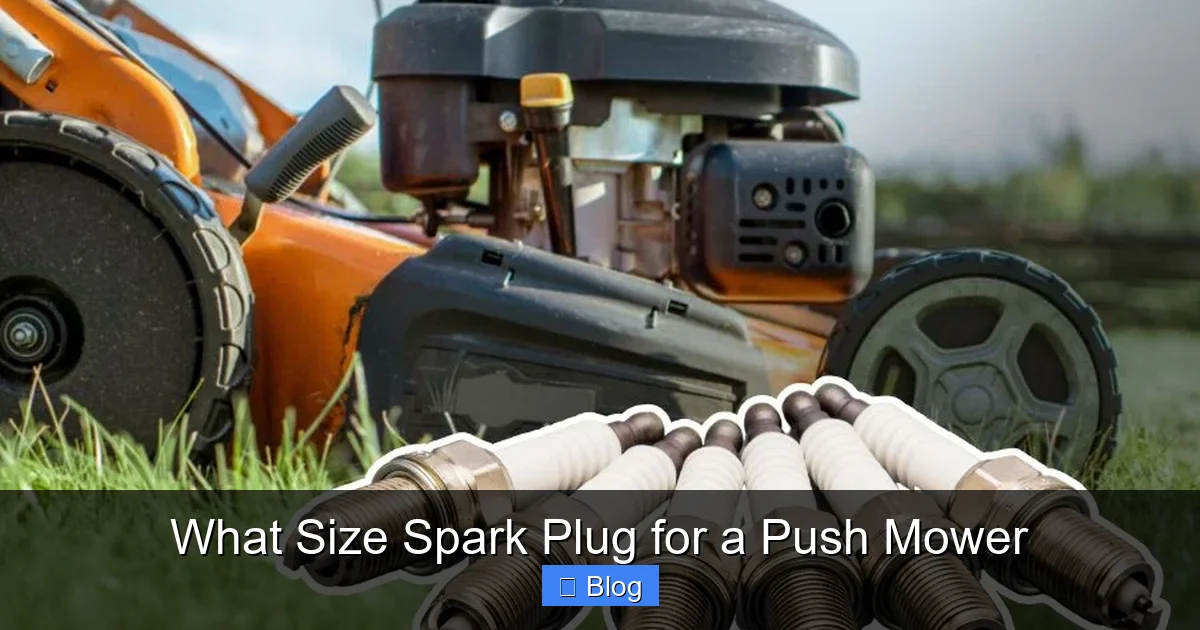
The best place to start is your mower’s owner’s manual. It will list the exact spark plug model number, thread size, reach (length), heat range, and gap specification. If you’ve lost the manual, don’t panic—there are other ways to find the info.
Check the Engine Label
Most push mowers have a label or stamped code on the engine itself. Look for a metal plate near the air filter or cylinder head. It often includes the engine model, type, and sometimes the spark plug part number. For example, a Briggs & Stratton engine might list “Model: 12H802, Type: 0212, Code: 123456”—this info helps you cross-reference the correct plug.
Use the OEM Part Number
If you know the engine manufacturer and model, visit their official website or use their parts lookup tool. Enter your engine details, and they’ll show you the exact spark plug recommended. For instance, a Honda GCV160 engine typically uses a NGK BPR6ES or equivalent.
Measure the Old Plug (If Removable)
If your mower still has the original spark plug, you can measure it to determine size:
– Thread diameter: Most are 14mm or 18mm. Use a caliper or thread gauge.
– Thread reach (length): Measure from the base to the tip of the threads. Common lengths are 12.7mm (½ inch) or 19mm (¾ inch).
– Hex size: The nut that fits the socket—usually 13/16″, 15/16″, or 16mm.
Consult a Cross-Reference Chart
Many auto parts stores and online retailers offer cross-reference tools. Enter your old plug’s brand and number (e.g., Champion RJ19LM), and they’ll suggest compatible replacements from other brands like NGK, Bosch, or Autolite.
At a Glance: Common Spark Plug Sizes for Push Mowers
Visual guide about What Size Spark Plug for a Push Mower
Image source: mowing.expert
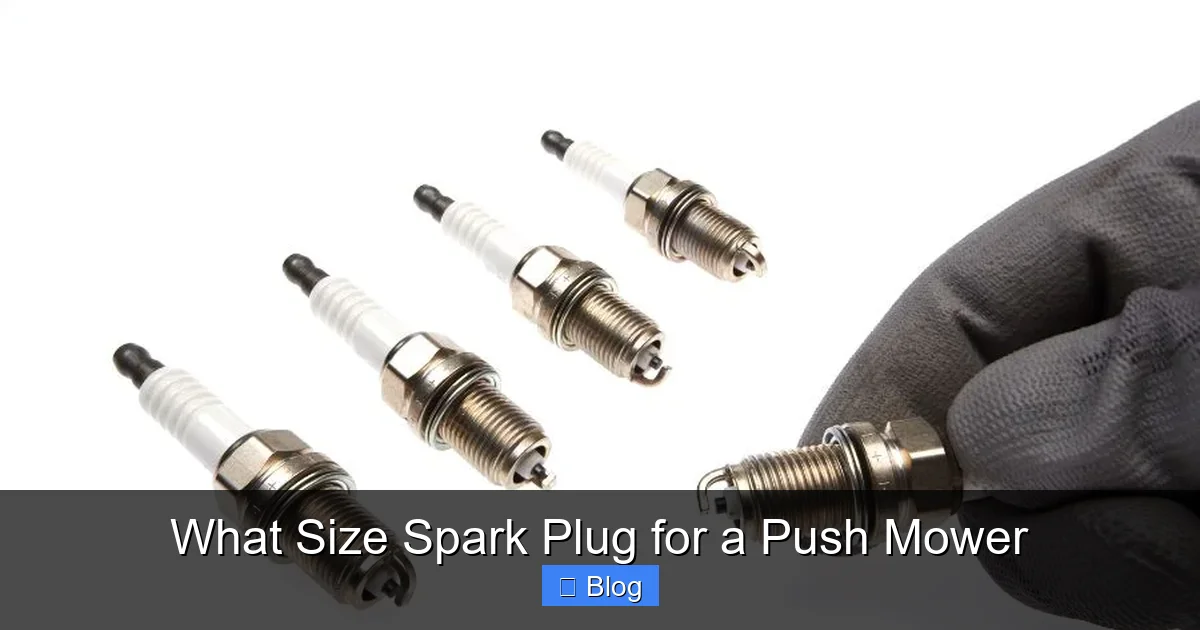
Below is a quick reference table of the most common spark plug sizes used in residential push mowers. This helps you compare your findings or choose a replacement when the manual isn’t available.
Step-by-Step: How to Replace Your Spark Plug
| Thread Diameter | Thread Reach | Hex Size | Common Brands/Models | Typical Gap (inches) |
|---|---|---|---|---|
| 14mm | 12.7mm (½”) | 13/16″ | Briggs & Stratton, Honda GCV160, Toro | 0.025–0.030″ |
| 14mm | 19mm (¾”) | 15/16″ | Kohler XT675, some older Tecumseh | 0.030″ |
| 18mm | 12.7mm (½”) | 15/16″ | Some commercial mowers, older models | 0.030″ |
Now that you know the correct size, it’s time to replace it. This process takes about 10–15 minutes and requires minimal tools.
Gather Your Tools and Materials
You’ll need:
– Correct spark plug (matched to your mower)
– Spark plug socket (usually 5/8″ or 13/16″)
– Ratchet wrench or extension
– Gap tool (feeler gauge or wire-style)
– Torque wrench (optional but recommended)
– Clean rag
– Safety gloves and glasses
Step 1: Safety First
Turn off the mower and disconnect the spark plug wire. Let the engine cool completely. Working on a hot engine can cause burns or accidental starts.
Step 2: Locate the Spark Plug
The spark plug is usually on the side of the engine, under a rubber boot. It’s connected to a thick wire leading to the ignition coil. Look for a small, threaded metal tip with a ceramic insulator.
Step 3: Remove the Old Plug
Gently pull the rubber boot off the plug. Use the spark plug socket and ratchet to loosen the plug counterclockwise. If it’s stuck, apply a drop of penetrating oil and wait a few minutes. Avoid using excessive force—aluminum cylinder heads can strip easily.
Step 4: Check and Gap the New Plug
Before installing, check the gap on your new plug. Use a gap tool to measure the space between the center and ground electrode. Adjust by gently bending the ground electrode—never the center. Most push mowers require a gap of 0.025 to 0.030 inches.
Step 5: Install the New Plug
Hand-thread the new plug into the cylinder head to avoid cross-threading. Once it’s snug, use the socket and ratchet to tighten. If you have a torque wrench, tighten to the manufacturer’s spec (usually 10–15 ft-lbs). Otherwise, tighten until snug, then give it an extra ¼ turn.
Step 6: Reconnect and Test
Push the rubber boot firmly onto the new plug until it clicks. Reconnect the spark plug wire. Start the mower and listen for smooth operation. If it runs rough or won’t start, double-check the connection and gap.
Troubleshooting Common Spark Plug Issues
Even with the right size, problems can occur. Here’s how to diagnose and fix them:
Hard Starting or No Start
– Cause: Fouled plug, incorrect gap, or weak spark.
– Fix: Clean or replace the plug. Check the gap and ensure the wire is connected securely.
Misfiring or Rough Idle
– Cause: Worn electrodes, carbon buildup, or incorrect heat range.
– Fix: Replace the plug. If it keeps happening, check the air filter, fuel quality, and carburetor.
Plug Overheating (Blistered insulator)
– Cause: Plug too hot for the engine, lean fuel mixture, or overworking the mower.
– Fix: Use a cooler heat range plug (check manual). Inspect fuel system and avoid mowing in extreme heat.
Oil-Fouled Plug (Wet, black, sooty)
– Cause: Worn piston rings or valve seals allowing oil into the combustion chamber.
– Fix: Replace the plug and have the engine inspected by a professional.
When to Replace Your Spark Plug
Don’t wait for failure. Replace your spark plug:
– Every season (before spring mowing)
– After 25–50 hours of use
– If you notice hard starting, poor fuel economy, or loss of power
– If the electrode is worn, cracked, or covered in deposits
Regular replacement is cheap insurance against bigger engine problems.
Conclusion
Finding the right spark plug size for your push mower doesn’t have to be confusing. By checking your owner’s manual, measuring the old plug, or using a cross-reference chart, you can quickly identify the correct replacement. Most residential mowers use 14mm plugs with a ½” reach, but always verify your specific model.
Replacing the spark plug is a simple maintenance task that takes minutes but delivers big rewards: easier starts, smoother running, and longer engine life. With the right tools and a little know-how, you’ll keep your mower in top shape season after season.
Remember: size matters, but so does quality. Stick to reputable brands like NGK, Champion, or Autolite, and always match OEM specifications. Your lawn—and your back—will thank you.

Sagor Jahan is the founder and author of Automopromo.com, dedicated to delivering insightful tips, reviews, and updates in the automotive and promotional industry. With a passion for innovation and clear guidance, Sagor helps readers make informed decisions and stay ahead in the ever-evolving automotive world.