
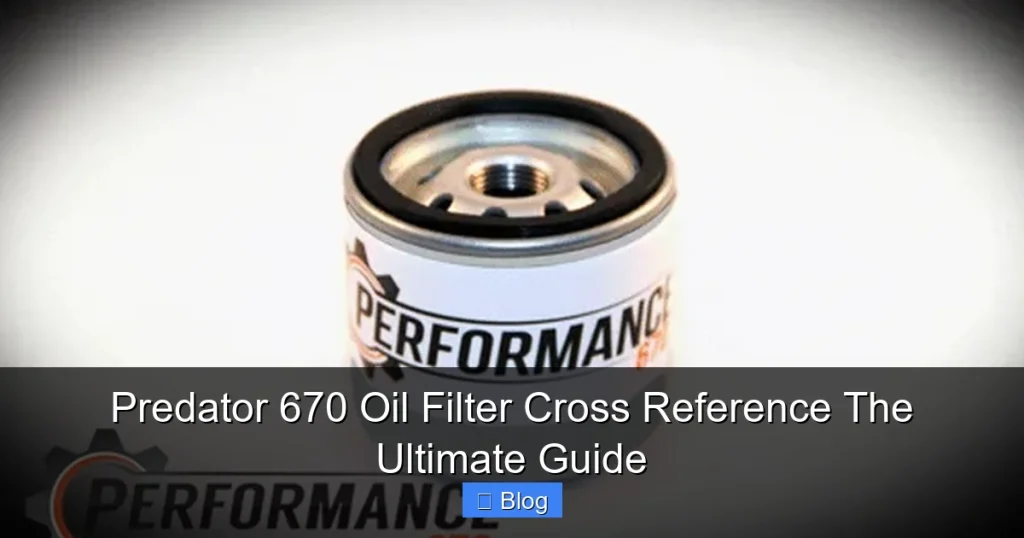
Maintaining your Predator 670 engine means choosing the right oil filter, which can be tricky due to a lack of readily available OEM part numbers. This ultimate guide provides a comprehensive Predator 670 oil filter cross reference, detailing critical specifications and offering reliable aftermarket alternatives. Discover how to select the perfect filter to ensure optimal engine performance, longevity, and to prevent costly damage.
Predator 670 Oil Filter Cross Reference The Ultimate Guide
Hey there, fellow engine enthusiasts! If you’re the proud owner of a Predator 670 engine, you already know you’ve got a powerhouse on your hands. These engines are famous for their reliability and robust performance, making them a go-to choice for everything from generators and log splitters to go-karts and custom projects. But just like any hardworking machine, your Predator 670 needs regular love and care, and a big part of that maintenance routine is changing the oil filter.
Now, here’s where things can get a little tricky. While the Predator 670 is a fantastic engine, finding its exact OEM oil filter can sometimes feel like a treasure hunt. Unlike some bigger-name brands that have clear, widely available part numbers, the Predator 670 can leave you scratching your head. That’s where the magic of cross-referencing comes in! This isn’t just about finding *any* filter that fits; it’s about finding the *right* filter that provides optimal filtration, ensures engine longevity, and keeps your beloved Predator running strong for years to come. This ultimate guide is here to demystify the Predator 670 oil filter cross reference process, giving you all the knowledge and specific examples you need to make the best choice for your engine.
Key Takeaways
- Critical Specs Matter: Thread size, gasket diameter, bypass valve pressure, and micron rating are crucial for choosing the correct Predator 670 oil filter cross reference.
- Aftermarket Options Abound: Many reputable brands like Wix, Fram, Purolator, and K&N offer compatible filters, but always verify specs against your engine’s requirements.
- Avoid Common Pitfalls: Don’t just match thread size; consider bypass pressure and overall filter quality to protect your engine from premature wear.
- OEM Information Can Be Limited: The Predator 670 often lacks clear OEM filter specifics, making thorough cross-referencing an essential skill for owners.
- Engine Longevity is Key: Using the right filter ensures optimal oil cleanliness, preventing wear and significantly extending the life of your Predator 670 engine.
- Double-Check Before You Buy: Always physically compare filters or meticulously confirm specifications before purchasing and installing any replacement filter.
- Installation Best Practices: Proper pre-filling and tightening are vital for leak-free performance and ensuring the new filter functions effectively from the start.
Quick Answers to Common Questions
What is the typical thread size for a Predator 670 oil filter?
The Predator 670 engine, being a clone of Honda GX models, commonly uses an M20x1.5mm thread size for its oil filter. However, it is always recommended to verify this physically or through reliable cross-reference data for your specific engine.
Can I use any oil filter that screws onto my Predator 670?
No, absolutely not. While a filter might screw on, it must also have the correct gasket diameter, bypass valve pressure, and filtration micron rating to function properly and protect your engine. Using an incorrect filter can lead to severe engine damage.
What does “bypass valve pressure” mean for an oil filter?
The bypass valve pressure specifies the force (in psi) at which a valve inside the filter opens to allow oil to flow through unfiltered if the main filter media becomes clogged or oil is too thick. An incorrect pressure can either starve the engine of oil or allow dirty oil to circulate prematurely.
How often should I change the oil filter on my Predator 670?
It’s generally recommended to change the oil filter every 50-100 hours of operation or at least once per season, whichever comes first. For demanding conditions, more frequent changes are advisable.
Why is it important to pre-fill the new oil filter with oil before installing it?
Pre-filling the new oil filter saturates the filter media with oil and prevents an “air pocket” from forming during startup. This ensures instant lubrication to critical engine components, reducing wear that can occur if the engine runs dry for a few seconds while the filter fills.
📑 Table of Contents
- Why Understanding Your Predator 670 Oil Filter is Crucial
- The Original Predator 670 Oil Filter: What You Need to Know
- Decoding the Cross-Reference: How to Find Compatible Filters
- Top Recommended Predator 670 Oil Filter Cross-References (with detailed options)
- Installation Tips and Best Practices for Your New Oil Filter
- Common Mistakes to Avoid When Choosing a Filter
- Conclusion
Why Understanding Your Predator 670 Oil Filter is Crucial
Think of your engine’s oil filter as its kidneys. Just as your kidneys filter waste from your blood, the oil filter traps contaminants, dirt, metal particles, and sludge from your engine oil. This prevents these harmful substances from circulating through vital engine components like bearings, camshafts, and cylinder walls, where they could cause significant damage. A clean oil filter ensures a steady supply of clean, lubricating oil, which is absolutely essential for your engine’s health and performance.
The Dangers of the Wrong Filter
Using the incorrect oil filter for your Predator 670 can lead to a host of problems. A filter with the wrong thread size simply won’t screw on or will strip the engine block. A filter with an improper bypass valve pressure might not let enough oil flow through when the filter is clogged, starving your engine, or it might bypass too early, allowing dirty oil to circulate freely. An inadequate micron rating means the filter won’t effectively capture small, damaging particles. All these scenarios can lead to increased engine wear, reduced performance, potential breakdowns, and in the worst cases, catastrophic engine failure. It can even void your warranty!
Benefits of the Right Filter
On the flip side, selecting the correct Predator 670 oil filter cross reference ensures several key benefits:
- Extended Engine Life: Proper filtration significantly reduces wear and tear on internal components.
- Optimal Performance: Clean oil ensures parts move smoothly, maintaining peak power and efficiency.
- Better Fuel Economy: A well-lubricated engine runs more efficiently.
- Peace of Mind: Knowing you’ve chosen a filter that meets or exceeds the engine’s requirements gives you confidence in your machine.
The Original Predator 670 Oil Filter: What You Need to Know
One of the biggest hurdles when trying to find a replacement for your Predator 670’s oil filter is the lack of a clearly specified, universally recognized OEM part number. Unlike automotive engines, where manufacturers often provide detailed specs and readily available branded filters, small engine clones like the Predator 670 often leave you to figure it out.
Visual guide about Predator 670 Oil Filter Cross Reference The Ultimate Guide
Image source: images.sampletemplates.com
Identifying the Stock Filter’s Characteristics
The Predator 670 engine is a clone of the Honda GX670/GX690 V-twin engines. This is a crucial piece of information! It means that many parts, including oil filters, designed for the Honda GX series are often directly compatible. However, it’s never a guarantee. The best way to approach this is to understand the key specifications of the *original* filter that came with your Predator 670 or to measure it directly if you still have it.
Key Oil Filter Specifications Explained
When you’re looking for a Predator 670 oil filter cross reference, these are the critical numbers you need to pay attention to:
- Thread Size: This is the diameter and pitch of the screw threads where the filter attaches to the engine. For many Honda GX clones, this is commonly M20x1.5mm (M for metric, 20 for 20mm diameter, 1.5 for 1.5mm thread pitch). However, some may use 3/4″-16. This is non-negotiable – it must match!
- Gasket Diameter: The rubber gasket at the base of the filter must match the engine’s sealing surface. Too small, and it won’t seal; too large, and it can buckle and leak.
- Overall Filter Dimensions (Height & Diameter): While not always critical for filtration, physical size matters for clearance. You need to ensure the new filter doesn’t hit other engine components, frames, or covers.
- Bypass Valve Pressure: Inside the filter, there’s a spring-loaded valve. If the filter media becomes clogged (or if the oil is too thick when cold), this valve opens to allow unfiltered oil to flow to the engine, preventing oil starvation. The pressure at which this valve opens (measured in psi) is vital. Too low, and dirty oil bypasses the filter prematurely; too high, and the engine could be starved of oil if the filter is restricted. Common ranges for small engines might be 10-15 psi.
- Micron Rating: This indicates the size of particles the filter can capture. A lower micron rating means finer filtration (e.g., 10-20 microns is typical for good quality oil filters).
Knowing these specifications is your first line of defense in finding a reliable Predator 670 oil filter cross reference. If you can measure your existing filter’s thread and gasket, and possibly find its bypass pressure specification (sometimes printed on the filter or available online for common filters), you’re well on your way!
Decoding the Cross-Reference: How to Find Compatible Filters
Now for the exciting part – finding those compatible filters! Since the Predator 670 shares many design elements with the Honda GX series, filters designed for models like the Honda GX670 or GX690 are excellent starting points for your cross-reference search. Many reputable filter manufacturers provide extensive cross-reference charts and online tools that can help.
Visual guide about Predator 670 Oil Filter Cross Reference The Ultimate Guide
Image source: i.ytimg.com
Methods for Cross-Referencing
- Manufacturer Websites: Brands like Wix, Fram, Purolator, K&N, and Baldwin have online catalogs where you can often search by engine type (if listed) or, more reliably, by specific filter dimensions and thread size.
- Parts Store Databases: Local auto parts stores (NAPA, AutoZone, O’Reilly) often have internal cross-reference systems that can match a filter’s specifications to available stock.
- Online Forums and Communities: Small engine forums are goldmines of information. Many Predator 670 owners have already done the legwork and shared their successful cross-references.
- Physical Comparison: If you have the old filter, take it with you to the store. Compare thread size, gasket diameter, and overall dimensions directly. This is often the most foolproof method for visual verification.
Popular Brands and What to Look For
When searching for a Predator 670 oil filter cross reference, you’ll encounter several well-known filter brands. These brands typically offer a range of filters with different levels of filtration efficiency and construction quality. Some popular and reliable choices include:
- Wix/NAPA Gold: Wix is renowned for its high-quality filtration. NAPA Gold filters are often rebranded Wix filters, offering excellent performance.
- Fram: A very common brand, offering a wide range of filters. Look for their higher-end models like Tough Guard or Ultra Synthetic for better performance.
- Purolator: Another well-respected brand, with various lines like PurolatorONE and PureONE offering good filtration.
- K&N: Known for performance filters, K&N offers robustly constructed filters with features like a wrench nut for easy removal.
- Baldwin: Primarily serving the heavy-duty and industrial markets, Baldwin filters are known for their robust construction and excellent filtration.
Thread Size and Gasket Matters
As mentioned, the thread size (e.g., M20x1.5mm) and gasket diameter are non-negotiable. If these don’t match, the filter won’t fit or seal properly. Always confirm these first. You can often find this information listed in the filter’s specifications online or on the packaging.
Bypass Valve Pressure: Don’t Overlook It
While harder to find consistently listed on packaging, the bypass valve pressure is crucial. Filters designed for similar Honda GX engines typically have bypass pressures in the 10-15 psi range. Try to stick within this range. If a filter’s bypass pressure is significantly different, it might not be suitable even if other dimensions match.
Micron Rating and Filter Efficiency
Most reputable aftermarket filters will offer adequate micron ratings (typically between 10-25 microns). If you want superior filtration, look for “synthetic media” or “extended life” filters, which often have lower micron ratings and better dirt-holding capacity.
Top Recommended Predator 670 Oil Filter Cross-References (with detailed options)
Based on the common specifications of the Predator 670 engine and its Honda GX counterparts (typically M20x1.5mm thread, with a gasket diameter around 2.5-2.8 inches and bypass valve pressure around 10-12 psi), here are some of the most commonly cited and reliable cross-references. Please remember, always double-check these specifications against your specific Predator 670 engine and the filter itself before purchasing. Engine variants or production changes can occur.
Wix and NAPA Gold Filters
- Wix 51348 (NAPA Gold 1348): This is arguably one of the most popular and trusted cross-references for many small engines, including the Honda GX series and its clones like the Predator 670.
- Thread Size: M20x1.5mm
- Gasket OD: ~2.8 inches
- Bypass Valve: ~8-11 psi
- Micron Rating: ~21 microns (nominal)
- Why it’s a good choice: Excellent filtration, robust construction, widely available. It’s often considered a premium choice for small engines.
Fram Filters
- Fram PH6017A: Another very common filter found in auto parts stores. It shares similar specifications with the Wix 51348.
- Thread Size: M20x1.5mm
- Gasket OD: ~2.8 inches
- Bypass Valve: ~8-11 psi
- Micron Rating: ~20 microns (nominal)
- Why it’s a good choice: Readily available, cost-effective, and generally provides good standard filtration.
- Fram Tough Guard TG6607 or TG7317 (check specs carefully for TG7317): These are higher-quality Fram options with better filtration media.
- Thread Size: M20x1.5mm (for TG6607)
- Why it’s a good choice: Improved dirt-holding capacity and filtration efficiency over standard Fram filters.
Purolator Filters
- Purolator L10241 (or PL10241 for PureONE): Purolator is another reliable brand that offers filters compatible with the M20x1.5mm thread.
- Thread Size: M20x1.5mm
- Gasket OD: ~2.8 inches
- Bypass Valve: ~8-11 psi
- Micron Rating: ~20 microns (for L10241), ~10-15 microns (for PureONE PL10241)
- Why it’s a good choice: Known for solid construction and effective filtration. The PureONE line offers enhanced performance.
K&N Filters
- K&N KN-204: K&N filters are popular among those looking for slightly higher performance and ease of installation.
- Thread Size: M20x1.5mm
- Gasket OD: ~2.8 inches
- Bypass Valve: ~8-11 psi
- Micron Rating: ~10-20 microns (often with synthetic blend media)
- Why it’s a good choice: Features a 17mm wrench nut on the end for easy removal, often has high flow rates and good filtration.
Baldwin Filters
- Baldwin B1400: For those who prefer heavy-duty filtration, Baldwin is an excellent choice.
- Thread Size: M20x1.5mm
- Gasket OD: ~2.8 inches
- Bypass Valve: ~8-11 psi
- Why it’s a good choice: Industrial-grade filtration, robust build quality, and typically excellent dirt-holding capacity.
Remember, the best approach is to take your current Predator 670 oil filter, or at least its known specifications, to your local parts store and cross-reference it with the options available. Don’t be afraid to ask to see the filters and compare them side-by-side!
Installation Tips and Best Practices for Your New Oil Filter
Once you’ve found the perfect Predator 670 oil filter cross reference, installing it correctly is just as important as choosing it. A poorly installed filter can leak, fail to filter, or even come loose, causing serious engine trouble.
Step-by-Step Installation Guide:
- Drain the Old Oil: Ensure your engine is warm (not hot!) to allow the oil to drain more easily. Place a drain pan underneath and remove the oil drain plug.
- Remove the Old Filter: Use an oil filter wrench if necessary. Be prepared for a small amount of oil to spill out as you unscrew it.
- Clean the Mounting Surface: Use a clean rag to wipe any old oil or debris from the engine block’s filter mounting surface. Ensure there are no bits of the old gasket left behind.
- Prepare the New Filter: This is a crucial step!
- Pre-fill with Oil: Pour some fresh engine oil into the new filter until the media is saturated. This prevents an “air pocket” and ensures instant lubrication upon startup.
- Lubricate the Gasket: Apply a thin film of fresh engine oil to the new rubber gasket. This helps create a good seal and prevents the gasket from sticking or tearing during installation.
- Install the New Filter: Carefully screw the new filter onto the engine block by hand. Once the gasket makes contact with the block, tighten it about 3/4 to 1 full turn (check the filter’s instructions; some say 1/2 to 3/4 turn). Do not overtighten, as this can damage the gasket or threads! Hand-tight is usually sufficient, with a slight extra snug turn.
- Refill Engine Oil: Replace the drain plug (with a new crush washer if applicable) and refill your engine with the recommended type and amount of fresh oil.
- Check for Leaks: Start the engine and let it run for a few minutes. Carefully check around the oil filter for any signs of leaks. If you see a leak, turn off the engine and gently tighten the filter a tiny bit more, then recheck.
- Check Oil Level: Turn off the engine, wait a few minutes for the oil to settle, and check the oil level with the dipstick. Adjust if necessary.
Oil Change Frequency
For most Predator 670 engines in typical usage, changing the oil and filter every 50-100 hours of operation or at least once per season (whichever comes first) is a good general guideline. If your engine operates in dusty conditions, under heavy load, or at extreme temperatures, more frequent changes might be necessary.
Common Mistakes to Avoid When Choosing a Filter
Even with all this information, it’s easy to fall into common traps when picking out a new oil filter. Staying vigilant will save you headaches and money down the line.
- Only Looking at Thread Size: “It screws on, so it must be right!” This is a dangerous misconception. While thread size is critical, ignoring bypass valve pressure, gasket diameter, and overall quality can lead to serious engine issues. A filter could fit physically but not function correctly, starving your engine or letting dirty oil circulate.
- Ignoring Bypass Valve Pressure: As discussed, incorrect bypass pressure can either allow dirty oil to bypass the filter too soon or restrict oil flow, leading to oil starvation. Always try to match the recommended bypass pressure for Honda GX670/690 filters.
- Buying the Cheapest Filter Available: While saving a few bucks might seem appealing, ultra-cheap filters often use inferior filtration media, weak construction, and unreliable bypass valves. This leads to poor filtration, shorter filter life, and potentially engine damage. Invest in a quality filter; it’s cheap insurance for your engine.
- Not Replacing the Gasket or Lubricating It: A new filter always comes with a new gasket for a reason. Reusing an old, compressed gasket is asking for leaks. Forgetting to lubricate the new gasket can cause it to tear or stick, preventing a proper seal.
- Overtightening the Filter: While you want the filter snug, overtightening can crush the gasket, damage the filter housing, or make it extremely difficult to remove next time. “Hand-tight plus a quarter to three-quarters turn” is the golden rule.
Conclusion
There you have it – your ultimate guide to the Predator 670 oil filter cross reference! While the lack of a clear OEM part number can initially be daunting, understanding the critical specifications and leveraging the compatibility with Honda GX series engines opens up a world of reliable aftermarket options. By focusing on thread size, gasket diameter, bypass valve pressure, and choosing reputable brands like Wix, Fram, Purolator, K&N, or Baldwin, you can confidently select the perfect filter for your Predator 670.
Remember, your engine’s oil filter is a small but mighty component vital to its long-term health and performance. Don’t compromise on quality, and always take the time to double-check specifications and follow proper installation procedures. With the right filter in place and consistent maintenance, your Predator 670 will continue to power through your projects for many years to come, keeping you productive and happy!
Frequently Asked Questions
What are the primary specifications I need to know when looking for a Predator 670 oil filter cross reference?
When searching for a Predator 670 oil filter cross reference, you primarily need to know the thread size (most commonly M20x1.5mm), the gasket outside diameter, and ideally, the bypass valve pressure. These ensure the filter fits securely and functions correctly for optimal engine protection.
Why is it difficult to find an original equipment manufacturer (OEM) part number for the Predator 670 oil filter?
The Predator 670 is a robust, aftermarket engine often without a specific, widely distributed OEM oil filter part number from its manufacturer. Instead, it relies on compatibility with filters designed for similar engines, particularly the Honda GX670/690, making cross-referencing essential for owners.
Are higher-priced oil filters always better for my Predator 670?
While not always strictly “better” for every application, higher-priced filters often feature superior filtration media, more durable construction, and more consistent bypass valve performance. Investing in a quality filter provides better protection and can extend your Predator 670’s engine life compared to cheaper alternatives.
Can I use an automotive oil filter if its specifications match my Predator 670?
If an automotive filter precisely matches all critical specifications—thread size, gasket diameter, bypass valve pressure, and micron rating—it technically *could* work. However, automotive filters are designed for different oil pressures and flow rates, so it’s generally safer to stick with filters specifically cross-referenced for small engines or the Honda GX series.
What if I can’t find any specific cross-references listed for the Predator 670?
If direct cross-references are scarce, focus on finding filters that match the exact thread size (e.g., M20x1.5mm) and gasket diameter of your original filter. Then, prioritize reputable brands known for quality small engine filtration and aim for a bypass valve pressure similar to what’s found in Honda GX670 filters (typically 8-15 psi).
What should I do if my new Predator 670 oil filter leaks after installation?
If your new filter leaks, immediately shut off the engine. First, check that the filter is snug (not overtightened) and that the gasket surface on the engine block is clean and free of old gasket material. If tightening slightly doesn’t fix it, remove the filter and inspect the gasket for tears or improper seating, then reinstall carefully or try a different filter if the gasket appears faulty.

Sagor Jahan is the founder and author of Automopromo.com, dedicated to delivering insightful tips, reviews, and updates in the automotive and promotional industry. With a passion for innovation and clear guidance, Sagor helps readers make informed decisions and stay ahead in the ever-evolving automotive world.

