
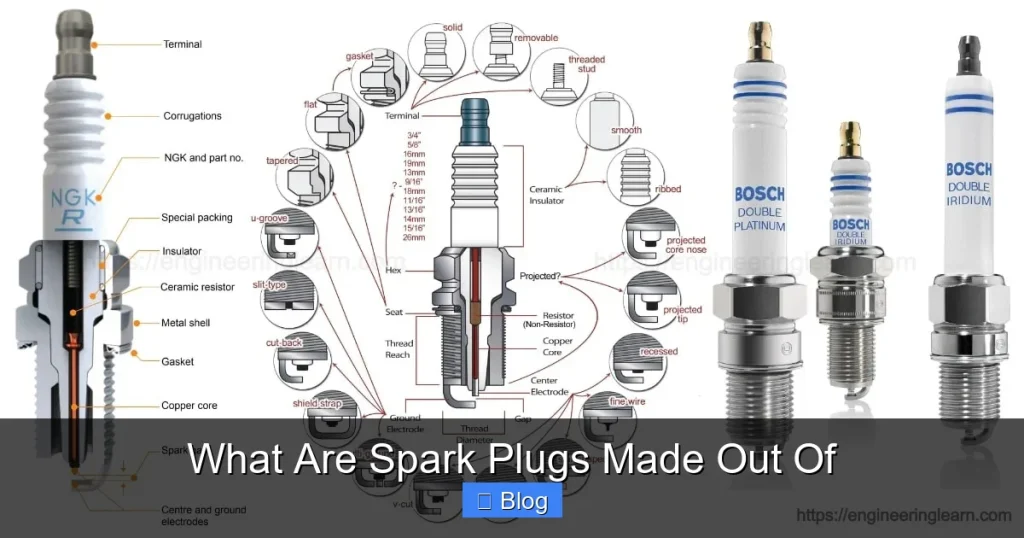
Spark plugs are essential engine components made from a mix of metals, ceramics, and insulators to ignite fuel efficiently. This guide breaks down their composition, from the center electrode to the housing, helping you understand how these materials impact performance and longevity. Learn what spark plugs are made out of to make informed choices for maintenance and upgrades.
What Are Spark Plugs Made Out Of
Hey there, car lover! If you’ve ever popped the hood of your vehicle and wondered about those small but mighty parts that make your engine roar, spark plugs are likely on your mind. In this guide, we’ll dive deep into what spark plugs are made out of. You’ll learn the key materials, how they work together, and why they matter for your ride’s performance. By the end, you’ll feel like an expert, ready to pick the best plugs for your needs. Let’s get started!
Key Takeaways
- Spark plugs use metals like copper and iridium: These form the electrodes, with copper offering affordability and iridium providing durability for high-performance engines.
- Ceramic insulators are key: They prevent electrical shorts and withstand extreme heat, ensuring reliable spark generation.
- Steel or aluminum housing protects internals: This outer shell provides strength while allowing heat dissipation.
- Materials affect lifespan and efficiency: Premium options like platinum extend plug life up to 100,000 miles compared to basic copper’s 30,000 miles.
- Choosing the right material matters: Match plug composition to your vehicle’s engine type for optimal fuel economy and reduced emissions.
- Maintenance reveals material quality: Inspecting worn plugs shows how materials degrade, guiding better replacements.
Quick Answers to Common Questions
How often should I replace spark plugs based on their materials?
Basic copper plugs last 30,000 miles, while iridium ones go up to 100,000. Check your manual and inspect every 20,000 miles for wear.
Can I mix different material types in my engine?
It’s best not to—stick to the recommended spec. Mixing could cause uneven performance or damage due to varying heat ranges.
What’s the difference between platinum and iridium plugs?
Platinum is durable and affordable, lasting 60,000 miles. Iridium is finer and harder, ideal for high-mileage or performance vehicles.
Are all ceramic insulators the same?
No, quality varies. High-grade alumina handles more heat; cheaper ones might crack sooner in demanding engines.
How do I know if my spark plug materials are failing?
Look for rough idling, poor acceleration, or check engine lights. Pull a plug—if electrodes are eroded, it’s time for new ones.
Understanding the Basics of Spark Plugs
Spark plugs are the unsung heroes of your engine. They create the spark that ignites the air-fuel mixture in your cylinders. But what exactly goes into building one? At their core, spark plugs combine conductive metals, heat-resistant insulators, and sturdy outer shells. These materials must handle intense heat, pressure, and electrical demands without failing.
Think of a spark plug as a tiny lightning rod. It has a center electrode that carries electricity, a ground electrode to complete the circuit, and insulators to keep everything safe. We’ll break this down step by step, exploring each part’s makeup.
Step 1: Examine the Center Electrode
The center electrode is where the action starts. It’s the positive side of the spark. Most spark plugs are made out of metals like copper, nickel, platinum, or iridium here. Why these? They conduct electricity well and resist corrosion.
- Copper: Cheap and effective, but it wears out faster in hot engines.
- Nickel: A step up, often alloyed for better strength.
- Platinum and iridium: Premium choices that last longer due to their high melting points.
To understand this, imagine revving your engine on a long drive. The center electrode must spark thousands of times per minute. Materials like iridium, which is one of the densest metals, handle this without eroding quickly.
Step 2: Look at the Ground Electrode
Next up is the ground electrode, the negative side that arcs to the center. It’s usually made from the same metals as the center but sometimes with a different alloy for better grounding. Nickel-chromium alloys are common because they resist oxidation.
Practical tip: If you’re inspecting old plugs, check the ground electrode for pitting. That’s a sign the material isn’t holding up, often due to poor quality alloys. Replacing with platinum-tipped ones can prevent this.
Quick Reference: Common Materials in Spark Plugs
Now that we’ve covered the electrodes, let’s look at a handy overview of the materials you’ll find in most spark plugs. This table summarizes key components, their primary materials, and why they’re used. It’s a quick way to see how spark plugs are made out of a smart blend of elements for reliability.

Visual guide about What Are Spark Plugs Made Out Of
Image source: whomakethis.com
With this reference, you can see how each piece fits the puzzle. Moving on, let’s explore the insulator, which is crucial for safety.
Step 3: Dive into the Insulator Material
The insulator surrounds the center electrode. It’s typically made from alumina ceramic, a tough, non-conductive material derived from aluminum oxide. This keeps the high-voltage spark contained and blocks heat from reaching the coil.
Example: In a high-revving sports car, the insulator must endure temperatures over 1,500°F. Ceramic does this effortlessly, unlike cheaper alternatives that might crack. Tip: When buying plugs, look for “fine-wire” designs—these use purer ceramics for better performance.
Exploring the Outer Shell and Seals
Beyond the spark-creating parts, the shell holds it all together. Spark plugs are made out of steel or aluminum alloys for the threaded body. These materials provide strength to screw into the cylinder head without stripping.

Visual guide about What Are Spark Plugs Made Out Of
Image source: ceramices.com
| Component | Primary Materials | Key Function | Benefits |
|---|---|---|---|
| Center Electrode | Copper, Platinum, Iridium | Conducts electricity for spark | High conductivity; iridium lasts 100,000+ miles |
| Ground Electrode | Nickel-Chromium Alloy, Platinum | Completes electrical circuit | Resists corrosion; improves spark efficiency |
| Insulator | Alumina Ceramic | Prevents shorts and contains heat | Withstands 2,000°F; insulates up to 30,000 volts |
| Shell/Housing | Steel, Aluminum Alloy | Protects internals; threads into engine | Corrosion-resistant; aids heat transfer |
| Terminal | Copper or Brass | Connects to ignition wire | Ensures secure electrical contact |
| Seal/Gasket | Glass or Metal | Seals against combustion gases | Prevents leaks; maintains pressure |
| Core (Resistor Type) | Carbon or Metal Oxide | Reduces electromagnetic interference | Quieter radio; protects electronics |
The threads are often zinc-plated to fight rust. At the top, a terminal stud made of copper or brass connects to the wire. Seals, like glass frit or metal rings, ensure no gases escape.
Step 4: Check the Resistor and Core
Many modern plugs include a resistor core made from carbon compounds or metal oxides. This suppresses radio noise that could interfere with your car’s electronics. Without it, you might hear static on the radio during acceleration.
Practical example: If your vehicle has an infotainment system, resistor-type plugs (made with these materials) are a must. They’re standard in most cars today.
Step 5: Advanced Materials in Performance Plugs
For racing or turbo engines, manufacturers use exotic stuff. Yttrium alloys strengthen electrodes, while multi-layer ceramics boost heat resistance. These spark plugs made out of high-tech materials can handle 50% more stress.
Tip: If you’re upgrading, consult your owner’s manual. Mismatched materials lead to misfires.
Troubleshooting Common Material Issues
Sometimes, materials fail. Here’s how to spot and fix problems related to what spark plugs are made out of.
Identifying Wear from Poor Materials
- Carbon buildup on copper electrodes: Indicates low-quality metal; clean or replace.
- Cracked insulators: Ceramic fatigue from heat; inspect for white deposits.
- Rusted shells: Switch to better-coated alloys for humid climates.
Step-by-Step Troubleshooting
Step 1: Remove the plug using a ratchet and socket. Wear gloves—it’s hot!
Step 2: Inspect visually. Black soot? Fouled electrodes from cheap materials.
Step 3: Test resistance with a multimeter. High readings mean degraded core materials.
Step 4: Gap check. Use a feeler gauge; wrong materials can cause improper spacing.
Common fix: Swap to iridium plugs. They resist fouling better. If issues persist, check wiring—materials alone aren’t the culprit.
Pro tip: Always torque plugs to spec (usually 15-20 ft-lbs) to avoid damaging the shell.
Why Material Choice Matters for Your Engine
Choosing the right materials isn’t just about longevity. It affects fuel efficiency, emissions, and power. Copper plugs are budget-friendly for daily drivers, sparking reliably up to 30,000 miles. But for longevity, iridium wins, reducing replacement frequency.
Example: In a family SUV, ceramic-insulated platinum plugs cut misfires, saving gas. Track your mileage post-install to see the difference.
Environmental note: Modern materials like low-platinum alloys meet emission standards, helping your car run cleaner.
Conclusion
There you have it—a full rundown on what spark plugs are made out of. From copper cores to ceramic insulators, each material plays a vital role in keeping your engine firing on all cylinders. Armed with this knowledge, you’re set to maintain, troubleshoot, and upgrade confidently. Next time you’re at the auto parts store, you’ll know exactly what to grab. Drive safe, and keep those plugs in top shape!

Sagor Jahan is the founder and author of Automopromo.com, dedicated to delivering insightful tips, reviews, and updates in the automotive and promotional industry. With a passion for innovation and clear guidance, Sagor helps readers make informed decisions and stay ahead in the ever-evolving automotive world.

